
Why Permeable Paver Driveways Are Changing Modern Landscaping
Permeable paver driveways are revolutionizing driveway design by combining curb appeal with environmental responsibility. Unlike solid surfaces like asphalt or concrete that cause rainwater runoff, these systems allow water to flow through specially designed joints into the ground below.
What makes permeable paver driveways different:
- Wider joints filled with aggregate instead of sand
- Deep gravel base that stores and filters stormwater
- Porous materials that prevent water pooling
- Dual benefit of beauty and environmental protection
Conventional driveways create impermeable surfaces that contribute to flooding, erosion, and water pollution. Rainwater picks up oil, chemicals, and debris before flowing into storm systems, often overwhelming them during heavy rainfall.
Permeable pavers solve this by mimicking natural ground processes. As one industry expert notes, they “allow stormwater to pass through their joints and seep into the ground or be retained in the base structure, filtering out pollutants and preventing runoff into sewer systems.”
For homeowners looking to modernize their outdoor spaces, permeable pavers offer a combination of contemporary style and responsible water management. They eliminate puddles, reduce ice formation, and may qualify for municipal rebates or tax incentives.
I’m Christopher Deanovic, Operations Leader of Task Masters. I’ve guided countless Minnesota homeowners through permeable paver driveway installations that improve property value and environmental stewardship. My experience shows how they transform not just driveways, but entire landscapes.
What Are Permeable Pavers and Why Choose Them?
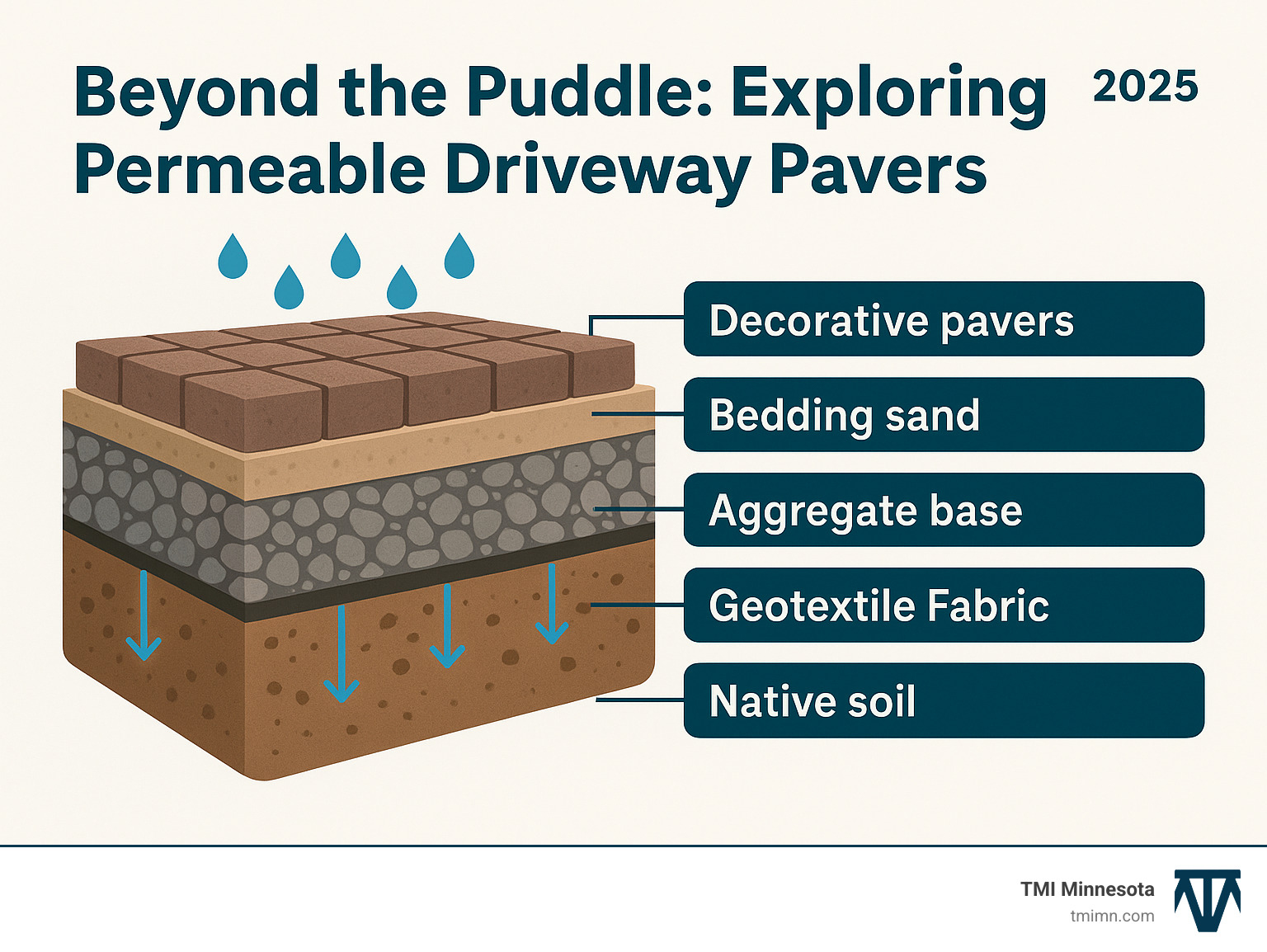
Permeable paver driveways use Permeable Interlocking Concrete Pavement (PICP) to work with water, not against it. While typical driveways create an impermeable barrier, permeable pavers welcome water through wider joints filled with porous materials like crushed stone.
The real innovation is beneath the surface. Permeable systems rest on a deep aggregate base of varying-sized stones. This base acts as an underground reservoir, storing and filtering stormwater before slowly releasing it into the ground, mimicking nature’s own drainage process.
The pavers themselves come in concrete, clay brick, or natural stone styles. Some are made with porous materials, while others rely on the permeable joints. This system offers a neat solution for homeowners seeking both beauty and environmental responsibility, improving curb appeal while protecting local waterways.
To explore how these systems can transform your space, see our hardscape installations for more information.
How Permeable Pavers Manage Stormwater
The stormwater management capabilities of permeable paver driveways are impressive. They tackle rainwater runoff in a way that benefits everyone.
Permeable pavers reduce runoff by letting water soak through the surface at a natural pace, cutting the volume and speed of water leaving your property. This process supports groundwater recharge, replenishing underground aquifers that feed wells and local ecosystems.
The system also acts as a natural filter, trapping sediments and pollutants. This means fewer harmful chemicals reach our streams and rivers. The erosion control benefits extend beyond your property, as less rushing water means less soil erosion in neighborhood waterways.
Most importantly, these systems alleviate strain on municipal storm drains. When homes manage stormwater on-site, it reduces the burden on aging infrastructure and helps prevent flooding during heavy storms. Many communities recognize permeable pavements as a best management practice and offer incentives for their adoption.
For more insight, the Stormwater Management for Homeowners Fact Sheet provides excellent additional information.
Key Advantages for Your Driveway
Beyond their environmental benefits, permeable paver driveways deliver practical advantages for homeowners.
Flood prevention is automatic, as water disappears into the ground instead of pooling near your foundation. This eliminates puddles that can freeze into ice patches or become mosquito breeding grounds.
The increased durability of these systems is a major plus. While concrete can crack from freeze-thaw cycles, permeable pavers flex with ground movement. Their deep aggregate base provides superior stability, often lasting decades longer than traditional surfaces.
Your landscape also benefits. Supporting surrounding landscapes occurs as the system keeps soil moisture levels consistent, creating healthier growing conditions for nearby plants and trees.
Winter safety improves with less standing water, which means less ice formation. The aesthetic upgrade boosts curb appeal and property value, with various colors, textures, and patterns available. Finally, many municipalities offer potential tax credits or incentives for installing permeable surfaces, which can help offset the initial investment.
These advantages make permeable paver driveways a smart choice for homeowners seeking both immediate and long-term value.
The Comprehensive Guide to Permeable Paver Driveways
Installing a permeable paver driveway is a sophisticated project that requires professional planning and execution. It’s a water management system that also serves as a beautiful, durable surface for your car.
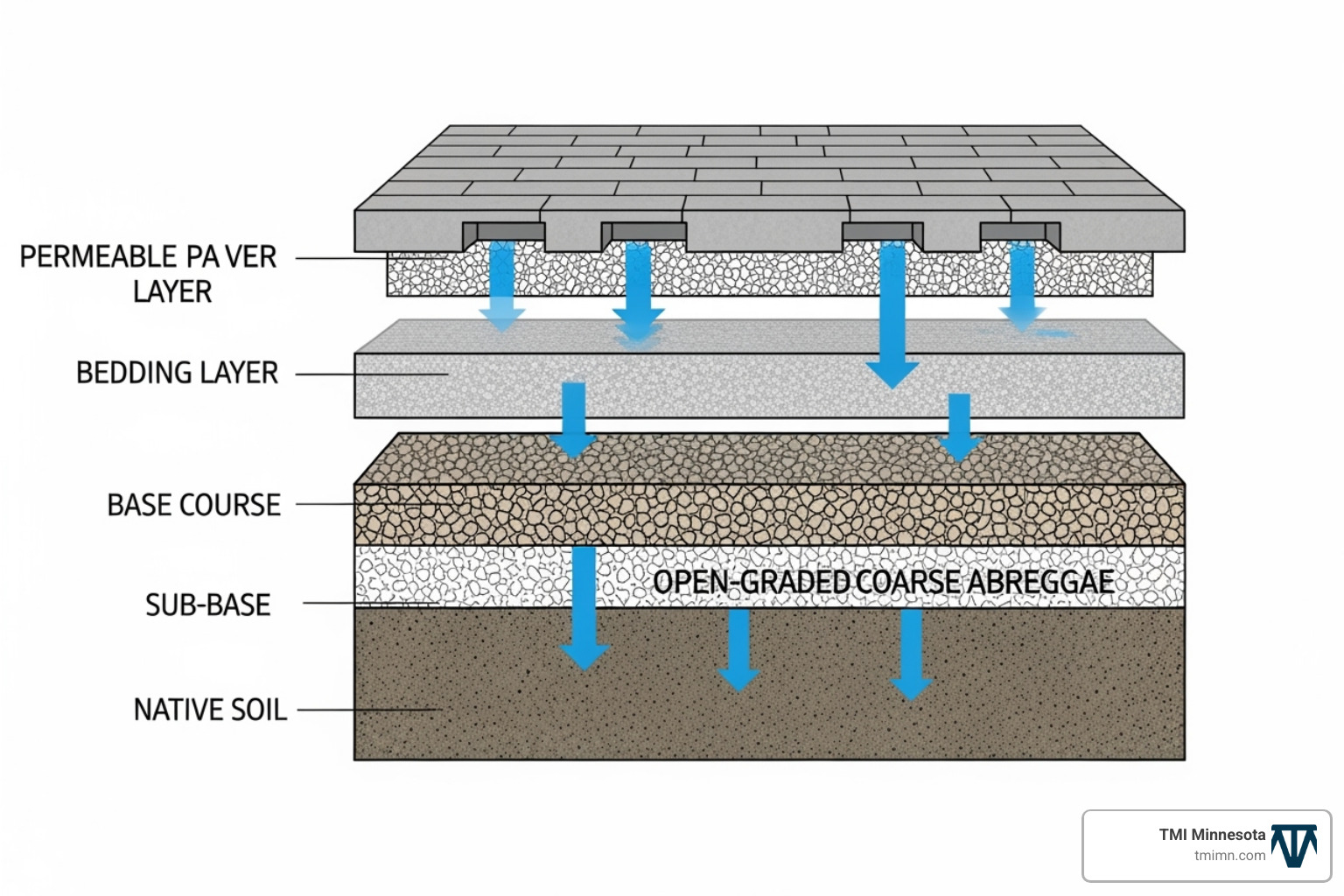
Every installation begins with a site assessment, including a soil percolation test. This test measures how quickly water soaks into your ground, which is critical for designing a system that works. Based on the results, we determine the proper excavation depth, which is typically at least 15 inches—much deeper than for a traditional driveway.
This depth accommodates the multi-layer aggregate base. We use specific types of washed, angular crushed stone in layers of different sizes for support and filtration. A geotextile fabric separates these layers from the native soil, preventing clogs while allowing water to pass through.
The complexity of this process is why professional installation is essential. A certified contractor ensures your permeable paver driveway will function properly for decades. For more details, see our guide on How to Install Hardscape Pavers.
Installation and Design Possibilities
Permeable paver driveways offer an incredible range of design possibilities to transform your home’s entrance.
- Modern linear pavers create clean, sophisticated lines in grays, charcoals, and creams.
- The classic cobblestone look brings timeless, old-world charm to modern functionality.
- Turfstone or grass pavers feature a grid style that allows grass or gravel to grow between cells, blending hardscaping with natural greenery.
An impressive variety of color and texture options are available, from earthy tones to bold colors and from smooth to rugged textures. Borders and patterns add another layer of customization, defining edges and creating visual interest.
You don’t have to choose between environmental responsibility and stunning design. For inspiration, explore our Driveway Landscaping Designs.
Aesthetic Options and Design Possibilities with Permeable Pavers for Driveways
Material choices for your permeable paver driveway expand your design options.
- Concrete permeable pavers offer the most versatility in shapes, sizes, and colors, able to mimic natural stone or create ultra-modern patterns.
- Clay brick pavers bring warmth and timeless elegance with their rich, natural colors.
- Natural stone look pavers provide the high-end appearance of granite or bluestone without the associated cost and complexity.
The key is integrating your driveway with your existing landscaping. We consider your home’s architecture, parking needs, and terrain to create a layout that improves curb appeal. Decorative borders, integrated lighting, and landscaping elements like planted beds soften the hardscape and create a seamless look. In warmer climates, lighter colored pavers can help reduce heat absorption.
Our expertise ensures you select the perfect materials and design for a permeable paver driveway that is both efficient and beautiful. To see how we can bring your vision to life, visit our Residential Landscape Services.
Cost and Maintenance Considerations
The initial investment for permeable paver driveways is typically higher than for traditional options, but the long-term value makes it a worthwhile investment. The system is designed to work harder for your money over decades.
The upfront cost is higher due to specialized materials like the multi-layer aggregate base, geotextile fabric, and engineered pavers. The installation is also more complex and labor-intensive. The final cost is influenced by the paver type, site conditions, excavation depth, and driveway complexity. However, many municipalities offer rebates or tax credits that can help offset the investment. Furthermore, permeable paver driveways can increase property values.
| Driveway Type | Initial Cost (Materials Only) | Lifespan | Maintenance Needs | Environmental Impact |
|---|---|---|---|---|
| Gravel | $0.40 – $2.00 per sq. ft. | 5-10 years | Raking, weed control, periodic regrading, topping up | Low runoff, but erosion possible |
| Traditional Concrete | $4.00 – $10.00 per sq. ft. | 20-30 years | Sealing, crack repair | High runoff, heat island effect |
| Standard Pavers | $3.00 – $10.00 per sq. ft. | 25-40 years | Joint sand replenishment, cleaning, occasional leveling | Moderate runoff, some heat absorption |
| Permeable Pavers | $10.00 – $70.00 per sq. ft. | 20-30+ years | Sweeping, vacuuming joints, debris removal | Low runoff, groundwater recharge, pollutant filtration |
Note: Installed costs for permeable pavers typically range from $10 to $70 per square foot, depending on materials and site conditions.
With a 20-30 year lifespan, permeable pavers often outlast asphalt and match or exceed concrete, while also reducing strain on municipal stormwater systems. For detailed budgeting information, check out our guide on Hardscape Installation Cost.
Long-Term Maintenance for Permeable Paver Driveways
Maintaining your permeable paver driveway is quite manageable with consistent, simple tasks.
- Routine sweeping or leaf blowing prevents debris from clogging the joints.
- Annual joint inspection in the spring is key. Look for any settled aggregate and top it up as needed to restore proper infiltration.
- Professional vacuuming may be needed every few years to remove fine particles from deep within the system and restore full drainage capacity.
There are also important don’ts: Never use polymeric sand or sealants, as they defeat the purpose of the system. Avoid regular sand for de-icing, as it can clog the pores. For snow removal, use plastic-edged plows or snow blowers and choose eco-friendly de-icing products instead of salt.
This routine keeps your permeable paver driveway functioning properly for decades.
Potential Drawbacks and Limitations
While we are passionate about permeable paver driveways, it’s important to understand their limitations.
- Higher initial cost is the most obvious factor due to specialized materials and complex installation.
- Clogging risk without maintenance is real but preventable. Routine sweeping and occasional professional cleaning are necessary to maintain permeability.
- Steep slopes (over 5% grade) can be challenging and may require special engineering or modified designs to ensure soil stability.
- Specialized installation knowledge is critical. This is not a DIY project. Improper installation can lead to system failure and costly repairs, which is why we recommend experienced professionals.
Understanding these limitations helps us design a system that works for your property. For more technical information, you can Learn more from the Interlocking Concrete Pavement Institute.
Performance in All Climates
In the Twin Cities, we know winter is tough on driveways. Permeable paver driveways, however, perform exceptionally well in cold weather.
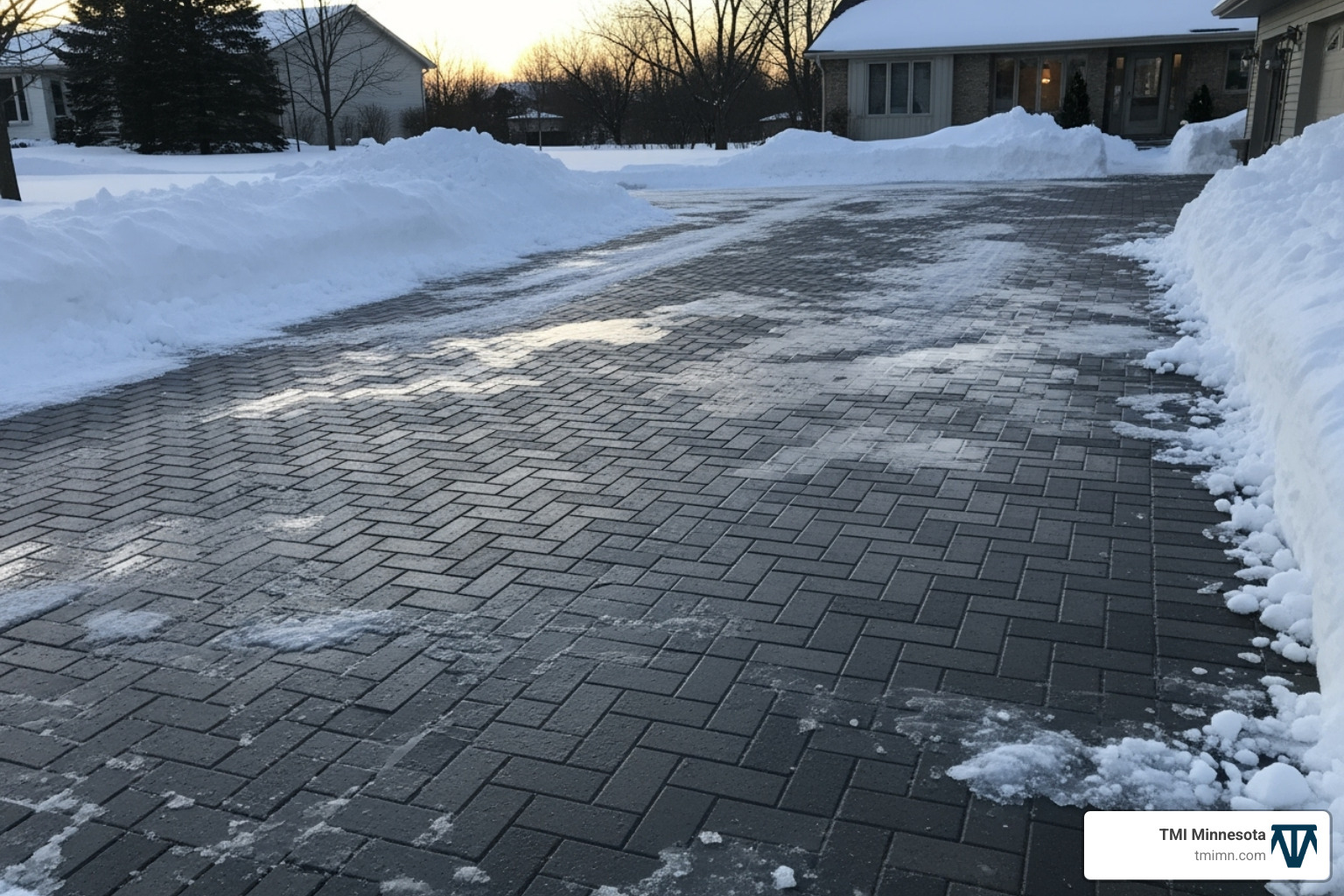
The secret is how they handle water. Traditional driveways trap water, which freezes, expands, and causes cracks. With permeable systems, water drains through the pavers into the stone base below, so there’s very little surface water to cause problems.
This design means your driveway experiences far less stress from the freeze-thaw cycle, keeping the pavers stable and crack-free. You’ll also notice reduced ice buildup because water drains away instead of pooling and freezing into dangerous patches. This leads to safer walking and driving conditions.
For ultimate winter convenience, permeable paver driveways are compatible with heated driveway systems. Heating elements installed beneath the pavers melt snow and ice on contact, providing a clear, safe driveway even in heavy snow.
How do permeable pavers perform with snow and ice?
Winter performance is where permeable paver driveways truly shine.
Faster melting occurs naturally because meltwater drains away immediately instead of pooling and refreezing into slippery patches. This reduced pooling and refreezing makes a huge difference for daily safety and convenience.
For snow removal, plastic-edged plows or snow blowers are ideal, as they won’t damage the pavers or disturb the joint material. Avoid metal-bladed plows.
It’s also important to avoid de-icing salts and regular sand, which can clog the permeable joints. Instead, use eco-friendly de-icing products designed for permeable surfaces or rely on the system’s natural ability to drain water and reduce ice.
This approach works with your driveway’s natural abilities for a smarter, more sustainable way to handle Minnesota’s climate.
For more inspiration, explore our Belgium Block Driveway Designs.
Frequently Asked Questions about Permeable Pavers
As professionals who have installed countless permeable paver driveways in the Twin Cities, we often hear the same thoughtful questions. Here are answers to the most common concerns.
Can you drive on permeable pavers?
Absolutely. Permeable paver driveways are engineered to support vehicular loads. The strength comes not just from the high-strength pavers but also from the deep, interlocking aggregate base system, which distributes weight effectively across a large area. When installed correctly, they provide a stable, durable surface for daily car and light truck traffic.
How long do permeable paver driveways last?
With proper installation and maintenance, a permeable paver driveway can last 20 to 30 years, and often much longer. They frequently outlast asphalt and are more resilient than concrete because they resist damage from freeze-thaw cycles. The robust, layered construction handles heavy loads and settling well, and individual pavers can be replaced if needed, which is a significant advantage over poured surfaces.
Do I need a professional to install a permeable driveway?
Yes, professional installation is essential for a permeable paver driveway. This is not a typical DIY project. The process involves technical requirements like soil percolation testing, deep excavation, and meticulous layering of specific aggregate materials. Proper grading and knowledge of local building codes are also critical. An experienced, certified contractor has the specialized knowledge and equipment to ensure your driveway functions correctly for decades, protecting your investment.
Conclusion
Permeable paver driveways offer a unique combination of beautiful design and genuine environmental responsibility. They are more than just a driveway option; they are a smart investment in your home and community.
By choosing a permeable system, you accept environmental stewardship. Your driveway will manage stormwater runoff, recharge local groundwater, and filter pollutants, making a real difference for our Twin Cities ecosystems.
The improved curb appeal is immediate. With countless materials, colors, and patterns, your driveway becomes a stunning feature that lifts your outdoor space. Safety and durability are also key benefits, with less ice in the winter and a robust construction that withstands our challenging climate.
As a long-term investment, permeable paver driveways provide lasting value. While the upfront cost may be higher, the extended lifespan, low maintenance, and potential for increased property value and municipal rebates make it a financially sound choice.
At TMI Minnesota, we are passionate about changing outdoor spaces with leading-edge products. We believe your home should be both beautiful and responsible, and permeable paver driveways deliver perfectly on both fronts.
For a driveway that’s both stunning and sustainable, permeable pavers are an excellent solution. Explore our driveway landscaping designs to get started!