
Why Privacy Landscaping Ideas Transform Modern Outdoor Living
Privacy landscaping ideas offer homeowners natural solutions to create secluded outdoor spaces without relying solely on traditional fencing. Here are the most effective approaches:
Top Privacy Landscaping Solutions:
• Evergreen hedges – Arborvitae, Leyland cypress for year-round screening
• Layered plantings – Tall trees, mid-height shrubs, ornamental grasses
• Fast-growing screens – Green Giant arborvitae (3-5 ft/year), bamboo
• Mixed barriers – Combine fencing with climbing vines or shrubs
• Container gardens – Moveable privacy for decks and patios
• Sound masking – Water features plus dense plantings
With more people living closer together, outdoor privacy has become essential for creating intimate spaces where families can relax and entertain. As one landscape expert notes, “A screen of mature, leafy trees can enclose outdoor space and provide a sense of seclusion in an effective and appealing way — especially helpful if your yard is overlooked by close neighbors or on a busy street.”
Privacy landscaping goes beyond blocking views. Living barriers provide wind protection, reduce noise by up to 50%, support local wildlife, and can increase property values by 7-14% compared to traditional fencing alone. They also help create distinct outdoor “rooms” that make yards feel larger and more functional.
Whether you’re dealing with nosy neighbors, busy streets, or simply want to create a peaceful retreat, the right combination of plants and structures can transform your yard into a private sanctuary that works for every season.
I’m Christopher Deanovic, Operations Leader at Task Masters, where I’ve spent years helping Minnesota homeowners create stunning outdoor environments through thoughtful landscape design and expert hardscape installation. My hands-on experience with privacy landscaping ideas has taught me how to balance functionality with natural beauty, creating screens that improve both privacy and curb appeal.
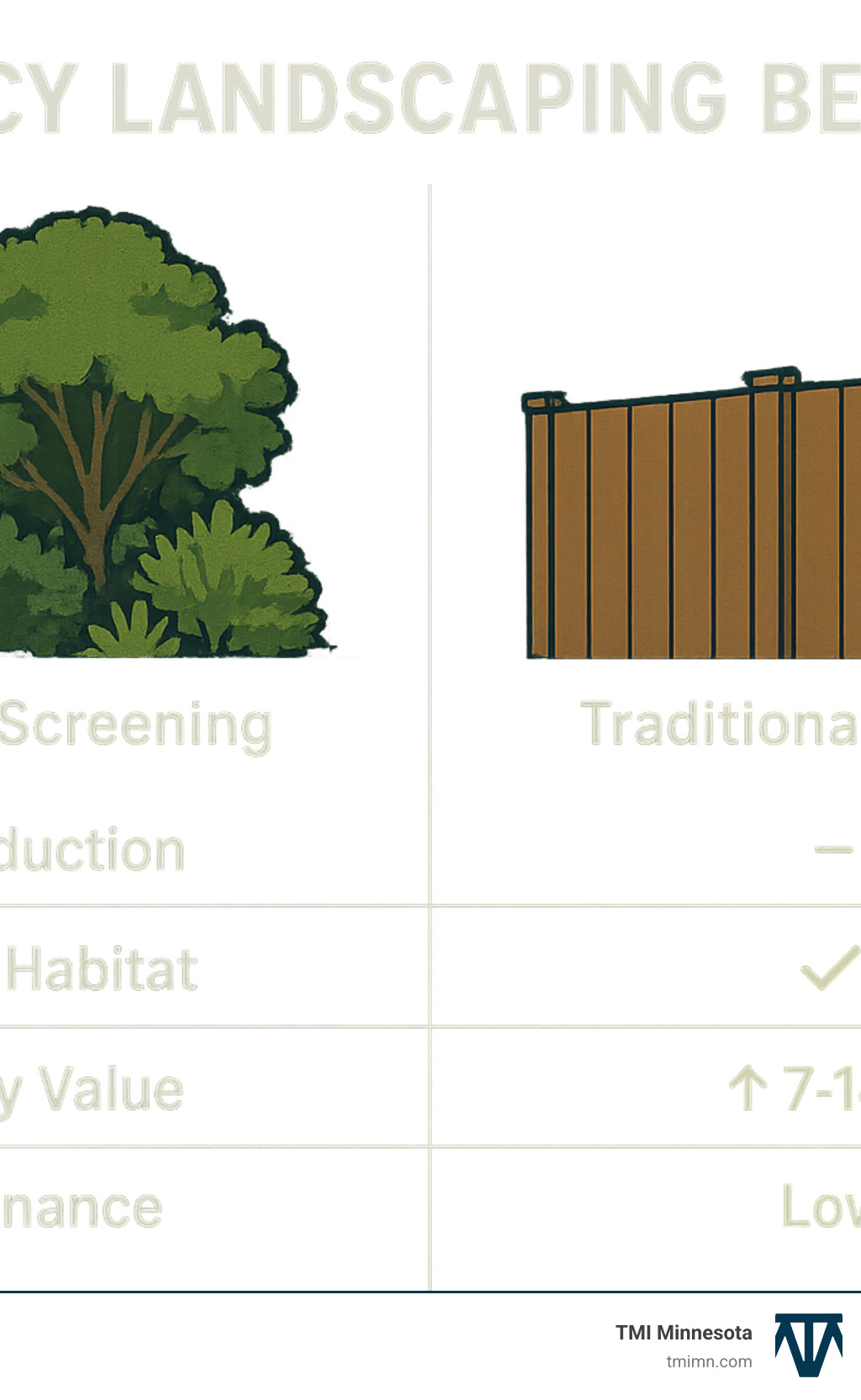
Simple guide to Privacy landscaping ideas:
– Garden border ideas
– Landscape lighting ideas
– Tree planting services
Understanding Privacy Landscaping
Privacy landscaping ideas center around using plants, structures, and thoughtful design to create natural barriers that feel welcoming rather than fortress-like. Think of it as drawing invisible boundaries around your outdoor space—you’re creating intimacy without sacrificing beauty.
The biggest privacy challenges we see in Minnesota yards are pretty universal: nosy neighbors with perfect sightlines into your backyard, busy streets that make relaxing outdoors feel impossible, and those awkward views of utility boxes or your neighbor’s garbage cans. Modern homeowners want seclusion without feeling trapped—it’s a delicate balance between enclosure and openness.
Here’s where privacy landscaping gets clever. Dense plantings don’t just block views; they create micro-climates that make your yard more comfortable. A wall of evergreens can cut wind by 50%, provide cooling shade in summer, and actually make your space feel larger by creating distinct outdoor “rooms.”
The environmental gains are impressive too. Living barriers work around the clock, absorbing carbon dioxide and producing fresh oxygen while you sleep. They provide wildlife habitat for birds and beneficial insects, creating a mini-ecosystem right in your backyard. It’s privacy with purpose.
From a practical standpoint, privacy landscaping often delivers better property value returns than traditional fencing. Well-designed screening can boost home values significantly, and here’s a bonus: most neighborhood codes that restrict fence heights don’t apply to hedges, giving you more flexibility to achieve real privacy.
When we design privacy solutions, we also think about creating wildlife corridors that connect green spaces throughout neighborhoods. It’s a win-win approach that supports local ecosystems while giving you the intimate outdoor space you’re craving. For more inspiration on creating beautiful transitions, check out our Garden Border Ideas.
Types of Privacy Barriers
Living screens are the workhorses of privacy landscaping. Evergreen hedges like arborvitae and Leyland cypress provide year-round coverage, while deciduous trees add seasonal interest with spring blooms and fall color. Fast-growing options like bamboo can fill gaps quickly, though they need management to prevent spreading.
Hardscape walls include traditional fencing, stone walls, and modern composite panels. While they deliver instant privacy, they often require permits and can feel imposing. We’ve found they work best as supporting players rather than the main act.
Combination barriers blend the best of both approaches. Picture a low stone wall topped with lattice and climbing roses, or a simple fence softened with shrubs planted in front. These layered solutions create depth and visual interest while maximizing privacy.
Soil berms are raised mounds of earth that lift your screening plants for better coverage. They’re particularly useful on flat lots where you need extra height without the expense of tall fencing. Pergolas and prefab panels offer quick structural solutions that improve with plantings over time—perfect for deck and patio areas where you need immediate screening.
Why It Matters for Modern Yards
Urban density has made outdoor privacy a luxury that’s increasingly hard to find. In many neighborhoods, homes sit closer together than ever before, making private outdoor space essential for mental wellness. The outdoor living trend has only intensified this need—when you’re investing in an outdoor kitchen or fire pit area, you want to enjoy it without feeling like you’re on display.
The wellness benefits of having a truly private outdoor retreat are real. Being able to step outside without worrying about who’s watching reduces stress and encourages families to spend more time outdoors. Kids need safe, enclosed spaces to play freely, and adults deserve spots where they can unwind completely.
Resale statistics consistently show that homes with thoughtful privacy landscaping sell faster and for higher prices. The key is creating privacy that improves rather than hides your property’s best features—privacy that feels intentional and beautiful rather than defensive.
Living vs. Structural Privacy Barriers: Pros, Cons & Comparison
Choosing between living and structural barriers for your privacy landscaping ideas comes down to understanding what matters most to you: instant results or long-term benefits, minimal maintenance or maximum environmental impact, upfront costs or ongoing care.
| Feature | Living Barriers (Hedges) | Structural Barriers (Fences) |
|---|---|---|
| Installation Cost | $15-40 per linear foot | $25-75 per linear foot |
| Privacy Timeline | 2-5 years for full screening | Immediate |
| Maintenance | Annual pruning, fertilizing | Minimal – cleaning, repairs |
| Lifespan | 50+ years with care | 15-25 years average |
| Ecological Value | High – carbon capture, habitat | None |
| Wind/Noise Reduction | Excellent – up to 50% noise reduction | Good – solid barrier only |
| HOA Restrictions | Usually height-exempt | Often limited to 6 feet |
Living barriers like evergreen hedges deliver the strongest ecological value while creating beautiful, natural screens. A mature arborvitae hedge doesn’t just block views—it captures carbon, provides bird habitat, and can reduce street noise by up to 50%. These natural screens also offer height freedom that fences can’t match. While most neighborhoods limit fences to six feet, your hedge can grow fifteen, twenty, or even thirty feet tall.
The trade-off? Patience pays off with living screens. That beautiful Emerald Green Arborvitae hedge grows less than a foot per year, meaning you’ll wait three to five years for complete privacy. Faster options like Leyland Cypress can grow two feet annually, but you’re still looking at a few seasons before your natural screen reaches its full potential.
Structural barriers shine when you need instant privacy. Install a fence on Friday, and you’re hosting a private barbecue on Saturday. Quality fences also require minimal ongoing care—no pruning schedules, no fertilizing, no worrying about pest problems or drought stress.
But structural solutions come with limitations. Most areas restrict fence height to six feet, which might not provide enough screening for liftd decks or second-story windows. Fences also make yards feel smaller and offer zero environmental benefits compared to their living counterparts.
For the best results, many homeowners combine both approaches. A low decorative fence topped with climbing vines, or structural elements mixed with strategic plantings, creates layered privacy that’s both beautiful and functional. Check out our Backyard Privacy Screens for combination ideas, and review Scientific research on wind-break hedges for detailed performance data on natural barriers.
Advantages of Living Barriers
Year-round beauty tops the list of living barrier benefits. Evergreen species like arborvitae and juniper keep your yard looking lush through Minnesota’s harsh winters, while deciduous options add spring flowers, summer shade, and spectacular fall color that changes with each season.
The environmental impact of living barriers extends far beyond their beauty. A mature privacy hedge can sequester hundreds of pounds of carbon dioxide each year while pumping fresh oxygen into your neighborhood. These green screens also create vital habitat corridors for birds, beneficial insects, and small wildlife that help maintain ecological balance in urban areas.
Height freedom gives living barriers a huge advantage over structural options. While fence ordinances typically cap privacy structures at six feet, your hedge can grow as tall as needed. This flexibility means complete privacy even from second-story neighbor windows or liftd decks—something no fence can legally provide.
The wind and noise reduction from dense plantings outperforms most fences. Living barriers don’t just block sound—they absorb it, creating quieter outdoor spaces that feel truly secluded from busy streets and neighborhood activity.
Advantages of Structural Barriers
Instant screening makes structural barriers appealing when you need privacy right now. Whether you’re installing a new pool, creating an outdoor dining area, or just tired of waving at neighbors every time you step outside, fences deliver immediate results that living barriers simply can’t match.
Low maintenance appeals to busy homeowners who want privacy without the ongoing care requirements. While hedges need annual pruning, fertilizing, and pest management, a quality fence requires only occasional cleaning and minor repairs. This predictable maintenance schedule makes budgeting easier and weekends more relaxing.
Defined style opportunities allow structural barriers to become landscape features rather than just functional elements. Modern horizontal slat designs, decorative metal panels, or natural stone walls can actually improve your yard’s visual appeal while providing privacy. These clean lines offer consistency that some homeowners prefer over the organic variability of living screens.
Security benefits give structural barriers an edge for families with safety concerns. Solid fences and walls provide better deterrence than most plantings, though strategic use of thorny shrubs like holly can boost security while maintaining natural beauty.
Privacy Landscaping Ideas for Every Yard
Creating effective privacy requires matching solutions to your specific site conditions, aesthetic preferences, and functional needs. We’ve found that the most successful privacy landscapes combine multiple approaches rather than relying on a single solution.
Evergreen rows form the backbone of most privacy designs. Species like Emerald Green Arborvitae spaced 3-4 feet apart create dense, year-round screening that improves with age. For larger properties, we often recommend Green Giant Western Arborvitae, which can reach 30 feet tall and 10 feet wide, providing substantial screening for multi-story homes.
Deciduous accents add seasonal interest to evergreen foundations. Flowering trees like serviceberry or redbud provide spring blooms, while trees with strong fall color like sugar maple or oak extend visual appeal through autumn. The key is positioning deciduous plants where their winter transparency won’t compromise privacy.
Layered planting creates the most natural and effective privacy screens. We typically design with tall evergreens in back, mid-height shrubs like viburnum or hydrangea in the middle, and ornamental grasses or perennials in front. This approach provides depth, seasonal interest, and multiple layers of screening.
Mixed materials combine the best aspects of living and structural barriers. A low stone wall topped with lattice and climbing vines, or a fence with shrubs planted in front, creates sophisticated privacy that’s both immediate and long-lasting.
Vertical gardens maximize privacy in small spaces. Trellises with climbing vines, living walls with shallow-rooted species, or tall container plantings can create effective screening without consuming much ground space.
Berm and fence combinations use raised soil mounds to lift screening plants or fences, providing better coverage while adding topographical interest to flat yards. This approach works particularly well for screening traffic noise or creating windbreaks.
Sunken rooms flip the privacy equation by lowering activity areas below grade, naturally creating intimacy and enclosure. Combined with surrounding plantings, sunken seating areas feel completely private even with minimal screening.
Water features provide auditory privacy by masking unwanted sounds. A fountain or waterfall positioned to block noise from busy streets can make your outdoor space feel remarkably secluded. For more comprehensive outdoor solutions, check our Softscaping and Hardscaping services.
Quick Privacy Landscaping Ideas with Fast-Growing Trees
When you need privacy quickly, fast-growing species can provide substantial screening within 3-5 years. Leyland Cypress tops our list for rapid growth, adding 2-3 feet per year and reaching 40-60 feet at maturity. These evergreens provide dense, year-round screening and tolerate a wide range of soil conditions.
Green Giant Arborvitae offers similar growth rates with better winter hardiness for Minnesota climates. Once established, these trees can grow 3-5 feet per year and reach 20-40 feet tall with an 8-12 foot spread. Their naturally pyramidal shape requires minimal pruning to maintain an attractive hedge line.
For unique texture and extremely rapid growth, Tricolor Willow can achieve 8-10 feet in a single season. While deciduous, their dense branching provides substantial winter screening, and the variegated foliage adds color interest during growing season.
While waiting for permanent plantings to mature, temporary panels can provide immediate privacy. Bamboo screens, fabric panels on frames, or even tall annual plants like sunflowers can bridge the gap during establishment years.
The balloon-string method mentioned in our research provides an accurate way to determine the minimum height needed for privacy screening. Simply tie a balloon to a kite string and let it float to the desired height, then measure the string length to determine your target screening height.
Layered Planting for Four-Season Interest
The most sophisticated privacy landscapes use layered planting to provide year-round interest while maintaining effective screening. We start with tall evergreens as the backbone—species like Norway Spruce or White Pine that provide substantial height and density.
Mid-height shrubs add seasonal variety and fill gaps at eye level. Viburnum species offer spring flowers, summer foliage, and often colorful fall berries. Hydrangeas provide summer blooms that persist into winter, adding structure even after leaves fall.
Ornamental grasses bring movement and texture to privacy plantings. Tall grasses like Miscanthus or Panicum can reach 6-8 feet and provide screening at the perennial level while adding winter interest with their persistent seed heads.
Perennials complete the layered approach with seasonal color and pollinator support. Plants like astilbe for shade areas or echinacea for sunny spots provide flowers while filling the lowest screening layer.
Planning bloom sequence ensures continuous color from spring through fall. Early bulbs give way to spring-flowering shrubs, followed by summer perennials, and finally fall-blooming asters and grasses. This approach makes privacy plantings an asset to your landscape design rather than just functional screening.
Privacy Landscaping Ideas for Decks & Patios
Liftd outdoor spaces present unique privacy challenges that require creative solutions. Container bamboos offer excellent screening for decks—choose clumping varieties like Bambusa multiplex to avoid invasive spreading. Large containers on casters allow you to move screening as needed for entertaining or maintenance.
Trellis vines provide vertical screening that doesn’t consume deck space. Fast-growing annual vines like morning glory or moonflower can cover a trellis in a single season, while perennial options like clematis or honeysuckle provide long-term screening with seasonal flowers.
Decorative screens offer immediate privacy with design flexibility. Modern laser-cut metal panels, traditional lattice, or custom wood screens can be integrated into deck railings or mounted on posts to create intimate seating areas.
Pergola drapes combine architectural structure with flexible privacy. Outdoor curtains or shade sails can be drawn for privacy during entertaining or opened to maintain views and airflow. This approach works particularly well for dining areas where privacy needs vary by occasion.
For comprehensive deck and patio privacy solutions, explore our Outdoor Privacy Solutions page for more detailed guidance and installation options.
Adding Sound & Light Control
Effective privacy landscaping addresses both visual and auditory privacy. Water features like fountains or waterfalls provide sound masking that can make busy streets or noisy neighbors virtually disappear. Position water features between noise sources and seating areas for maximum effectiveness.
Plant selection affects sound control—dense evergreen plantings with thick foliage provide better noise reduction than sparse or deciduous options. Layered plantings with plants of varying heights and densities create the most effective sound barriers.
Strategic lighting improves privacy by controlling what’s visible after dark. Low-voltage LED lights can illuminate pathways and seating areas while leaving screening plantings in shadow, maintaining privacy while providing necessary illumination for safety and ambiance.
The key is balancing privacy with openness—too much screening can make spaces feel claustrophobic, while too little leaves you feeling exposed. We typically recommend semi-opaque screening that provides privacy while maintaining some visual connection to the broader landscape.
Design, Plant & Maintain Your Privacy Screen
Successful privacy landscaping starts with thorough site analysis. We evaluate existing views, both desirable and undesirable, prevailing wind patterns, soil conditions, and sun exposure throughout the day. Understanding your climate zone is crucial—Minnesota’s Zone 3-5 conditions limit plant choices but offer excellent options for cold-hardy screening.
Soil preparation often determines long-term success more than plant selection. Most privacy plants prefer well-draining soil with organic matter. We typically recommend amending heavy clay soils with compost and ensuring proper drainage, especially for evergreen species that are sensitive to wet feet.
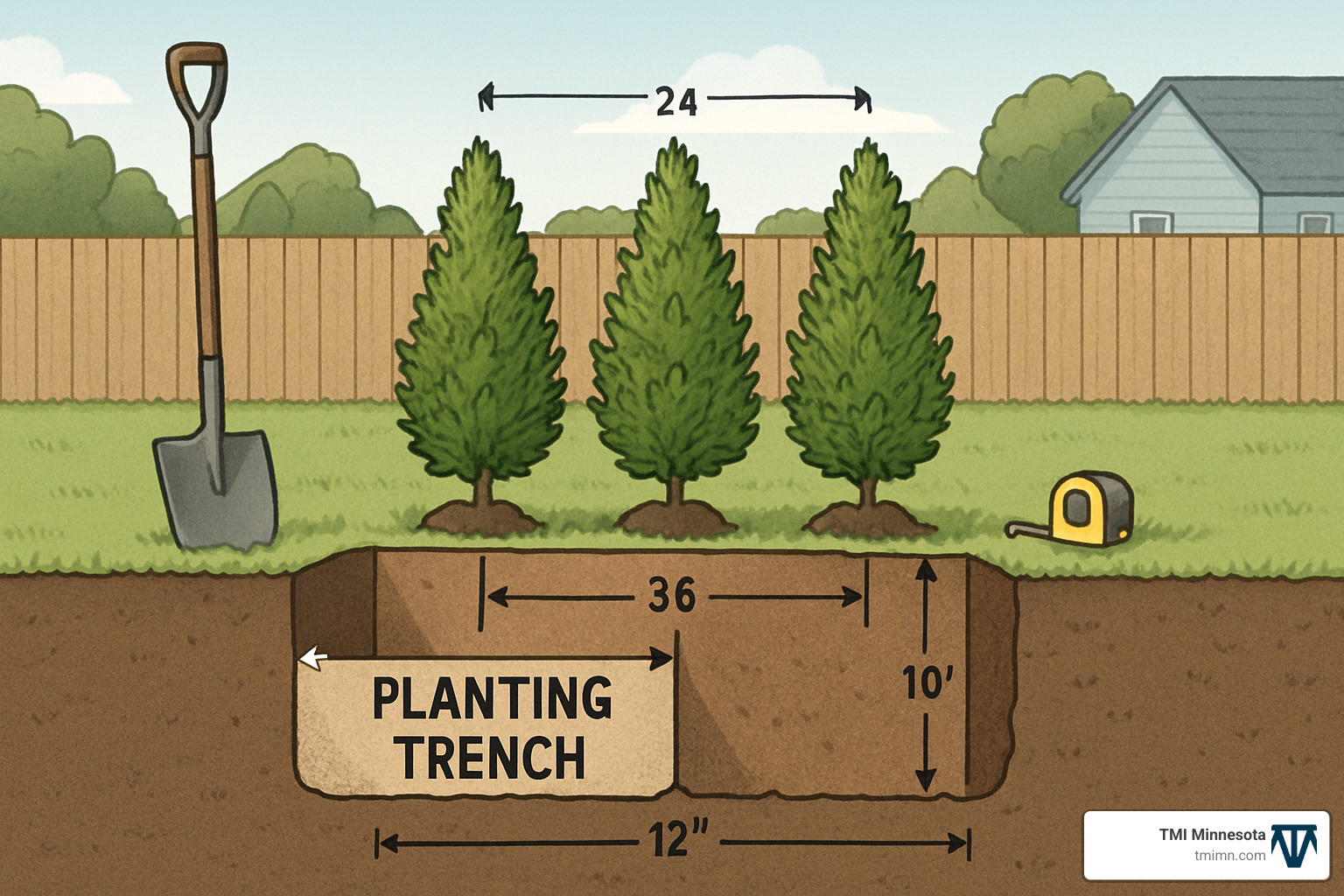
Spacing rules prevent common mistakes that can ruin privacy plantings. The general rule is to space plants based on their mature width—if a shrub will grow 4 feet wide, space centers 4 feet apart for a continuous hedge, or closer for faster fill-in. Planting too close leads to overcrowding, disease, and stressed plants that fail to provide effective screening.
The balloon-string method provides accurate height measurements for planning your privacy screen. This simple technique helps you determine exactly how tall your screening needs to be from various viewpoints around your property.
Irrigation planning is essential, especially during establishment. Most privacy hedges require deep, frequent watering during the first year, preferably using drip irrigation to encourage deep root development. We typically recommend weekly watering unless sufficient rain occurs, adjusting frequency based on soil type and weather conditions.
Pruning schedules vary by species and desired appearance. Formal hedges require regular shaping, typically 2-3 times per growing season. Informal screens need minimal pruning beyond removing dead or damaged wood. The key is starting pruning early to encourage dense branching.
Pest and disease monitoring prevents small problems from becoming major issues. Common problems include bagworms on evergreens, scale insects on various species, and fungal diseases in humid conditions. Regular inspection and early intervention keep privacy plantings healthy and attractive.
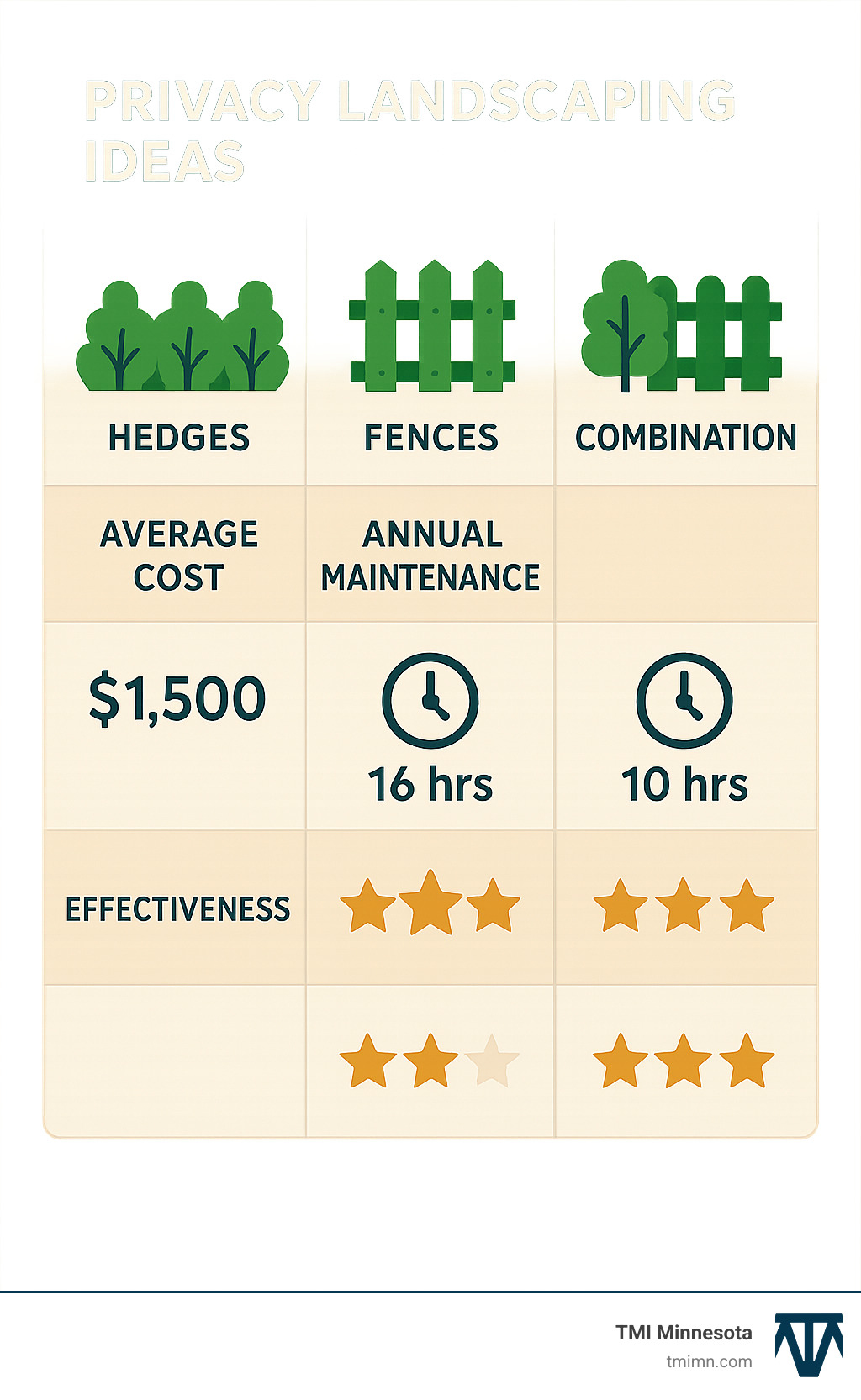
Budget planning should include both installation and ongoing maintenance costs. While living barriers cost less initially than quality fencing, they require annual care including fertilizing, pruning, and occasional replacement of failed plants.
HOA and municipal regulations vary widely, so check requirements before planting. Most areas have setback requirements from property lines and utility easements. Call 811 before digging to locate underground utilities—this free service prevents dangerous and expensive mistakes.
For detailed guidance on hedge installation, consult this comprehensive Planting a Privacy Hedge guide for professional techniques and timing recommendations.
Step-by-Step Planting & Spacing
Proper planting technique ensures your privacy screen establishes quickly and thrives long-term. Start by soaking root balls thoroughly before planting—this reduces transplant shock and encourages rapid establishment.
Dig your trench two to three times wider than the root ball and about two inches shallower than the root ball height. This wide planting area allows roots to spread easily while preventing the plant from settling too deep, which can cause root rot.
For hedge plantings, we recommend digging a continuous trench rather than individual holes. This approach ensures consistent soil preparation and makes spacing more accurate. The trench should be 2 feet wide for most privacy hedges.
Staggered rows create denser screening than single-row plantings. Plant the back row first, then offset the front row plants to fill gaps. This technique provides fuller coverage and reduces the impact if individual plants fail.
Backfill with a mixture of native soil and compost—typically two parts excavated soil to one part organic matter. Avoid heavy amendments that can create drainage problems or prevent roots from extending into surrounding soil.
Create a water-holding basin around each plant by building a small soil dam. This directs water to the root zone and prevents runoff, especially important on slopes or in sandy soils.
Apply 2-3 inches of mulch around new plantings, keeping mulch several inches away from plant trunks to prevent rot and pest problems. Organic mulches like shredded bark or wood chips conserve moisture and suppress weeds while breaking down to improve soil.
Long-Term Care & Common Mistakes
Overcrowding ranks as the most common mistake in privacy landscaping. Homeowners often plant too close together for faster screening, but this leads to competition, disease, and eventual decline. Trust the mature spacing recommendations—patience pays off with healthier, longer-lasting screens.
Topping trees destroys their natural form and creates weak, multi-stemmed growth that’s prone to storm damage. If height control is necessary, choose dwarf varieties or use proper pruning techniques that maintain natural branching patterns.
Ignoring mature size leads to plants outgrowing their intended space, requiring constant pruning or eventual removal. Research ultimate height and spread before planting, and choose species that fit your space naturally.
Skipped pruning allows privacy hedges to become thin at the base as upper branches shade lower growth. Annual light pruning maintains density from top to bottom and prevents the need for drastic renovation pruning later.
Drought stress weakens privacy plantings and makes them susceptible to pests and diseases. Maintain consistent moisture through the first growing season and during extended dry periods. Deep, infrequent watering encourages deeper root systems than frequent shallow watering.
Winter protection may be necessary for marginally hardy species or plants in exposed locations. Burlap screens can protect evergreens from drying winds, while mulch around the root zone prevents freeze-thaw damage.
Small-Space & Rental Solutions
Limited space or temporary living situations don’t preclude effective privacy landscaping. Moveable planters allow renters to take privacy investments with them when they move. Large containers on wheels can hold substantial screening plants while remaining portable.
Pleached trees offer sophisticated privacy in minimal space. This technique involves training young trees along wire or wooden frameworks to create a narrow, living fence. Hornbeam and linden work particularly well for pleaching in Minnesota climates.
Hanging baskets and vertical gardens maximize screening in tight spaces. Wall-mounted planters with trailing or climbing plants can screen windows or create privacy barriers without consuming ground space.
Shade sails provide instant overhead privacy for decks and patios. These fabric panels can be installed temporarily and removed when you move, making them ideal for rental properties.
Temporary screening using annual plants offers budget-friendly privacy that can be changed each year. Tall annuals like sunflowers, castor beans, or corn can provide substantial screening for a single growing season at minimal cost.
For comprehensive small-space solutions, explore our Backyard Privacy Solutions for more ideas and professional installation options.
Frequently Asked Questions about Privacy Landscaping Ideas
What’s the fastest way to create a privacy screen?
For immediate results, combine temporary panels with fast-growing plants. Install bamboo screens or fabric panels for instant privacy, then plant fast-growing species like Leyland Cypress or Green Giant Arborvitae that will provide permanent screening within 3-5 years.
How do hedge costs compare to fence installation?
Initial hedge costs are typically 30-50% less than quality fencing, but hedges require ongoing maintenance costs. Over 10 years, total costs are often similar, but hedges provide environmental benefits and can grow taller than fence height restrictions allow.
What’s the maintenance commitment for privacy landscaping?
Expect 2-4 hours per 100 feet of hedge annually for pruning, plus seasonal tasks like fertilizing and pest monitoring. Informal screens require less maintenance than formal hedges, while structural elements need minimal ongoing care beyond occasional cleaning.
What are the best fast-growing evergreens for privacy?
Leyland Cypress leads our recommendations for rapid evergreen screening, growing 2-3 feet annually and reaching 40-60 feet at maturity. These trees provide dense, year-round coverage and adapt to various soil conditions, making them ideal for Minnesota landscapes.
Green Giant Arborvitae offers similar growth rates with superior cold hardiness. Once established, these trees grow 3-5 feet per year and naturally maintain an attractive pyramidal shape with minimal pruning. Their mature size of 20-40 feet tall makes them perfect for most residential applications.
Norway Spruce provides excellent windbreak capabilities along with privacy screening. While slower than Leyland Cypress at 2 feet per year for the first 25 years, Norway Spruce can reach 60-80 feet tall and 25-30 feet wide, making it ideal for large properties or extreme privacy needs.
How far apart should I space hedge plants?
Spacing depends on mature plant width and desired density. For Emerald Green Arborvitae, which reaches 4 feet wide, space plants 2-3 feet apart for quick fill-in or 3-4 feet apart for natural spacing. Closer spacing provides faster coverage but may require thinning later.
Staggered double rows create the densest screening. Plant the first row at recommended spacing, then plant a second row offset behind the first. This technique works particularly well for large properties where maximum privacy is essential.
Consider growth rates when planning spacing—fast-growing species can be spaced wider initially since they’ll fill in quickly, while slow-growing plants benefit from closer spacing for earlier coverage.
Are there height limits or permits needed?
Local building codes typically restrict fence heights to 6 feet in front yards and 6-8 feet in backyards, but these restrictions rarely apply to living hedges. This gives privacy landscaping a significant advantage for achieving substantial screening height.
However, setback requirements often apply to both structures and plantings. Most municipalities require privacy barriers to be set back 3-5 feet from property lines, and utility easements may have additional restrictions.
Always call 811 before digging to locate underground utilities. This free service prevents dangerous encounters with gas, electric, or water lines and is required by law in most areas.
Check HOA covenants if applicable—some neighborhoods have specific restrictions on plant types, heights, or maintenance standards that could affect your privacy landscaping plans.

Conclusion
Privacy landscaping ideas offer homeowners the perfect blend of functionality and natural beauty, creating intimate outdoor spaces that improve both daily living and property values. Throughout this guide, we’ve explored how living barriers, structural elements, and creative combinations can address every privacy challenge while supporting local ecosystems and environmental health.
The key to successful privacy landscaping lies in balancing enclosure with openness—creating seclusion without making your yard feel cramped or isolated. Whether you choose fast-growing evergreens for quick results, layered plantings for four-season interest, or innovative container solutions for small spaces, the right approach transforms your outdoor space into a private sanctuary.
Privacy landscaping delivers benefits far beyond screening. Living barriers reduce noise pollution, improve air quality, provide wildlife habitat, and can increase property values by 7-14%. These environmental bonuses make privacy landscaping an investment in both your family’s quality of life and the broader community’s ecological health.
At TMI Minnesota, we specialize in changing outdoor spaces with unique designs that combine leading-edge hardscape and softscape solutions. Our expertise in privacy landscaping helps Twin Cities homeowners create beautiful, functional outdoor environments that provide the perfect balance of seclusion and style.
Ready to create your own private outdoor retreat? Contact our landscape design team to turn these privacy landscaping ideas into your own backyard sanctuary. Our comprehensive approach to softscape and hardscape installation ensures your privacy landscape not only meets your immediate needs but continues to improve your outdoor living experience for years to come.
Whether you’re starting from scratch or enhancing existing landscaping, TMI Minnesota’s innovative solutions lift outdoor living spaces throughout the Twin Cities. Let us help you find how the right privacy landscaping can transform your yard into the private oasis you’ve always wanted.