
Changing Your Outdoor Space
Residential landscape services can change your backyard from dull to delightful. Changing your outdoor space is not just about aesthetics—it’s a matter of functionality and boosting the value of your home. When considering a landscape makeover, there are key benefits and steps to keep in mind:
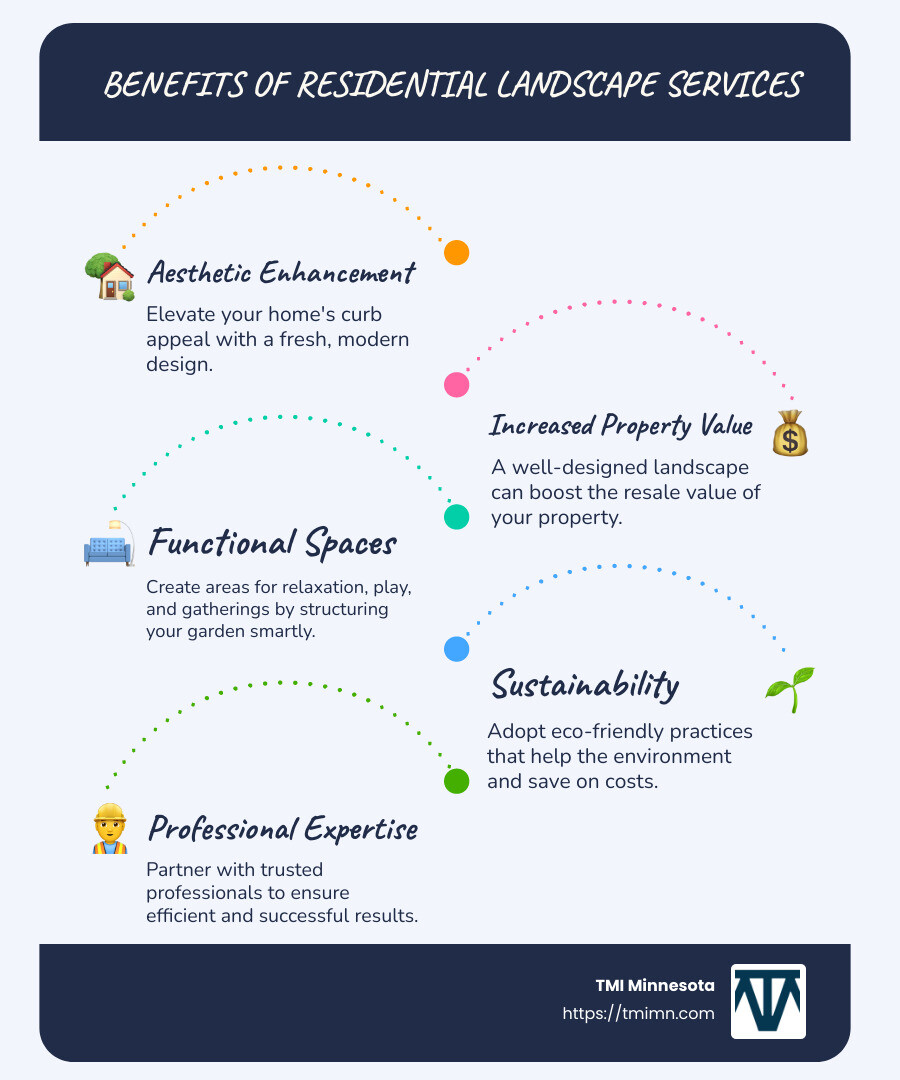
- Aesthetic Improvement: Lift your home’s curb appeal with a fresh, modern design.
- Increased Property Value: A well-designed landscape can boost the resale value of your property.
- Functional Spaces: Create areas for relaxation, play, and gatherings by structuring your garden more smartly.
- Sustainability: Adopt eco-friendly practices that help the environment and save on maintenance costs.
For homeowners like Emily, who wish to change their outdated landscape into a modern oasis, partnering with trusted professionals can ensure efficient and successful results.
As Christopher Deanovic, I’ve specialized in crafting exceptional landscaping projects that merge visual appeal with practical solutions. My expertise in residential landscape services has helped Task Masters deliver standout results in the Minnesota area, turning ordinary yards into extraordinary living spaces.
Understanding Residential Landscape Services
When it comes to residential landscape services, choosing the right plants is crucial. The plants you select should not only improve the beauty of your home but also thrive in your local climate. This ensures they remain healthy and vibrant year-round, reducing the need for constant maintenance and replacement.
Climate Considerations
Understanding your local climate is a key step in selecting the right plants. For instance, the Twin Cities experience cold winters and warm summers. Therefore, opting for hardy plants that can withstand these temperature variations is essential. Native plants are often a wise choice because they are adapted to the local environment and require less water and care.
The Role of Professional Help
Seeking professional help can make a significant difference in the success of your landscaping project. Experts like those at TMI Minnesota can provide valuable insights into plant selection, design, and maintenance custom to your specific needs. They take the time to understand your vision and the unique challenges of your property, offering solutions that blend aesthetics with functionality.

Professionals also stay updated on the latest trends and technologies in landscaping, such as sustainable practices and innovative design techniques. This ensures your outdoor space not only looks good but also supports environmental health.
Case Study: Emily’s Garden Change
Take the story of Emily, a homeowner in Minnesota who wanted to revamp her backyard. By partnering with experienced landscapers, she was able to select plants that thrived in her climate while achieving the lush, vibrant look she desired. The professionals provided guidance on plant placement, irrigation, and maintenance, turning her vision into reality.
In summary, understanding the importance of climate and plant selection, coupled with professional guidance, can transform your outdoor space into a beautiful and sustainable haven.
Next, we’ll dig into the key elements of a successful landscape design, focusing on space understanding, avoiding overdevelopment, and eco-friendly practices.
Key Elements of a Successful Landscape Design
Creating a successful landscape design involves more than just planting a few trees and flowers. It requires a thoughtful approach to understanding your space, avoiding overdevelopment, and embracing eco-friendly practices.
Space Understanding
Before diving into any landscape project, understand the space you’re working with. This means taking note of the size, shape, and unique features of your yard. A well-planned layout can maximize the use of available space and ensure that every element serves a purpose.
Evaluate Sunlight and Shade: Identify which areas receive full sun, partial shade, or full shade. This will guide your plant selection and placement.
Consider Accessibility: Ensure paths and walkways are accessible and safe for everyone, including those with mobility challenges.
Plan for Functionality: Decide how you want to use the space. Is it for entertaining, relaxation, or play? This will influence your design choices.
Avoiding Overdevelopment
Overdevelopment can lead to a cluttered and unmanageable yard. It’s important to strike a balance between hardscape (non-living elements like patios and walkways) and softscape (plants and trees).
Maintain Open Spaces: Leave some areas open for visual and physical relief. This can make smaller yards feel more expansive.
Prioritize Simplicity: Sometimes less is more. A few well-chosen elements can have a greater impact than a crowded design.
Use Multi-Functional Elements: Consider features that serve multiple purposes, like retaining walls that also offer seating.
Eco-Friendly Practices
Incorporating eco-friendly practices into your landscape design not only benefits the environment but can also reduce maintenance and costs.
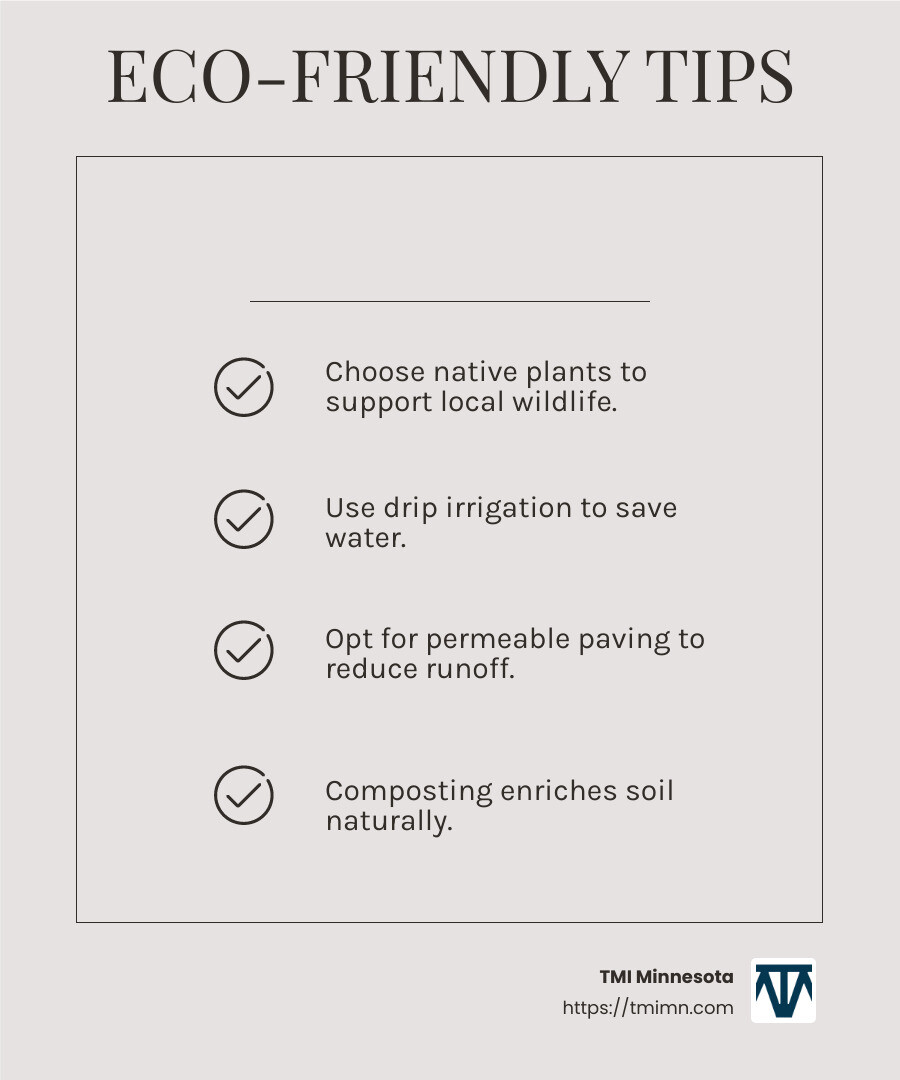
Choose Native Plants: Native plants are adapted to the local climate and soil, requiring less water and care. They also support local wildlife.
Implement Water-Saving Techniques: Use drip irrigation systems and rain barrels to conserve water.
Opt for Permeable Materials: Use permeable paving for driveways and walkways to reduce runoff and improve water absorption.
Incorporate Composting: Create a compost area to recycle garden waste and enrich your soil naturally.
By understanding your space, avoiding overdevelopment, and embracing eco-friendly practices, you can create a landscape design that is both beautiful and sustainable. This approach not only improves the aesthetic appeal of your home but also contributes positively to the environment.
Next, we’ll explore the differences between hardscape and softscape installations in residential landscape services.
Residential Landscape Services: Hardscape and Softscape
When it comes to residential landscape services, understanding the difference between hardscape and softscape installations can transform your outdoor area from ordinary to extraordinary.
Hardscape Installations
Hardscape refers to the non-living elements of a landscape. These are the structures and surfaces that provide form and function.
Patios and Decks: These are perfect for creating outdoor living spaces where you can relax or entertain guests. Patios made from stone or concrete offer durability, while decks provide a more natural look with wood.
Walkways and Pathways: These guide movement through your yard. Materials like brick, stone, or gravel can complement the overall design while providing safe and accessible routes.
Retaining Walls: Not only do they prevent soil erosion, but they can also create terraces for planting or seating areas.
Water Features: Ponds, fountains, and waterfalls can add a soothing element to your yard, attracting wildlife and providing a focal point.
Hardscape installations are all about creating structure and defining spaces. They require careful planning to ensure they fit seamlessly with the natural elements of your yard.
Softscape Installations
Softscape, on the other hand, involves the living elements of your landscape. These are the plants and organic materials that bring life and color to your outdoor space.
Trees and Shrubs: These provide shade, privacy, and habitat for wildlife. Choosing native species can improve the ecosystem and reduce maintenance.
Flowers and Groundcovers: Use these to add pops of color and texture. Seasonal flowers can offer year-round interest, while groundcovers help prevent erosion.
Lawns and Grasses: A well-maintained lawn can serve as a versatile area for play and relaxation. Consider drought-resistant grasses to conserve water.
Garden Beds: Raised or in-ground beds are ideal for growing vegetables, herbs, or ornamental plants.
Softscape installations require a keen understanding of your local climate and soil conditions. This ensures that your plants thrive and complement the hardscape elements.
Balancing Hardscape and Softscape
Creating a balanced landscape design involves harmonizing both hardscape and softscape elements. This balance ensures functionality, beauty, and sustainability.
Blend Structures with Nature: Use plants to soften the edges of hardscape elements and create a more natural look.
Plan for Growth: Consider the mature size of plants when placing them near hardscape elements to avoid future crowding.
Seasonal Interest: Incorporate a mix of evergreens and deciduous plants for year-round appeal.
By thoughtfully integrating hardscape and softscape elements, you can create an outdoor space that is both practical and visually appealing. This approach not only improves your home’s value but also provides a personal oasis for you and your family.
Next, we’ll discuss how to choose the right residential landscape service provider to bring your vision to life.
How to Choose the Right Residential Landscape Service Provider
Choosing the right residential landscape service provider is crucial for changing your outdoor space into a lush haven. Here’s how you can make the best choice:
Professional Help
A professional landscape service provider brings expertise and experience to your project. Look for providers who:
- Understand Your Vision: They should listen to your ideas and offer suggestions that improve your plan.
- Have a Proven Track Record: Experience matters. Providers with years of service can handle complex projects with ease.
- Are Licensed and Insured: This protects you from liabilities and ensures quality work.
Service Reviews
Before hiring, check reviews to gauge the provider’s reputation. Here’s how:
- Online Reviews: Websites like Yelp and Google offer insights into customer satisfaction. Look for consistent positive feedback about quality and reliability.
- Testimonials: Ask the provider for references or testimonials. Speaking directly with past clients can give you a clearer picture of what to expect.
- Portfolio: Review their previous work. A diverse portfolio showcases their ability to manage different styles and scales.
Affordable Services
Balancing cost with quality is key. Consider these tips:
- Get Multiple Quotes: Obtain estimates from several providers to compare prices and services offered.
- Understand Pricing: Make sure the quote includes all aspects of the project, from materials to labor.
- Look for Value: The cheapest option isn’t always the best. Focus on the value of services provided and the quality of materials used.
By following these steps, you can confidently select a landscape service provider that aligns with your needs and budget. Up next, we’ll answer some frequently asked questions about residential landscape services to further assist you in making informed decisions.
Frequently Asked Questions about Residential Landscape Services
What are the benefits of residential landscape services?
Residential landscape services offer many benefits that go beyond just making your yard look nice. Here are some key advantages:
- Increased Property Value: A well-designed landscape can boost your home’s value by up to 15%. This makes it a smart investment for the future.
- Improved Curb Appeal: First impressions matter. Beautiful landscapes make your home more inviting and can impress visitors or potential buyers.
- Environmental Benefits: Proper landscaping can reduce soil erosion, improve air quality, and provide a habitat for wildlife.
These services also save you time and effort, allowing you to enjoy your outdoor space without the hassle of maintaining it yourself.
How do I choose the right plants for my climate?
Selecting the right plants is crucial for a thriving landscape. Here’s how to make the best choices:
- Know Your Zone: Check the USDA Plant Hardiness Zone Map to understand your climate zone. This helps in selecting plants that can survive local weather conditions.
- Consider Native Plants: Native plants are adapted to the local climate and soil, making them easier to care for and more resilient to pests.
- Consult Professionals: Experts can guide you in choosing plants that match your landscape design and maintenance preferences. They can also suggest drought-resistant or low-maintenance options if needed.
What should I consider when planning a landscape design?
Planning a landscape design involves several considerations to ensure success:
- Understand Your Space: Assess the size and shape of your yard. Think about how you want to use the space—whether for relaxation, entertainment, or gardening.
- Balance Hardscape and Softscape: Hardscape elements like paths and patios provide structure, while softscape elements like plants add beauty and life.
- Sustainability: Incorporate eco-friendly practices such as rain gardens or composting to minimize environmental impact.
By considering these factors, you can create a landscape that is both beautiful and functional, enhancing your home’s overall appeal. Now, let’s explore how TMI Minnesota can help you bring your vision to life.
Conclusion
At TMI Minnesota, we believe that your outdoor space should be a reflection of your style and needs. Our unique designs and commitment to using leading-edge products set us apart in the landscaping industry. We specialize in changing ordinary yards into extraordinary living spaces that you can enjoy year-round.
Our approach is simple. We start by understanding your vision and the specific challenges your property presents. Whether you’re interested in hardscape installations like patios and walkways, or softscape elements such as lush gardens and plantings, our team has the expertise to bring your ideas to life.
Why choose TMI Minnesota?
- Innovative Solutions: We use the latest products and techniques to ensure your landscape is not only beautiful but also sustainable and easy to maintain.
- Custom Designs: Every project is customized to meet your unique needs and preferences. We work closely with you to ensure the final result exceeds your expectations.
- Local Expertise: With locations in the Twin Cities, we understand the local climate and environmental factors that can impact your landscape. This knowledge allows us to select the best plants and materials for your area.
Our mission is to make your outdoor space a place where you can relax, entertain, and connect with nature. Let us be your partner in creating a landscape that improves your property and enriches your life.
Ready to transform your yard? Contact us today to get started on your journey from lawn to lush.