
Why Your Rooftop Deserves More Than Just a View
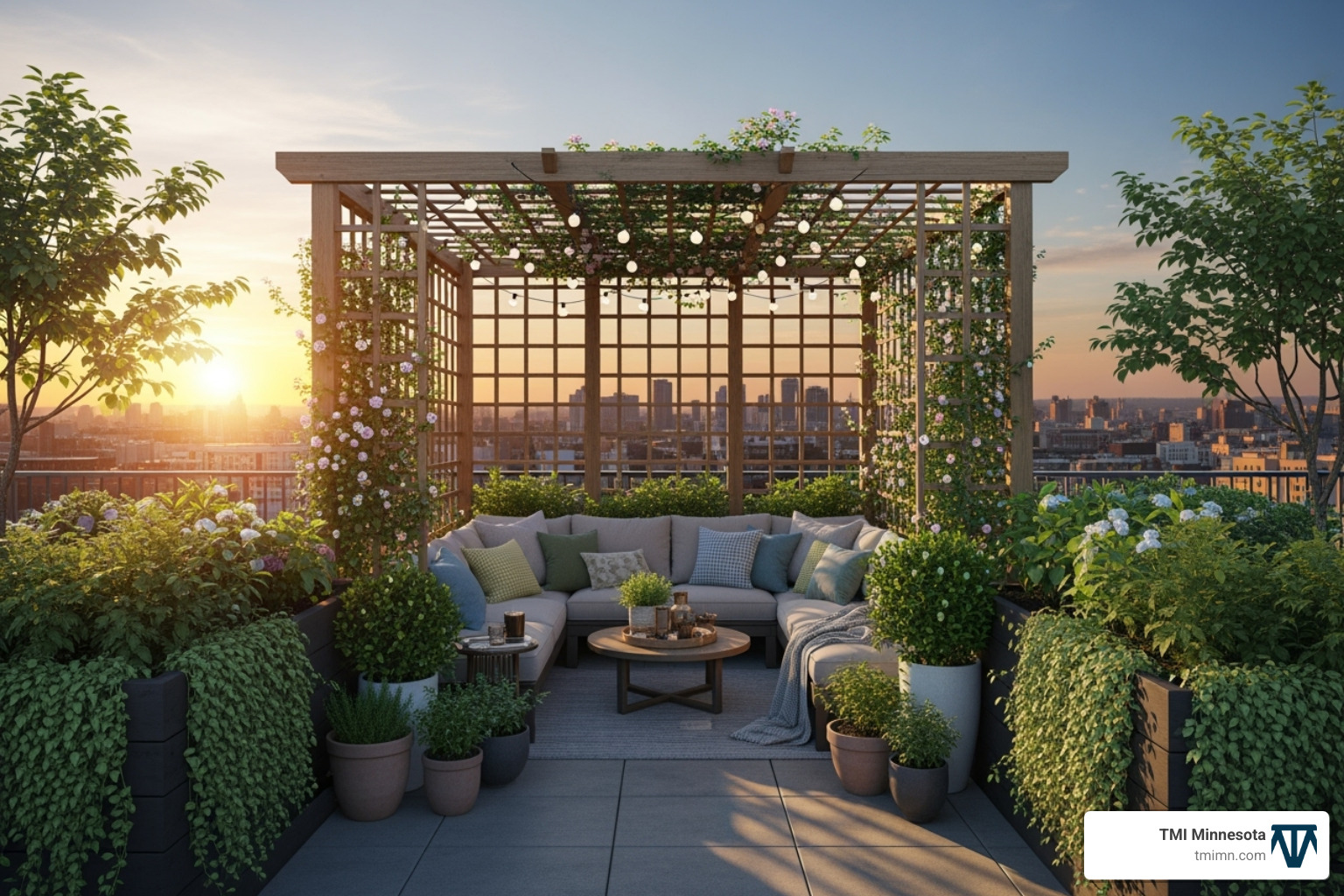
A rooftop trellis transforms unused overhead space into a thriving vertical garden, providing shade, privacy, and visual interest. These structures range from simple wall-mounted frames to elaborate pergola-integrated systems and are essential elements in modern rooftop design.
What a Rooftop Trellis Offers:
- Privacy and Shade – Creates intimate spaces and reduces heat exposure
- Plant Support – Enables vertical gardening for vines, flowers, and vegetables
- Aesthetic Improvement – Adds architectural interest and softens urban views
- Property Value – Green roofs with trellises can increase property value by 10-20%
- Energy Savings – Rooftop gardens can reduce building energy consumption by up to 30%
The numbers are compelling: the global rooftop garden market is projected to reach $3.5 billion by 2032, a 12.1% annual growth rate. This reflects a 15% increase in demand for outdoor living spaces that blend function with beauty.
However, installing a rooftop trellis requires careful planning around weight limits, wind loads, and roof membrane protection. With the right approach, you can create a stunning vertical garden that’s both safe and sustainable.
I’m Christopher Deanovic, Operations Leader at Task Masters. We’ve designed and built many outdoor structures across Minnesota, balancing aesthetic vision with structural integrity. I’ve seen how a well-designed rooftop trellis transforms an underused space into an urban oasis.

Rooftop trellis terms simplified:
Why a Rooftop Trellis is Your Urban Oasis Upgrade
Imagine stepping onto your rooftop not to bare concrete, but to flowering vines, dappled shade, and a sense of escape. That’s the power of a rooftop trellis.
These structures are game-changers. A well-placed rooftop trellis softens urban architecture, turning an exposed platform into a private retreat. The practical benefits are just as compelling. A trellis creates natural privacy screens, generates shade on hot Minnesota afternoons, and even reduces wind, making your rooftop more comfortable.
Environmentally, a trellis becomes a mini ecosystem, creating vital pollinator habitats for bees and butterflies. Vertical gardening maximizes every square foot, letting you grow greenery, flowers, or vegetables in limited space.
Demand for outdoor living spaces has jumped 15% in recent years, with rooftop features leading the charge. For more ideas on making the most of your outdoor areas, check out our Decorative Outdoor Structures and browse our Outdoor Living Trends Guide.
Key Types of Rooftop Trellis Structures
Choosing the right type of trellis for your rooftop makes all the difference. Here are your main options:
Freestanding trellises are flexible, self-supporting structures, often anchored by weighted planters. They can be moved to define different zones without permanent installation.
Wall-mounted trellises attach to a building’s wall or parapet, saving space and turning a blank surface into a vertical garden. They are ideal for smaller rooftops but require proper anchoring.
Pergola-integrated trellises are built into a larger rooftop pergola for comprehensive coverage. The pergola provides support while trellis panels add privacy and growing space, creating a true outdoor room.
Planter-based trellises are a clever solution, inserting directly into large containers. The weight of the soil provides stability without roof penetrations, making them safe and rearrangeable.
What should you grow? The best climbing plants for rooftops handle sun and wind. Consider Clematis for stunning flowers, Wisteria for cascading blooms (on a strong structure), and climbing roses for classic beauty. Passionflower adds an exotic touch, while hardy kiwi provides dense foliage and fruit. For fast growth, choose trumpet vine or morning glory. Edible options include pole beans and sweet peas.
Maximizing Space and Functionality
A rooftop trellis fundamentally changes how your rooftop functions. Use your trellis as a living room divider to create distinct outdoor “rooms” for dining or relaxing. These defined spaces make your rooftop feel intentional and inviting.
A trellis with climbing plants provides privacy from neighbors without blocking airflow. Slat walls are particularly effective, offering immediate screening while vines grow in. A tall, planted trellis can also screen unsightly views like HVAC units, redirecting focus to your beautiful garden.
An unexpected benefit is wind reduction. On exposed rooftops, trellises break up wind patterns, making the space more comfortable and protecting your plants. The result is a rooftop that feels larger and more functional. For more inspiration, our Custom Outdoor Spaces Ultimate Guide walks you through the possibilities.
Essential Guide to Rooftop Trellis Materials
Choosing the right material for a rooftop trellis is critical. It’s not just about looks; you must consider weight, durability, weather resistance, and maintenance, as rooftop installations have unique constraints.
Key considerations include weight, durability, weather resistance, and maintenance. These factors guide our material decisions at TMI Minnesota, based on our experience with liftd structures.
| Material Type | Weight | Cost | Maintenance | Lifespan | Aesthetic |
|---|---|---|---|---|---|
| Wood (Cedar, Ipe) | Moderate | Moderate-High | High (sealing, staining) | 15-25+ yrs | Natural, classic, warm |
| Metal (Aluminum, Steel) | Light-Moderate | Moderate-High | Low (powder-coated) | 20-50+ yrs | Modern, sleek, industrial, neat |
| Composites/Vinyl | Light | Moderate | Very Low | 20-30+ yrs | Uniform, contemporary, wide color range |
The table above gives you a quick comparison, but let’s dig deeper into what each material brings to your rooftop sanctuary.
Lightweight and Durable Metals
For a modern aesthetic, metal is a great choice. We often use aluminum and powder-coated steel for their suitability in rooftop installations. Aluminum is remarkably light—a critical advantage on a rooftop—and rust-proof. Powder-coated steel is stronger, ideal for larger structures or high-wind areas, with a coating that resists rust, chipping, and sun damage. Wrought iron offers a traditional look but is heavier and requires more maintenance. The real win with metal is its low-maintenance longevity. Our Aluminum Pergolas showcase how versatile these materials can be.
Natural and Classic Wood
Wood offers a timeless, natural warmth that synthetic materials can’t replicate. A wooden rooftop trellis brings organic beauty to a stark urban environment. We recommend Western Red Cedar for its natural resistance to rot and insects. It’s relatively lightweight and can be left to age to a silver-gray or sealed to maintain its warm tone. For maximum durability, premium hardwoods like Ipe and Teak are excellent choices. Though heavier and more expensive, they are incredibly long-lasting. However, wood requires regular maintenance. As one experienced builder wisely noted, “If you’re going to be using timber then always treat it with the best wood preservative.” This is essential whether you’re growing tomatoes on a trellis or training roses.
Low-Maintenance Composites and Vinyl
If low maintenance is your priority, consider composite and vinyl materials. PVC and vinyl trellises are lightweight, immune to rot and rust, and UV-resistant. They come in various colors, are splinter-free, and require virtually no maintenance. Composite materials blend wood fibers and recycled plastics to mimic real wood without the upkeep. They resist warping, splintering, and moisture damage, making them ideal for Minnesota’s climate. The maintenance routine is simple: wash with soap and water when dirty. That’s it. At TMI Minnesota, we help you weigh these trade-offs to ensure your rooftop trellis fits your lifestyle.
Safe Installation: Structural Integrity and Roof Protection
Safe installation is crucial for a rooftop trellis. Working several stories up leaves no room for guesswork, so every project must begin by confirming the roof can safely support the new structure. Rooftops face unique challenges: powerful wind loads, and significant weight from the structure, soil, mature plants, and snow. Protecting the roof’s waterproof membrane is paramount to prevent costly leaks.
DIY projects can fail when these factors are ignored, leading to structural strain or leaks. Professional consultation is essential for any significant rooftop installation to ensure safety and longevity. Before installation, we assess the building’s load-bearing capacity, considering the structure, mature plants, soil, and potential snow load. We also calculate wind exposure for the specific height and location. This attention to detail ensures your rooftop trellis is a lasting feature. Our experience with Landscape Design has taught us that the best outdoor spaces are built on solid foundations.
Anchoring Without Damaging the Roof
Our guiding principle is simple: avoid penetrating the roof membrane. Holes create potential leaks. The good news is there are clever ways to secure a rooftop trellis without drilling.
The most effective non-penetrating method is a planter-based system. Large, heavy planters act as anchors for the trellis structure, creating a stable system without drilling into the roof. Sub-Irrigated Planters (SIPs) are ideal for this, as their built-in water reservoirs add ballast weight. This approach is proven to withstand Midwest windstorms.

Freestanding designs are another non-penetrating option, relying on wide bases and their own weight to stay put. The key is ensuring enough weight and a broad footprint to resist wind.
Permits and Regulations
Permits are a necessary part of the process. For most substantial rooftop trellis projects, you will likely need one, and it’s worth the effort to ensure compliance. Local building codes, HOA rules, and zoning ordinances exist to ensure safety. These regulations cover height, setbacks, materials, and load standards. It’s crucial to check what applies to your property before you begin.
For larger projects, a professional assessment from an architect or structural engineer may be required to provide the necessary drawings and calculations. This process adds time and cost upfront, but it provides peace of mind and prevents future issues like fines or structural failure.
Creative Designs and Long-Term Care
Your rooftop trellis should be more than ordinary; it should be a special feature that defines your outdoor space. The right design can transform a rooftop into a luxury retreat. Think beyond basic lattice. A custom trellis can flow into a bar or fireplace, creating a true outdoor living room. Even small details have a big impact. Downspout trellises can turn plumbing into a feature, while integrated lighting extends evening usability.
The beauty of working with Hardscape and Softscape together is that we can create designs where structural elements and living plants feel seamlessly integrated.

Unique Rooftop Trellis Design Ideas
Creative solutions begin with your vision. Here are a few ideas to inspire you:
- Undulating Planes: Instead of a flat structure, carefully constructed sections that rise and fall create dramatic movement and mimic natural landscapes.
- Slat Walls: These offer a contemporary look and provide privacy. They work beautifully as trellis supports and can screen integrated storage areas.
- Architectural Focal Points: Turn your trellis into sculpture with geometric metal patterns, intricate ironwork to frame a view, or a dramatic archway.
- Asian-Inspired Designs: Use clean lines, natural wood tones, and minimalist aesthetics to create a serene, contemplative atmosphere.
- Integrated Features: Make your trellis multifunctional with built-in seating or hidden storage. For more innovative concepts, see our Modern Outdoor Designs section.
Maintenance for Your Rooftop Trellis
Every rooftop trellis needs some attention to stay beautiful and functional, though the amount of care depends on the material. Regular care protects your investment.
- Wood Trellises: Inspect annually for rot or damage, and reseal or restain every 2-3 years to protect from moisture and UV rays. Using a quality wood preservative is key.
- Metal Trellises: For aluminum or powder-coated steel, an annual checkup is sufficient. Look for loose fasteners and touch up any scratches on steel to prevent rust.
- Composite and Vinyl Trellises: These are the easiest to maintain. A simple cleaning with soap and water is usually all that’s needed.
Beyond the structure, care for the plants. Regular pruning keeps vines healthy and prevents them from becoming too heavy. Removing dead leaves reduces pests and disease. Finally, check all fasteners and stability points annually, as rooftops face significant wind stress. This ensures your trellis remains safe and secure.
Conclusion
A rooftop trellis does more than just add a structure; it changes your entire urban living experience. It’s a way to bring nature back into city life, representing more than just climbing vines and architectural interest.
We’ve covered the practicalities: selecting weather-resistant materials, using safe anchoring systems, and choosing between durable aluminum, warm wood, or low-maintenance composites. The real benefit, however, is the long-term value and lifestyle improvement. A rooftop trellis creates a space for quiet mornings and long evenings, turning the city skyline into a personal backdrop.
The numbers back this up, with rising property values (10-20%), lower energy costs (up to 30%), and a rapidly growing market. People are recognizing the potential of their unused rooftops.
At TMI Minnesota, we specialize in changing outdoor spaces. We see your rooftop’s potential and combine hardscape and softscape expertise to guide every decision, from structural assessments to plant selection. We use leading-edge products to create your ideal sky-high sanctuary.
By thoughtfully selecting the right design, materials, and installation method, a rooftop trellis can become the defining feature of your sky-high sanctuary. It’s about creating something that serves you for decades and makes you genuinely happy to be home.
Your rooftop is waiting. Start designing your custom Struxure pergola system today and find how a rooftop trellis can transform your urban space into the retreat you’ve always imagined.