
Why Safe Playground Surfaces Matter More Than Ever
Safe turf for kids has become a top priority for parents creating backyard play spaces. With over 200,000 children aged 14 and younger receiving emergency room treatment for playground-related injuries each year, choosing the right surface can make all the difference.
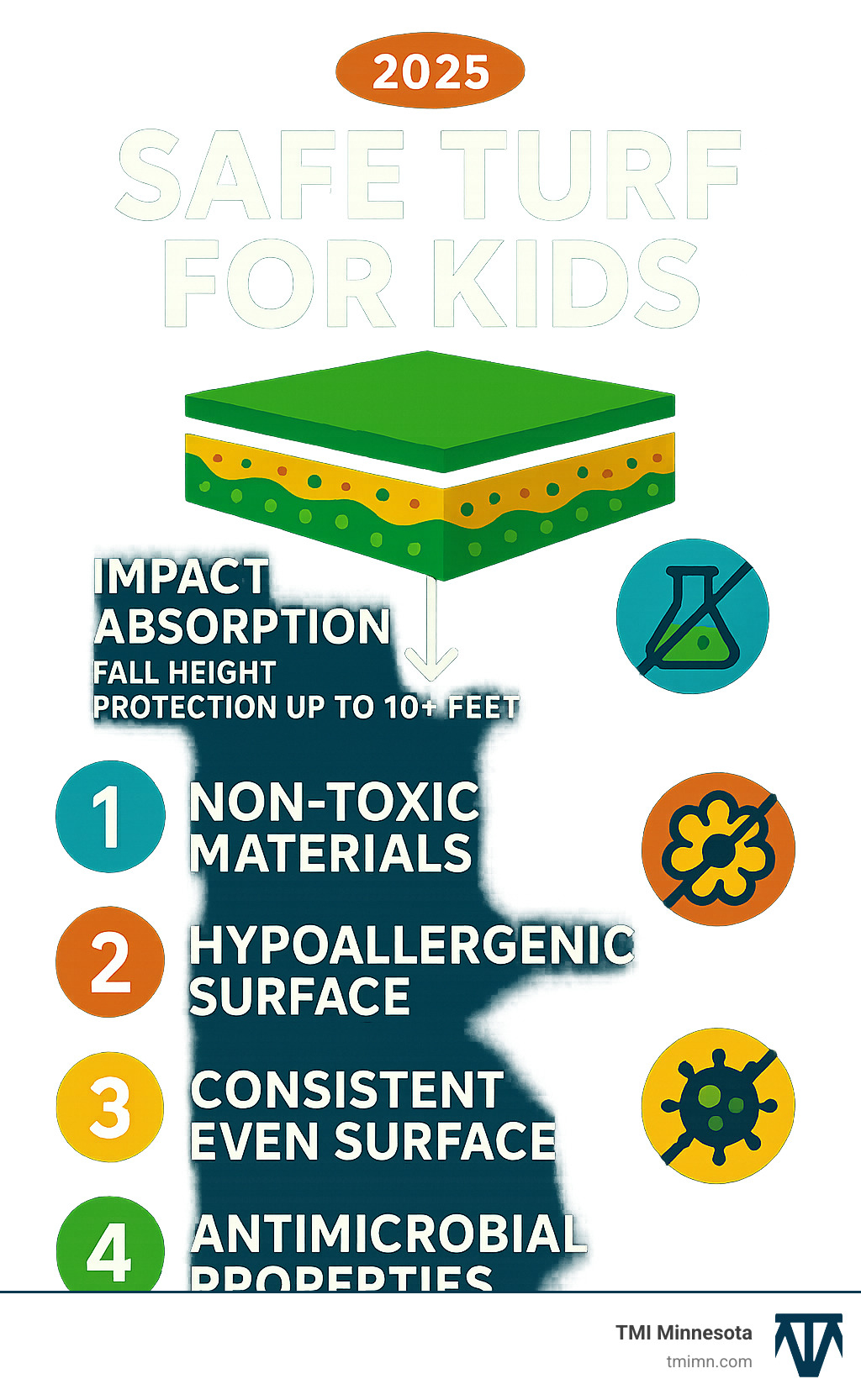
Here’s what makes turf genuinely safe for children:
- Impact absorption – Quality artificial turf with proper padding protects against falls up to 10+ feet
- Non-toxic materials – Lead-free, PFAS-free construction eliminates chemical exposure risks
- Hypoallergenic properties – No pollen, pesticides, or fertilizers that trigger allergies
- Consistent surface – Eliminates trip hazards from holes, uneven spots, or hidden objects
- Easy maintenance – Simple cleaning prevents bacteria buildup and pest issues
Modern artificial turf has evolved far beyond the hot, abrasive surfaces of the past. Today’s playground-grade products feature soft polyethylene fibers, antimicrobial protection, and cooling technologies that keep surfaces comfortable for barefoot play.
As experts in designing family-friendly outdoor spaces, we’ve seen how choosing the right safe turf for kids transforms backyards into worry-free play zones. Quality materials and proper installation create surfaces that protect children while giving parents peace of mind.
What Makes Artificial Turf a Safe Play Surface?
Creating a safe play environment starts with the ground itself. Artificial turf is a leading solution, offering safety features that natural grass and other surfaces can’t match. At its core, safe turf for kids is engineered for impact absorption, consistency, and cleanliness. Unlike hard or uneven surfaces, quality artificial turf provides a soft, even cushion. This design is crucial for preventing injuries from slips and falls during energetic play.
Key safety features of playground-grade artificial grass mitigate the risks of active play. These include:
- Superior Fall Protection: This is arguably the most critical safety feature, ensuring that falls from play equipment are cushioned effectively.
- Non-Abrasive Surface: Modern turf uses soft, realistic fibers that are gentle on skin, reducing the risk of “turf burns” or skin irritation.
- Consistent and Even Surface: Artificial turf eliminates uneven patches, holes, or hidden objects like rocks and splinters that can cause trips and falls. This consistent surface is particularly beneficial for children of all abilities, including those using wheelchairs or walkers, as it often meets ADA standards for smooth transitions.
- Improved Hygiene and Cleanliness: With proper drainage and antimicrobial properties, artificial turf provides a much cleaner environment than traditional options.
- Pest and Allergen-Free: It doesn’t attract common lawn pests and eliminates pollen, making it a haven for children with allergies.
We believe in creating Creative Outdoor Play Spaces that are as safe as they are fun, and artificial turf is a cornerstone of this philosophy.
Superior Fall Protection
The primary concern for any playground surface is its ability to protect children from falls. Here, artificial turf truly shines, especially when combined with specialized underlayment systems. Leading artificial turf systems can protect children from falls as high as 10 feet, meeting rigorous IPEMA standards and conforming to ASTM F1292. This is achieved through sophisticated impact absorption systems.
These systems typically involve:
- Padded Underlayment: Below the turf, foam pads are installed to provide critical cushioning. These pads absorb the shock of a fall, significantly reducing the force of impact on a child’s body. Advanced systems can provide fall height protection up to 16 feet when combined with foam pads and other materials.
- Fall Height Ratings: Artificial turf systems are tested for their critical fall height—the maximum height from which a fall is unlikely to cause a life-threatening head injury. This is measured using metrics like Head Injury Criterion (HIC) and GMax scores, with top-tier systems boasting excellent ratings that exceed recommendations.
- Reduced Injuries: The goal of these advanced systems is simple: fewer scrapes, fewer bruises, and a dramatically reduced risk of more serious injuries like concussions or broken bones. The soft, cushioned layers allow children to play freely, taking healthy risks, knowing they have a forgiving landing.
When designing Backyard Playground Ideas, we always prioritize these advanced fall protection features to ensure peace of mind for parents and endless safe fun for children.
A Cleaner, More Hygienic Environment
An often-overlooked benefit of artificial turf is its contribution to a cleaner, more hygienic play area. Unlike natural grass with its mud, grass stains, and insects, artificial turf eliminates these concerns and creates a pristine play space.
Here’s how it contributes to a cleaner environment:
- No Mud, No Grass Stains: Because artificial turf has excellent drainage, water quickly passes through, preventing muddy puddles and keeping clothes clean. This means children can play immediately after rain, without tracking dirt and grime indoors.
- Superior Drainage: High-quality turf features permeable fibers and backing designed to wick water away efficiently, often draining over 1,000 inches per hour. This rapid drainage not only prevents mud but also makes the surface quick to dry, reducing slippery conditions.
- Antimicrobial Properties: Many modern artificial turf systems are infused with antimicrobial agents, such as Microban technology, or use infill materials like Envirofill with antimicrobial protection. These fight bacteria and microbes, ensuring a more sanitary play surface and offering peace of mind, especially in high-traffic areas like daycares or schools.
- Non-Toxic Materials: Reputable artificial turf products are manufactured to be non-toxic and free from harmful chemicals. This means no exposure to pesticides, fertilizers, or other treatments commonly used on natural grass.
- Pest-Free: Artificial turf discourages common lawn pests like ticks, fleas, and mosquitos, which prefer natural grass habitats. This means less worry about bug bites or infestations.
- Allergen Reduction: Without pollen, artificial turf significantly benefits children with allergies. It also eliminates the need for chemical treatments that can irritate sensitive skin or respiratory systems.
These features combine to create a play area that is not only safe from falls but also contributes to the overall health and well-being of our children, making it a truly hygienic solution. We consider these aspects vital in our Pet-Friendly Landscape Design as well, ensuring a clean and safe space for all members of the family.
Artificial Turf vs. Natural Grass: A Child Safety Comparison
While natural grass has nostalgic appeal, a safety comparison with safe turf for kids reveals eye-opening differences for your children’s play area.
Natural grass play areas quickly develop bare patches, muddy spots, and divots from active play. In contrast, artificial turf maintains its consistency day after day, season after season.
| Feature | Artificial Turf | Natural Grass |
|---|---|---|
| Surface Consistency | Always even, no holes, bumps, or hidden objects; consistent cushioning | Uneven, prone to divots, bare spots, mud, hidden debris (rocks, roots) |
| Fall Protection | Engineered with padded underlayment for critical fall height protection (up to 16 ft) | Varies widely; hard-packed dirt offers little cushioning; mud/wet grass can be slippery |
| Allergens | No pollen, reducing allergy triggers | High pollen count, major trigger for grass allergies |
| Pests | Discourages ticks, fleas, mosquitos; no natural habitat | Attracts various insects, including disease-carrying ones |
| Chemical Use | No need for pesticides, herbicides, or fertilizers | Requires regular chemical treatments for maintenance |
| Hygiene | Drains quickly, easy to clean spills, antimicrobial options | Prone to mud, standing water, can harbor bacteria and animal waste |
| Playability | Usable year-round, immediately after rain; no mud | Limited by weather (mud, wetness); prone to wear in high-traffic areas |
The difference in surface consistency is dramatic. Natural grass quickly develops uneven patches, creating trip hazards. These spots become hard-packed dirt or muddy messes. Artificial turf eliminates these issues, providing a uniformly safe surface without unexpected holes or bumps.
For families dealing with allergens, the choice becomes even clearer. Natural grass can trigger allergies through pollen production, turning outdoor playtime into a sneezing, watery-eyed ordeal for sensitive children. Artificial turf creates a hypoallergenic environment where kids can play freely without allergy concerns.
The chemical use factor is vital. Natural grass often requires pesticides and fertilizers—chemicals you don’t want near your children. Artificial turf eliminates this chemical exposure entirely.
Year-round play capability sets artificial turf apart. Natural grass is often unusable in wet weather. Artificial turf’s excellent drainage means kids can play minutes after rain, avoiding disappointment and muddy footprints indoors.
The water usage required to maintain natural grass also affects its safety and usability. Over-watering creates muddy, slippery conditions, while under-watering results in hard, unforgiving surfaces that offer little fall protection.
For a truly safe play environment, artificial turf provides a controlled, predictable surface that natural grass can’t consistently match. It’s about creating the safest possible space for your family.
Potential Risks and How to Choose Genuinely Safe Turf for Kids
While artificial turf has impressive safety benefits, not all products are equal. Some can pose risks if you don’t choose carefully. The good news is that with the right knowledge, you can find genuinely safe turf for kids and gain complete peace of mind.

Think of choosing artificial turf like buying a car seat for your child. You wouldn’t pick just any model – you’d research safety ratings, materials, and certifications. The same careful approach applies here.
The main areas to focus on include material composition (what the turf blades and backing are actually made from), infill options (the cushioning material between blades), heat retention (how hot it gets in summer sun), chemical concerns (avoiding harmful substances), and manufacturing standards (quality control and safety testing).
At TMI Minnesota, transparency matters to us. That’s why our Backyard Change Services prioritize high-quality, thoroughly tested products that meet the strictest safety standards.
Addressing Chemical Concerns: PFAS, Lead, and VOCs
Many parents rightfully worry about chemicals in artificial turf. Let’s separate fact from fiction and show you what to look for.
PFAS “forever chemicals” have gotten a lot of attention lately, and for good reason. These synthetic chemicals stick around in our bodies and environment for decades. The CDC and other health organizations have linked PFAS to serious health issues including developmental delays, immune system problems, and certain cancers. Some older turf products did contain PFAS in their construction.
Here’s the reassuring part: reputable manufacturers now explicitly guarantee their products are PFAS-free. You just need to ask for this certification when shopping.
Lead-free certification is another must-have. Older artificial turf, especially cheaper imports, sometimes contained lead – a heavy metal that’s particularly dangerous for developing brains. Today’s quality North American manufacturers follow strict lead-free standards, but always confirm this before buying.
The crumb rubber infill used in many traditional installations raises some red flags too. Made from recycled car tires, this material can contain heavy metals and release volatile compounds, especially when heated by summer sun.
Fortunately, safer infill alternatives are widely available now. Silica sand offers a natural, completely inert option. Cork and coconut fibers provide organic alternatives that are both safe and environmentally friendly. Specialized products like Envirofill undergo rigorous testing to ensure they’re non-toxic and free from heavy metals.
The key is choosing products that meet strict North American manufacturing standards. These regulations are typically much more stringent than overseas requirements, giving you better protection and higher quality materials.
Key considerations for choosing safe turf for kids
When you’re ready to choose safe turf for kids, specific certifications and features should be non-negotiable. Think of these as your safety checklist.
IPEMA Certified products have passed independent third-party testing for playground surface standards. This certification means the turf has been rigorously tested by labs that specialize in playground safety – not just the manufacturer’s own testing.
ASTM F1292 certification specifically tests fall height protection. This standard ensures the turf system can absorb impact from playground equipment falls, which is crucial for preventing head injuries. ASTM F1951 certification guarantees the surface works for children with disabilities, providing smooth paths for wheelchairs and mobility devices.
EN71-3 certification goes a step further by testing for toxic element migration – basically ensuring that harmful chemicals won’t leach out over time, even with normal wear and weathering.
Beyond certifications, look for non-toxic materials with clear documentation. Quality manufacturers will provide detailed reports showing their products are free from PFAS, lead, heavy metals, and harmful VOCs. If a company won’t provide this documentation, keep shopping.
UV protection might not seem safety-related, but it’s crucial for long-term performance. UV stabilizers prevent the turf from breaking down and potentially releasing particles or losing its cushioning properties over time.
Cooling technology has become a game-changer for comfort and safety. Heat-reflective yarn fibers and specialized infills can reduce surface temperatures dramatically, keeping play areas comfortable even on hot summer days.
Managing Surface Temperature
Let’s address the elephant in the room – yes, artificial turf can get hot in direct sunlight. But modern technology and smart planning can keep temperatures comfortable for bare feet and safe play.
Heat-reflective technology has revolutionized artificial turf comfort. Advanced yarn fibers reflect sunlight instead of absorbing it, while specialized blade shapes increase airflow to dissipate heat naturally. Some systems can stay significantly cooler than traditional turf, even in full sun.
Lighter color options make a real difference too. Just like wearing a white shirt versus a black one on a sunny day, lighter green turf stays noticeably cooler than darker shades.
Proper infill choice dramatically affects temperature. While traditional crumb rubber can get quite hot, alternatives like silica sand or specialized cooling infills stay much more comfortable. Some no-infill systems eliminate heat retention entirely.
Shade structures offer the most effective temperature control. Adding pergolas, awnings, or strategically planted trees around play areas creates comfortable zones even on the hottest days.
For those occasional scorching afternoons, rinsing with water provides instant relief. Thanks to artificial turf’s excellent drainage, a quick spray leaves you with a cool, dry surface that’s ready for play within minutes.
With these strategies combined, you can ensure your artificial turf remains genuinely safe turf for kids year-round, providing comfortable play even when the mercury rises.
Installation and Maintenance: The Keys to Long-Term Safety
Think of artificial turf installation like building a house – you need a solid foundation to ensure everything above it stays safe and secure. Even the highest quality safe turf for kids won’t perform properly without expert installation and simple ongoing care.
Professional installation makes all the difference between a surface that lasts decades and one that develops problems within months. When we install artificial turf at TMI Minnesota, we start from the ground up, literally.
The process begins with ground preparation – removing existing vegetation, excavating to the proper depth, and creating a stable base using compacted gravel and sand layers. This foundation work prevents settling and ensures your play surface stays level and safe.
Proper drainage is absolutely critical. Without it, you’ll end up with standing water that creates slippery conditions and potential bacterial growth. Quality turf backing combined with our carefully designed sub-base allows water to drain at over 1,000 inches per hour – meaning kids can play minutes after a downpour.
Secure seams eliminate tripping hazards and maintain that seamless look parents love. We use specialized adhesives and joining techniques that create invisible connections between turf sections.
Getting infill levels just right requires experience. Too little infill reduces the cushioning that protects against falls, while too much affects how the turf feels underfoot. Our Softscape Services ensure every installation meets the highest safety standards from day one.
How does maintenance ensure a safe turf for kids?
Here’s the best part about artificial turf – maintaining it is surprisingly simple, especially compared to the weekly mowing, watering, and fertilizing that natural grass demands. But “low maintenance” doesn’t mean “no maintenance.”
Regular rinsing keeps your play surface fresh and clean. A quick spray with the garden hose removes dust, pollen, and any spills. This is especially helpful after birthday parties or when pets have been playing on the turf.
Debris removal takes just minutes but makes a big difference. Fallen leaves, twigs, and other organic matter can block drainage and create spots where pests might want to hang out. A leaf blower or soft rake handles this easily.
Cross-brushing fibers helps high-traffic areas maintain their cushioning properties. When turf blades get matted down from lots of play, brushing against the grain perks them back up. This keeps the surface looking great and performing its safety functions.
Checking for hazards should become a quick monthly habit. Look for loose seams, damaged spots, or toys that might have been left behind. Catching small issues early prevents bigger problems later.
Maintaining infill levels ensures consistent fall protection across the entire play area. Over time, infill naturally settles or gets displaced in areas where kids play most. Topping it up as needed keeps the cushioning consistent.
These simple practices ensure impressive long-term durability. A well-maintained artificial turf play surface can last 15 years or more, giving you peace of mind. The minimal time investment yields an enormous payoff in safety and performance, making it a smart choice for busy families who want safe turf for kids without the constant upkeep.
Frequently Asked Questions About Safe Turf for Kids
As parents ourselves, we understand the questions that keep you up at night when considering artificial turf for your children’s play area. Let me share some of the most common concerns we hear and provide you with the honest, straightforward answers you need.
Is artificial grass safe for babies and toddlers?
Absolutely. High-quality, non-toxic artificial turf is ideal for babies and toddlers, who spend a lot of time on the ground crawling, rolling, and exploring.
Safe turf for kids eliminates many hazards that natural grass presents. There are no pesticides or fertilizers that could irritate sensitive skin or cause problems if accidentally ingested. No pollen to trigger those miserable allergy symptoms. No mud to track indoors or dirt to get into everything.
The consistent, cushioned surface is perfect for those wobbly first steps and inevitable tumbles. Unlike natural grass with its hidden rocks, sticks, or uneven patches, artificial turf provides a predictable, soft landing every time.
Supervision remains essential, as babies and toddlers explore by putting things in their mouths. A quick daily check for small debris keeps the surface clean. With proper maintenance, artificial turf is one of the cleanest, safest surfaces for your little explorer.
Can artificial grass cause friction burns?
This concern usually comes from memories of those rough, carpet-like sports fields from years past. Those older nylon turfs were notorious for causing painful “turf burns” during slides and falls.
Modern playground artificial turf is completely different. Today’s safe turf for kids uses soft polyethylene fibers specifically engineered to be gentle on skin. These fibers feel much more like natural grass and are designed with children’s safety in mind.
When properly installed with cushioning and infill, the surface reduces scrapes and abrasions. The soft, forgiving texture means active play is much less likely to cause skin irritation.
The key is choosing playground-grade turf rather than sports turf. Playground products prioritize comfort and safety over the durability needed for competitive athletics. When you feel high-quality playground turf, you’ll immediately notice how soft and skin-friendly it is.
How does artificial grass benefit children with allergies?
If you’ve ever watched your child suffer through allergy season – the constant sneezing, itchy eyes, and general misery – you know how life-changing this benefit can be.
Natural grass is one of the biggest pollen producers in most yards, making outdoor play torture for allergic children. Artificial turf completely eliminates this problem. Zero pollen means your kids can play outside without triggering those uncomfortable symptoms.
But the benefits go beyond just pollen. Natural lawns require regular treatments with fertilizers, herbicides, and pesticides to stay healthy and green. These chemicals can cause skin reactions, respiratory irritation, and other problems for children with sensitive systems.
With artificial turf, you create a chemical-free play zone. No more worrying about what your children are exposed to when they play barefoot or roll around on the grass. No more timing outdoor activities around lawn treatments.
The result? Kids with allergies can finally enjoy outdoor play without the constant discomfort. Parents get peace of mind knowing their children are playing in a clean, allergen-free environment. It’s truly transformative for families dealing with grass allergies or chemical sensitivities.
Create a Safe and Fun Backyard Haven
Picture this: your children running barefoot across a soft, green surface that stays clean and comfortable all year long. No muddy shoes tracked through the house. No worries about hidden rocks or pesticide exposure. Just pure, carefree play in a space designed with their safety and your peace of mind in mind.
That’s exactly what quality safe turf for kids delivers. Throughout this guide, we’ve explored how modern artificial turf transforms ordinary backyards into extraordinary play havens through superior fall protection with advanced padding systems, cleaner environments with excellent drainage and antimicrobial properties, and consistent surfaces that eliminate the unpredictability of natural grass.
The durability factor alone makes artificial turf a smart investment. While natural grass requires constant watering, fertilizing, and replanting of worn areas, quality artificial turf maintains its lush appearance and safety features for 12-15 years with minimal low maintenance. No more weekend mornings spent mowing or evenings spent watering – just more time enjoying your backyard with your family.
But here’s what matters most: the importance of quality materials and professional installation cannot be overstated. Not all artificial turf is created equal. The difference between a mediocre installation and an exceptional one lies in choosing certified, non-toxic products and having them installed by experienced professionals who understand proper ground preparation, drainage, and safety standards.
At TMI Minnesota, we’ve built our reputation on changing outdoor spaces with unique designs that truly lift yard living. Our TMI Minnesota expertise in both hardscape and softscape installations means we understand how all the elements of your backyard work together. We don’t just install turf – we create comprehensive outdoor environments where families can thrive.
When you work with us, you’re not just getting artificial turf. You’re getting a partner who understands that your backyard should be a place where childhood memories are made safely. From the initial design consultation to the final quality check, we ensure every detail meets the highest standards of safety and beauty.
Ready to give your children the gift of a worry-free play space? Start designing your safe play area today and find how the right surface can transform not just your backyard, but your family’s entire outdoor experience.