
Softscaping and hardscaping are two essential elements that bring life and structure to landscape design, turning your outdoor area into a personal escape that blends aesthetics with functionality. While softscaping involves the vibrant plant life that adds color and texture, hardscaping provides the durable foundation with pathways, walls, and other non-living features. Understanding the balance between these two can create a harmonious and inviting outdoor space perfect for relaxing or entertaining.
Quick Overview:
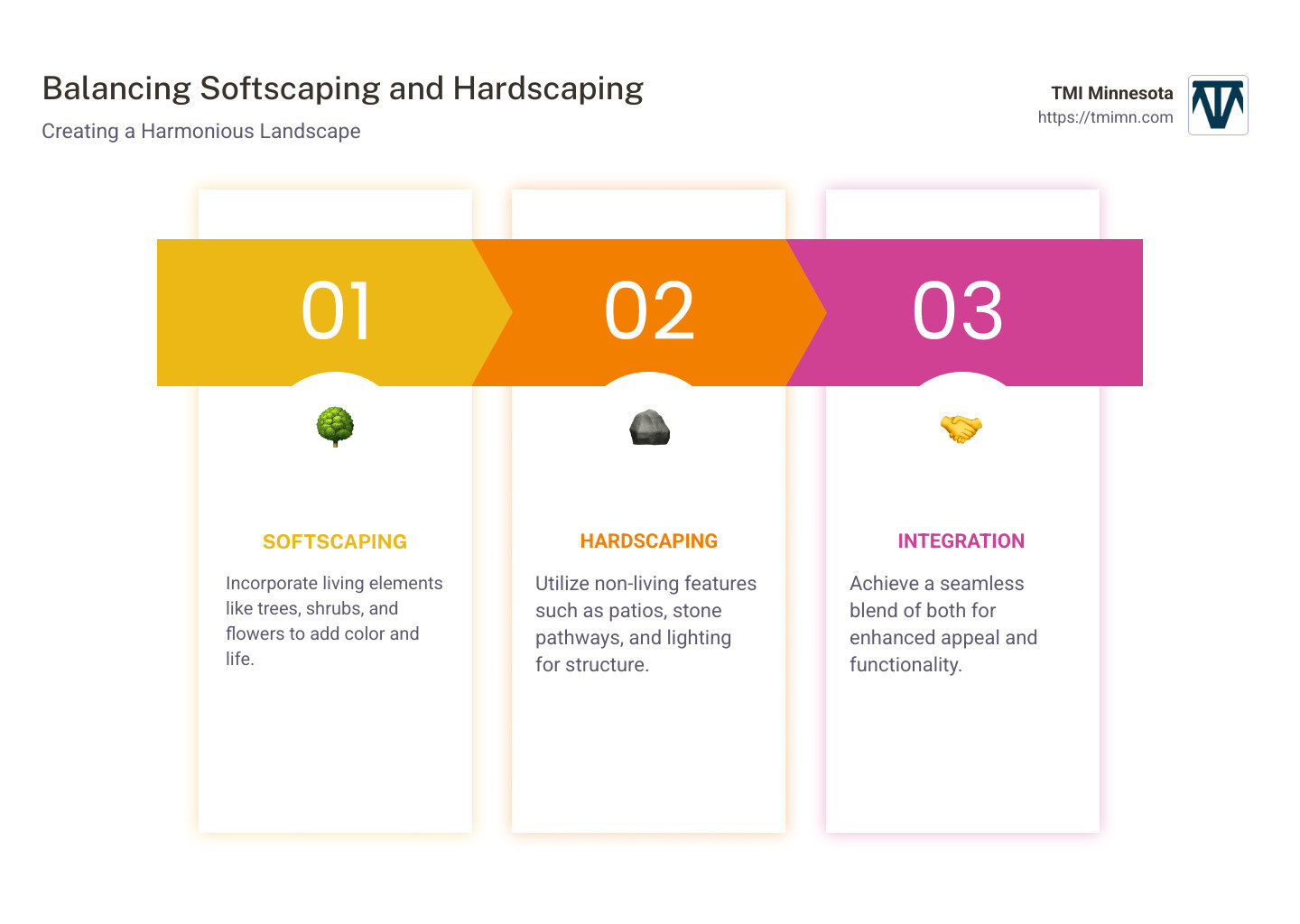
– Softscaping: Involves living elements like trees, shrubs, and flowers.
– Hardscaping: Includes non-living features such as patios, stone pathways, and lighting.
– Ideal Balance: A well-designed landscape seamlessly integrates both elements for increased appeal and functionality.
I’m Christopher Deanovic. With years of hands-on experience in changing landscapes, I’ve led Task Masters to exceptional achievements in blending softscaping and hardscaping. My expertise ensures that every space is not only visually stunning but also practical.
Key softscaping and hardscaping vocabulary:
– softscape designer
– softscape services
Understanding Softscaping and Hardscaping
When it comes to landscape design, softscaping and hardscaping are the dynamic duo that can transform any outdoor space. Each plays a unique role in creating a functional and beautiful environment. Let’s explore the specifics of each.
Hardscaping Elements
Hardscaping refers to the solid, non-living elements of a landscape. These features provide structure and organization to your outdoor space.
Walkways: These are the pathways that guide you through your garden or yard. Made from materials like stone, brick, or concrete, walkways not only direct foot traffic but also add a polished look to your landscape.
Patios: A patio is an outdoor area that offers space for relaxation and entertainment. Whether you’re hosting a barbecue or enjoying a quiet evening, a well-designed patio can improve your outdoor living experience.
Retaining Walls: These are crucial for managing soil erosion and creating level areas in sloped landscapes. Retaining walls can also be a beautiful feature, adding texture and depth to your yard.
Outdoor Lighting: Strategic lighting not only highlights the best features of your landscape but also extends the usability of your outdoor space into the evening. Think tall lamp posts or subtle ground lights that illuminate walkways.
Water Features: From fountains to ponds, water features add a soothing element to your landscape. They attract wildlife and can become a focal point in your yard.
Softscaping Elements
Softscaping involves the living, growing parts of your landscape. These elements bring color, texture, and life to your outdoor space.
Trees: Trees provide shade, privacy, and a sense of scale to your landscape. They can also be a long-term investment, increasing in value as they mature.
Shrubs: These versatile plants can be used for borders, privacy screens, or standalone features. They come in various sizes and colors, adding diversity to your garden.
Flowers: Flowers are the stars of any garden, offering a burst of color and fragrance. Mixing perennials and annuals can ensure year-round interest.
Lawns: A lush, green lawn is often the centerpiece of a landscape. It provides a space for recreation and relaxation and can significantly boost curb appeal.
Container Gardens: Perfect for small spaces, container gardens allow you to enjoy plants in areas where traditional gardening might not be possible. They offer flexibility and can be moved or rearranged as needed.
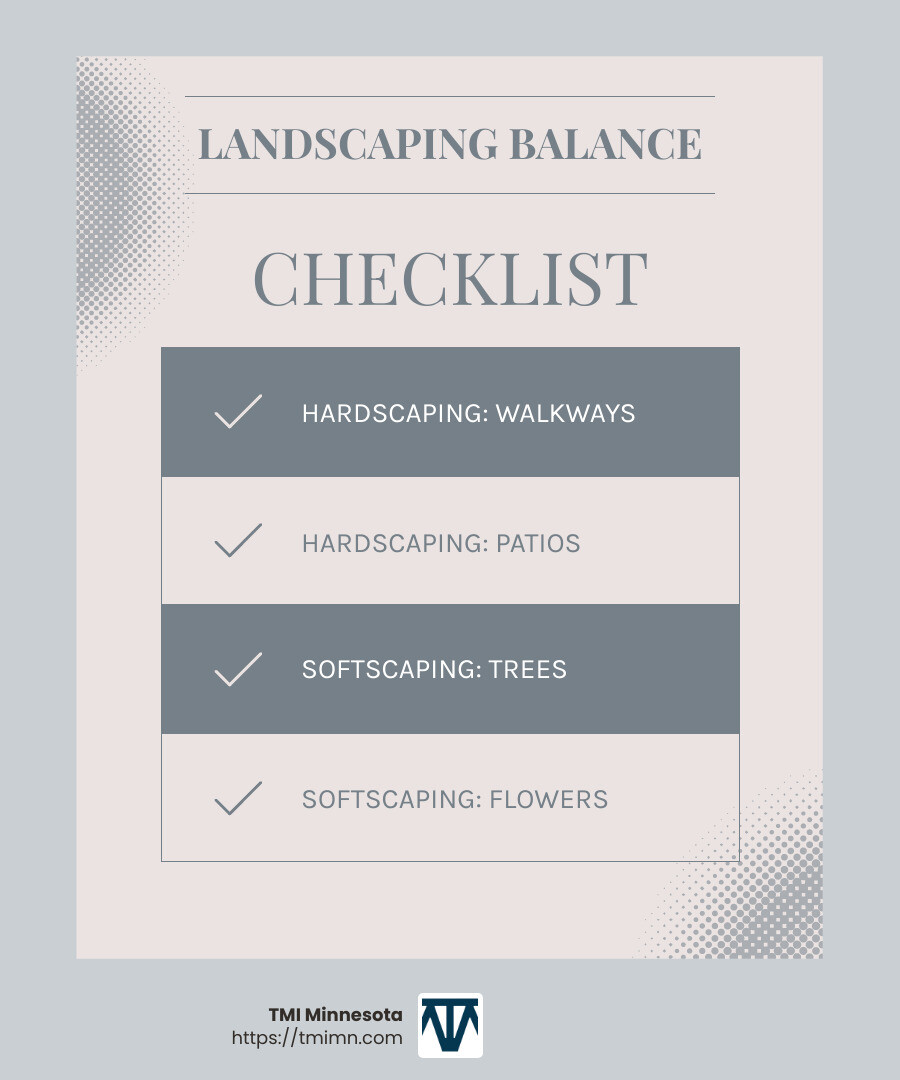
By thoughtfully combining these hardscaping and softscaping elements, you can create a landscape that is both functional and visually appealing. The key is to balance the durable structure of hardscapes with the vibrant life of softscapes, making your outdoor area a true extension of your home.
Benefits of Balancing Softscaping and Hardscaping
Balancing softscaping and hardscaping is more than just an art—it’s a smart investment. Striking the right balance can improve your property in several significant ways.
Boosting Property Value
A well-designed landscape can significantly increase your property’s value. According to real estate experts, a balanced combination of softscaping and hardscaping can add up to 20% to your home’s value. This makes it one of the most cost-effective home improvements you can make.
Hardscaping provides lasting features like patios and walkways, which are attractive to buyers looking for low-maintenance outdoor spaces.
Softscaping adds the lush, inviting appeal that improves the overall ambiance of the property.
Enhancing Curb Appeal
First impressions matter, and your home’s exterior is the first thing people see. A harmonious blend of softscaping and hardscaping can create a welcoming and attractive facade.
Walkways and Lighting: Well-lit paths and inviting walkways guide visitors and provide a sense of arrival.
Flowers and Shrubs: These add color and vibrancy, creating an inviting atmosphere that can make your home stand out in the neighborhood.
Expanding Outdoor Living Spaces
Your outdoor area is an extension of your home. Balancing softscaping and hardscaping transforms your yard into functional living spaces.
Patios and Decks: These hardscape features provide areas for dining, entertaining, or simply relaxing.
Lawn and Garden Areas: Softscaped areas offer spaces for play and gardening, bringing a sense of tranquility and nature into your daily life.
By integrating these elements thoughtfully, you can create a landscape that not only looks good but also serves as a practical and enjoyable space. This balance between hard and soft elements is essential for a landscape that is both beautiful and functional.
Softscaping and Hardscaping in Landscape Design
When it comes to landscape design, achieving a balance between softscaping and hardscaping is key to creating a space that is both visually appealing and functional. This harmony improves not just the look but also the usability of your outdoor area.
Design Balance
Creating a balanced design involves carefully planning the distribution of hardscape and softscape elements. Imagine your yard like a canvas: the hardscapes are the structure, the lines and shapes, while the softscapes are the colors and textures that fill it in.
Hardscapes like patios, walkways, and retaining walls provide structure and define spaces. They create the framework for your outdoor design.
Softscapes such as trees, shrubs, and flowers add life and movement. They’re the elements that soften the edges and bring your yard to life.
Too much of one or the other can throw off the balance. Too many hardscapes, and your yard can feel cold and uninviting. Too many plants, and it might look overgrown and chaotic.
Seasonal Interest
A well-designed landscape should look great all year round. This is where seasonal interest comes into play. By choosing a mix of plants that bloom at different times, you ensure that your yard always has something to offer.
Perennials and Annuals: Use a mix of these to keep your garden vibrant throughout the seasons. Perennials come back year after year, while annuals can be changed to suit your mood or the season.
Trees and Shrubs: These provide structure and can offer beautiful foliage in fall or blossoms in spring.
Incorporating elements like an evergreen hedge can provide color and structure even in winter, ensuring your landscape remains appealing no matter the season.
Aesthetic Appeal
Aesthetic appeal is all about creating a landscape that is pleasing to the eye. This involves using a variety of textures, colors, and forms.
Contrast and Harmony: Use contrasting textures, like smooth stone against leafy plants, to create interest. At the same time, ensure there’s harmony in color and form to avoid a jarring effect.
Focal Points: Incorporate elements like a water feature or a stunning tree to draw the eye and create a sense of flow.
A well-planned landscape design not only improves your home’s curb appeal but also makes your outdoor space a joy to experience. By carefully balancing softscaping and hardscaping, you create a cohesive and inviting environment.
Up next, we’ll address some common questions about softscaping and hardscaping to help you make informed decisions for your landscape.
Frequently Asked Questions about Softscaping and Hardscaping
What is the difference between softscaping and hardscaping?
Softscaping and hardscaping are the two main components of any landscape design. Understanding their differences is the first step in creating a balanced outdoor space.
Softscaping includes all the living elements of your landscape, such as trees, shrubs, flowers, and grass. These elements add color, texture, and life to your yard. They can be changed or replaced over time as your tastes or the seasons change.
Hardscaping includes the non-living structures like patios, walkways, and retaining walls. These elements are more permanent and usually require significant planning and investment. They define the space and provide areas for gathering and movement.
In short, softscaping is about the living, changing parts of your yard, while hardscaping provides the stable, structural elements.
How do I choose the right balance for my yard?
Finding the right balance between softscaping and hardscaping involves considering both aesthetic and practical needs.
Assess Your Space: Start by evaluating the size and layout of your yard. Large open areas might benefit from more hardscaping to create defined spaces, while smaller yards might need more plants to soften the space.
Consider Your Lifestyle: Think about how you want to use your outdoor space. If you love hosting gatherings, prioritize hardscaping elements like patios or decks. If gardening is your passion, you might lean more towards softscapes.
Plan for Maintenance: Softscaping requires regular upkeep. If you prefer low-maintenance options, choose hardy plants and simple designs. Hardscapes generally need less frequent maintenance but can be more costly to install.
Seasonal Variety: Incorporate a mix of plants that bloom at different times to keep your yard looking vibrant year-round.
By thoughtfully combining these elements, you can create a yard that suits your needs and looks great throughout the year.
Can softscaping and hardscaping increase property value?
Yes, a well-designed landscape that balances softscaping and hardscaping can significantly increase your property’s value and curb appeal.
Curb Appeal: First impressions matter. A beautiful landscape can make your home more attractive to potential buyers.
Functional Spaces: Features like patios and outdoor kitchens can extend your living space and make your home more functional.
Low Maintenance: A well-planned landscape that requires minimal upkeep can be a selling point for busy buyers.
A study by the National Association of Realtors suggests that landscape improvements can return 100% to 200% of their cost upon resale.
Investing in both softscaping and hardscaping not only improves your enjoyment of your home but can also pay off financially in the long run.
Next, we’ll wrap up with a look at how TMI Minnesota can help you achieve your landscaping dreams with their unique designs and leading-edge products.
Conclusion
At TMI Minnesota, we understand the art and science of blending softscaping and hardscaping to create outdoor spaces that are both beautiful and functional. Our approach is all about bringing your landscape dreams to life with unique designs and leading-edge products.
We believe that every yard has its own story to tell, and our job is to help you write it. Whether you’re looking to add a serene water feature, a vibrant garden, or a cozy patio, our team is here to guide you every step of the way. We take pride in changing ordinary yards into extraordinary outdoor escapes.
Our use of cutting-edge materials and techniques ensures that your landscape is not only stunning but also sustainable. By focusing on both aesthetic appeal and practical functionality, we create spaces that are as enjoyable to maintain as they are to use.
So, if you’re ready to lift your yard to the next level, we’re here to help. Contact us today to explore how we can assist you in crafting a landscape that reflects your personal style and improves your property’s value.
Reach out to us to start your landscaping journey with TMI Minnesota. Let’s create something beautiful together.