
Why Natural Stone Patios Transform Your Outdoor Living Space
Natural stone patios deliver unmatched beauty, exceptional durability, and lasting value to any outdoor space. Here’s what makes them the top choice for homeowners:
- Durability: 4,000–20,000+ PSI compressive strength withstands decades of use
- Aesthetics: Unique natural variation ensures no two patios look alike
- Value: Around 80% return on investment when you sell your home
- Longevity: Develops a rich patina that enhances appeal over time
- Weather Resistance: Thrives in extreme temperatures, from harsh winters to hot summers
- Versatility: Available in multiple types (flagstone, bluestone, granite, limestone) and styles
A traditional stone patio isn’t just a nice-to-have feature—it can become an important part of your daily living. Whether you’re hosting family gatherings, enjoying quiet mornings with coffee, or creating an outdoor dining space, natural stone provides the foundation that blends timeless elegance with practical durability.
Unlike manufactured materials that fade and deteriorate, natural stone looks better with age. Scratches and scuffs contribute to what experts call an “aged patina”—that authentic, lived-in character that synthetic materials can never replicate. Plus, natural stone is less susceptible to lichen and moss growth compared to concrete or stamped alternatives.
The appeal goes beyond aesthetics. Natural stone offers superior environmental benefits through its thermal properties and the ability to source materials locally. In regions like Minnesota, where ground freezes and thaws throughout the year, the right natural stone selection and proper installation become even more critical for long-term performance.
I’m Christopher Deanovic, Operations Leader at TMI Minnesota, and I’ve spent years designing and building custom hardscapes that transform outdoor spaces throughout Minnesota. From selecting the perfect stone type to ensuring proper drainage for our freeze-thaw climate, I’ve guided countless homeowners through creating natural stone patios that enhance both their lifestyle and property value.
Natural stone patios terms made easy:
The Unmatched Benefits of Natural Stone Patios
When we talk about Natural Stone Hardscapes, we aren’t just talking about a place to put your grill. We’re talking about a permanent upgrade to your lifestyle. In the Twin Cities, where we experience everything from humid 90-degree days to -20-degree polar vortexes, the material you choose needs to be more than just pretty—it needs to be “Minnesota tough.”
One of the most compelling reasons to choose natural stone is the sheer strength of the material. High-quality stones like granite and quartzite boast a compressive strength of 4,000 to over 20,000 PSI. To put that in perspective, standard residential concrete is usually only around 2,500 to 3,000 PSI. This density means your patio is less likely to chip, scratch, or crack under the weight of heavy patio furniture or the movement of the earth during a spring thaw.
Beyond strength, the financial benefits are significant. Industry data suggests that a well-designed patio offers an 80% return on investment (ROI). Furthermore, curb appeal is important because 99% of realtors believe it is a key factor in selling a home. A natural stone entryway or backyard retreat creates a “wow” factor that manufactured pavers simply can’t match.
Our Hardscape Design Services focus on leveraging these natural benefits. Because stone is a product of the earth, it possesses inherent thermal properties—it stays cooler in the sun than many dark-colored manufactured materials and retains a natural, slip-resistant texture that keeps your family safe.
Choosing Your Material: Types and Design Styles
Selecting the right stone is like choosing the perfect outfit for your home—it needs to fit the “architecture” and the “occasion.” Each stone type brings a different personality to the yard.
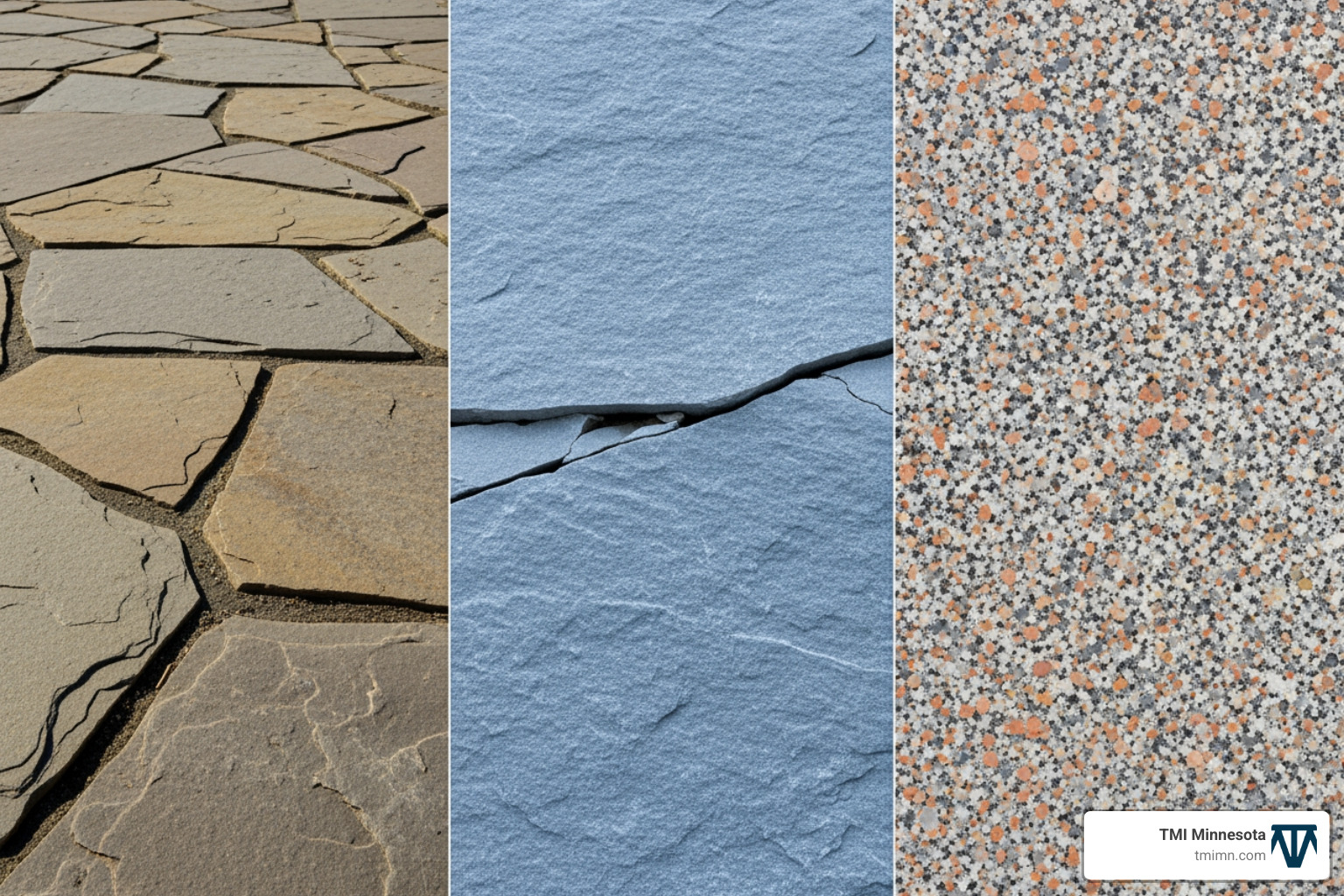
- Flagstone: This is the “artist’s choice.” Flagstone refers to flat slabs of stone (often sandstone or limestone) that are usually irregular in shape. When laid, they fit together like a beautiful, natural puzzle. It’s perfect for a rustic or “cottage” look.
- Bluestone: A dense, sedimentary rock typically quarried in the Northeastern U.S. It offers a sophisticated blue-gray palette that looks stunning when wet. It can be “natural cleave” (rougher) or “thermal” (smooth and flat).
- Granite: The king of durability. Granite is incredibly hard and comes in a variety of speckled colors. It’s ideal for high-traffic areas and outdoor kitchens.
- Limestone: Known for its uniform colors and “warm” feel. It’s a classic choice that has graced iconic buildings for centuries.
- Travertine: While popular in warmer climates, in Minnesota, we use specific high-density travertine that can handle our freeze-thaw cycles. It offers a luxurious, resort-like feel.
You can browse our Hardscape Gallery to see how these materials look in real Twin Cities backyards. Whether you prefer modern panels with clean, straight lines or rustic stacked stone for a more textured, organic feel, there is a stone that fits your vision. For sloped yards, multi-level layouts can define distinct zones—one for dining and one for a cozy fire pit. Adding a stone accent wall can provide privacy and architectural interest, turning a flat patio into an “outdoor room.” For more inspiration, check out our Ultimate Elegant Patio Guide.
Designing Natural Stone Patios for Small Spaces
Don’t let a small backyard limit your dreams. In fact, some of the most impactful Modern Outdoor Patio Design projects happen in compact spaces. When working with a smaller footprint, we focus on:
- Material Scale: Using larger format stones can actually make a small space feel bigger by reducing the number of joint lines (the “grid” effect).
- Vertical Interest: If you can’t go out, go up! A small stone accent wall or a built-in stone planter adds depth without taking up floor space.
- Pattern Placement: Running stones in a diagonal pattern or using a circular focal point can trick the eye into seeing more square footage than there actually is.
- Focal Points: A small, high-quality stone patio surrounding a compact fire feature creates an intimate, high-end retreat that feels intentional rather than “cramped.”
Installation Essentials and Maintenance Routines
Building natural stone patios in the Twin Cities requires a specific set of rules to ensure the ground doesn’t swallow your investment. If you’ve ever seen a “wavy” sidewalk, you’ve seen the effects of poor installation.
According to the experts at How to Lay a Stone Patio, and our own Patio Paver Installation standards, the foundation is everything.
- Excavation: In Minnesota, we recommend excavating to a depth of at least 12 inches. This allows for a thick base of compacted gravel that can “flex” during freeze-thaw cycles without cracking the stone above.
- Drainage: This is non-negotiable. Your patio must have a 1–2% slope (about 1/8 to 1/4 inch per foot) away from your home’s foundation. Water is the enemy of stone; if it pools, it can seep into the stone’s pores, freeze, and cause “spalling” or cracking.
- Joint Fillers: We often recommend stone dust or polymeric sand. Avoid standard mortar in “dry-set” patios, as it will crack when the ground shifts in winter.
- Sealing: While not always required, sealing your stone every 3-5 years helps preserve the color and prevents oil or wine stains from penetrating the surface.
For a deeper dive into the technical side, read our How to Install Hardscape: Ultimate Guide.
Maintenance is surprisingly simple. Regular sweeping prevents organic debris from staining the stone. For a deeper clean, a mild detergent and a garden hose are usually all you need. Avoid harsh chemicals or high-pressure power washing that can blast out your joint sand.
Natural Stone vs. Concrete and Brick: A Comparative Guide
Many homeowners ask us: “Why should I pay more for stone when I can get concrete pavers?” It’s a fair question. While the Flagstone patio cost is higher upfront, the long-term value is vastly superior.
| Feature | Natural Stone | Concrete Pavers | Brick |
|---|---|---|---|
| Durability | Extremely High (20k PSI) | High (8k PSI) | Moderate |
| Aesthetic Aging | Improves (Rich Patina) | Fades over time | Can chip/wear |
| Maintenance | Low (Sweeping/Sealing) | Moderate (Weeds/Fading) | Moderate (Moss) |
| Repairability | Individual stones easy to swap | Easy to swap | Moderate |
| Unique Look | 100% Unique | Mass-produced patterns | Classic but repetitive |
The biggest difference is how they age. Concrete is at its most beautiful the day it is installed; from there, it slowly fades and wears. Natural stone, however, develops a character over time. It tells a story. Furthermore, stone is easier to repair. If one stone is damaged, we can simply lift and replace that specific piece without it looking like a “patch job,” because the natural variation hides the change.
Understanding the balance between Hardscape and Softscape (the plants and greenery) is also easier with stone, as its organic colors blend more naturally with the Minnesota landscape than dyed concrete.
Cost Considerations for Natural Stone Patios
Let’s talk numbers. A natural stone patio is a premium investment. According to Angi reports, a DIY flagstone patio might cost between $855 and $1,385 for a 200-square-foot area, but professional installation—which includes heavy machinery, proper base compaction, and expert grading—can range significantly higher.
Factors that influence your quote from our Patio Design Services include:
- Stone Rarity: Locally sourced limestone is generally more affordable than imported exotic quartzite.
- Site Preparation: If we need to remove an old concrete slab or deal with significant drainage issues, the labor costs will increase.
- Cuts and Detail: A “random” flagstone pattern requires more on-site cutting and fitting than uniform rectangular slabs.
While the initial investment is higher, the “cost per year” is often lower because you won’t be replacing it in 15 years. It’s a “do it once, do it right” project.
Frequently Asked Questions about Stone Patios
What is the most durable stone for a patio?
Quartzite and Granite are the winners here. Because of their incredible density, they are highly resistant to scratches from patio chairs and staining from spilled food. They also have a high heat tolerance, meaning they won’t bake your feet on a hot July afternoon in the Twin Cities.
How often should I seal my natural stone patio?
We generally recommend sealing every 3 to 5 years. If you have “sawn” stone (where the pores are exposed by a saw cut), it may be more prone to absorbing moisture and should be sealed more frequently. Sealing not only protects against stains but can also “pop” the color of the stone, making the natural veining stand out.
Is natural stone slippery when wet?
It depends on the finish! While polished marble (the kind you see in bathrooms) is very slippery, most outdoor natural stone patios use textured finishes. Thermal treatments, sandblasted surfaces, or natural “cleave” finishes provide excellent grip, making them safe for pool surrounds and rainy days.
Conclusion
At TMI Minnesota, we believe your backyard should be your favorite “room” in the house. By choosing natural stone patios, you are investing in a space that is as durable as it is beautiful. Our team specializes in using leading-edge products and unique designs to transform your yard into a luxury retreat that stands up to the Minnesota climate.
Ready to stop dreaming and start building? Whether you want a rustic flagstone path or a sleek, modern granite entertaining zone, we have the expertise to make it happen.
Contact TMI Minnesota today to schedule your consultation and let’s build something “stone cold gorgeous” together.