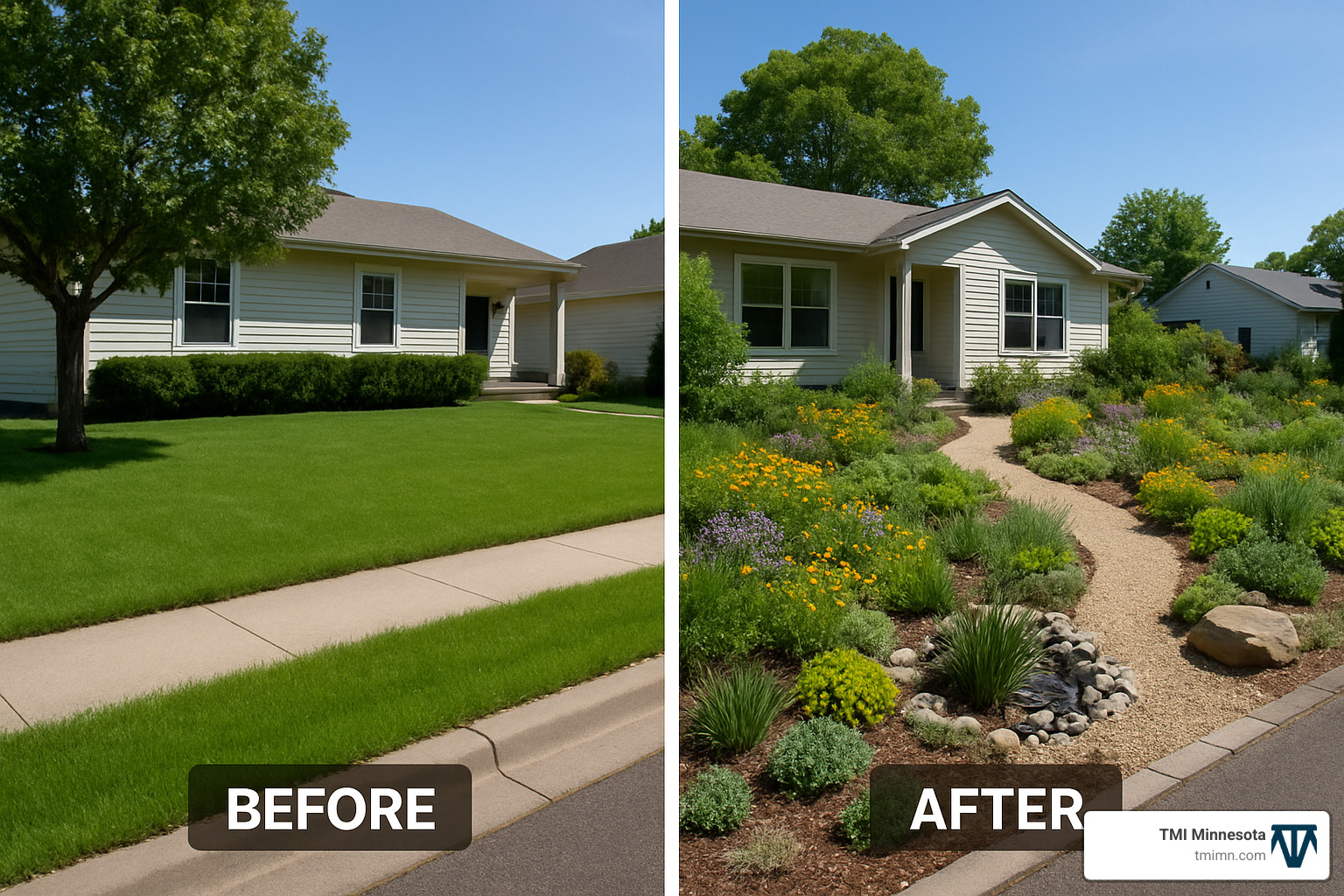
Changing Your Yard for a Greener Future
Sustainable landscaping techniques involve creating beautiful, functional outdoor spaces that conserve resources while supporting local ecosystems. If you’re looking to implement these practices in your yard, here are the core techniques to consider:
- Native plant selection: Choose plants adapted to your local climate that require minimal watering
- Water conservation: Install drip irrigation, rain barrels, and rain gardens
- Soil management: Practice composting and mulching to build healthy soil
- Permeable surfaces: Use materials that allow water to infiltrate rather than run off
- Integrated pest management: Reduce chemical use through natural predators and resistant plants
- Strategic planting: Position trees to provide shade in summer and windbreaks in winter
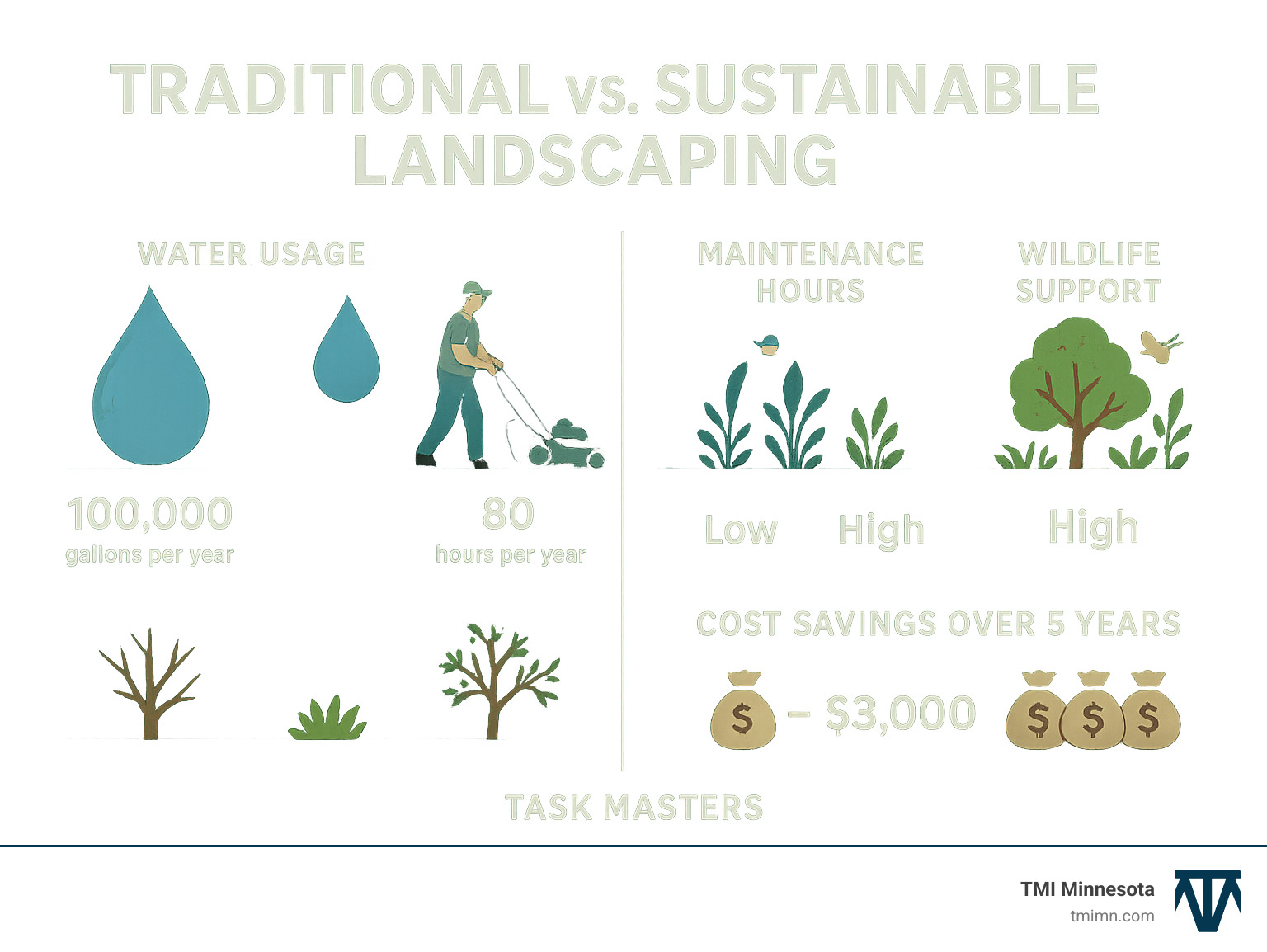
Why make the switch? A well-designed sustainable landscape can reduce water usage by up to 60%, cut maintenance time and costs by 50%, and significantly decrease your carbon footprint while creating habitat for beneficial wildlife.
The traditional lawn-centered approach to landscaping is increasingly out of step with today’s environmental challenges and resource constraints. As one landscape architect noted in our research, “Where people once opted for expansive, resource-heavy, time-consuming garden-scapes, they are now actively seeking landscape designs that are ecologically responsible and sustainable, balancing minimum material input with maximum ecological results.”
I’m Christopher Deanovic, Operations Leader at Task Masters, where I’ve helped countless Minnesota homeowners implement sustainable landscaping techniques that transform their outdoor spaces into beautiful, resilient environments that thrive with minimal resources. My approach combines innovative design principles with practical solutions that work with nature rather than against it.
Find more about sustainable landscaping techniques:
– landscape design for small yards
– pet friendly landscape design
– outdoor lighting installations
Principles of Sustainable Landscaping Techniques
When you step into a yard designed with sustainable landscaping techniques, you can feel the difference immediately. There’s a sense of harmony and natural balance that’s often missing in traditional landscapes. At TMI Minnesota, we believe understanding these core principles helps you create an outdoor space that not only looks beautiful but works with nature rather than against it.
Think of sustainable landscapes as nature’s perfect circle – where nothing goes to waste. Your autumn leaves become next spring’s soil nutrients. Your carefully selected native plants feed local pollinators. Those same pollinators help control garden pests naturally. It’s a beautiful system where everything serves multiple purposes.
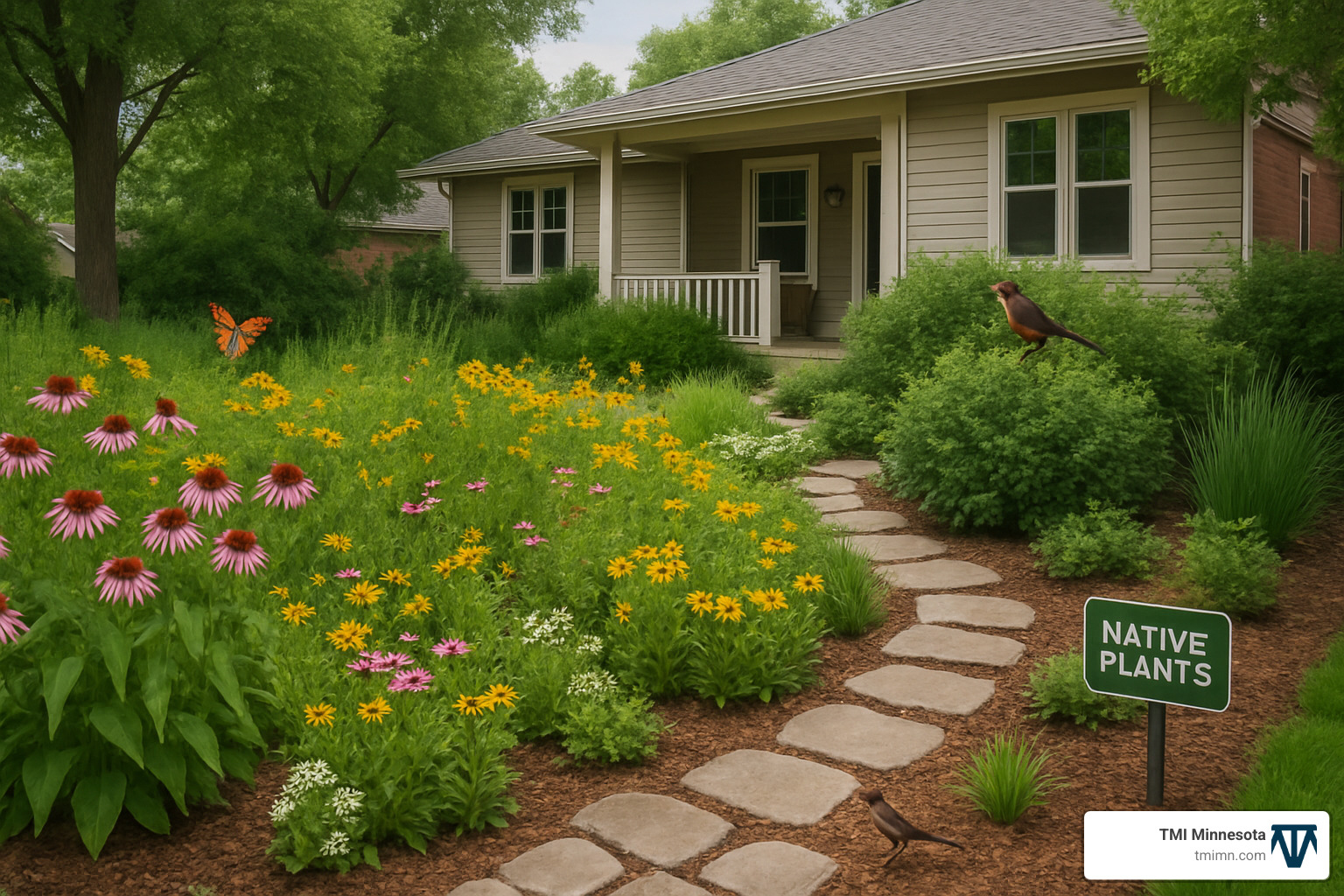
What makes a landscape truly sustainable? It’s about creating a space that thrives with minimal intervention. Your yard becomes a place that conserves water through smart irrigation and plant choices, builds healthy soil naturally without synthetic amendments, reduces or eliminates chemicals like pesticides and fertilizers, supports local wildlife with habitat-friendly features, minimizes resource inputs while maximizing benefits, and considers the full lifecycle of every material used.
What makes sustainable landscaping techniques different?
The difference between traditional and sustainable landscaping techniques is like comparing fast food to a home-cooked meal – both feed you, but one nourishes you better with fewer downsides.
Traditional landscaping often puts appearance first, with little thought for what happens behind the scenes. That perfect carpet of green lawn? It’s typically thirsty for water, hungry for fertilizers, and vulnerable to pests without chemical assistance. Those pristine hardscapes? They might be made from materials that traveled thousands of miles and will eventually end up in a landfill.
Sustainable landscaping techniques flip this approach on its head. Instead of fighting against your local climate, you work with it by choosing plants that thrive naturally in your conditions. Rather than reaching for chemical solutions, you create balanced ecosystems where beneficial insects help manage pests. Instead of treating resources as unlimited, you think carefully about where things come from and where they’ll go when their useful life ends.
As one landscape designer put it: “An attractive environment in balance with the local climate requires minimal resource inputs such as fertilizer, pesticides, gasoline, time, and water.” That’s the sweet spot we’re aiming for – beauty that doesn’t come at nature’s expense.
Environmental benefits of sustainable landscaping techniques
The good you do by implementing sustainable landscaping techniques reaches far beyond your property line. You’re making a real difference for your local environment and the planet as a whole.
Water is becoming increasingly precious, yet traditional lawns guzzle it at an alarming rate – often as much as your entire family uses indoors! By switching to water-wise landscaping, you can slash outdoor water use by up to 60%. That’s not just good for your water bill; it reduces the energy needed to treat and pump all that water in the first place.
When rain falls on conventional landscapes, much of it rushes away as runoff, carrying pollutants and causing erosion. Sustainable landscaping techniques like permeable surfaces and rain gardens can reduce stormwater runoff by an impressive 75-80% during typical rainfall. This allows water to soak in where it falls, replenishing groundwater and keeping our waterways cleaner.
Your sustainable landscape is also a climate hero in disguise. Plants, especially trees and deep-rooted perennials, pull carbon dioxide from the air and lock it away in their tissues and the soil. At the same time, you’re reducing emissions by using fewer gas-powered tools for maintenance.
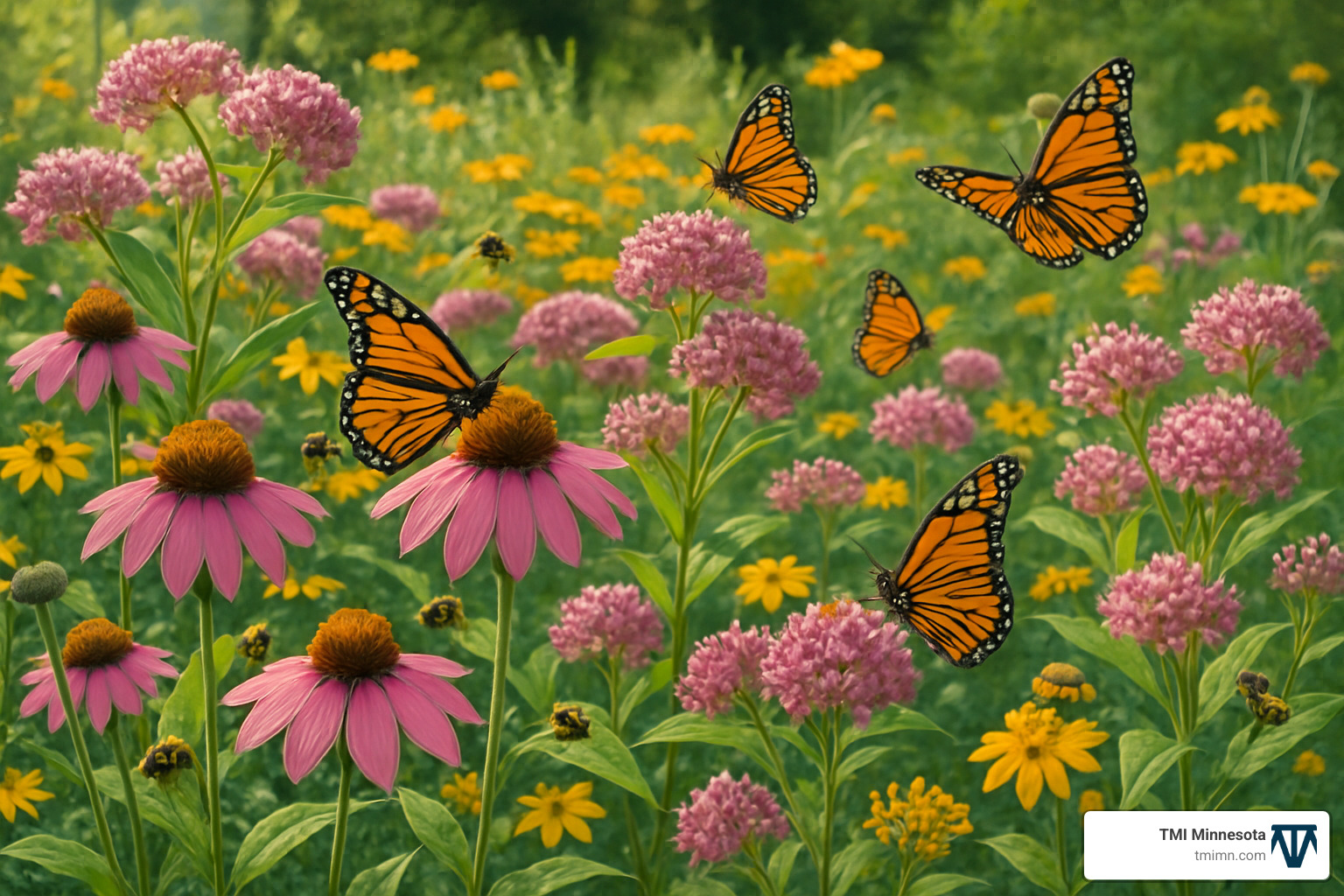
Perhaps most visibly, your sustainable yard becomes a haven for wildlife. Native plant gardens support everything from soil microbes to butterflies to songbirds. The difference is dramatic – native plants support up to 3-4 times more insects and birds than non-natives do. When you plant natives, you’re essentially hanging out a “Welcome” sign for the local wildlife that has evolved alongside these plants for thousands of years.
By embracing these principles in your own yard, you’re joining a growing movement of homeowners who are finding that working with nature is not just better for the planet – it creates more beautiful, resilient, and enjoyable outdoor spaces too.
Designing a Water-Wise & Soil-Smart Landscape
When Minnesota homeowners ask me why they should consider changing their landscaping approach, water conservation is often the most compelling reason. Here in the Twin Cities, traditional lawns gulp down enormous amounts of our precious drinking water, especially during those hot summer months. By embracing sustainable landscaping techniques, you can dramatically reduce both your water usage and those ever-climbing utility bills.
Choosing native & drought-tolerant plants
I love talking about native plants because they’re truly the heroes of any sustainable landscape. These resilient plants have called Minnesota home for thousands of years, evolving perfectly in tune with our local conditions. They’ve adapted naturally to our rainfall patterns, regional soil types, seasonal temperature swings, and they’ve developed relationships with our local wildlife that exotic plants simply can’t match.
What makes our Twin Cities native plants particularly special are their impressive root systems. While your typical lawn grass might have roots just a few inches deep, many of our native prairie plants send roots down 6, 8, even 15 feet! These extensive underground networks do amazing things for your landscape – they stabilize soil and prevent erosion, create pathways for water to soak in deeply, build rich organic matter as they naturally die back and decompose, and can access moisture deep in the soil during those inevitable dry spells.
For those sunny, potentially parched spots in your yard, consider drought-resistant natives like the graceful Prairie Dropseed with its fountain-like form, the vibrant orange Butterfly Weed that monarch butterflies adore, the reliable Purple Coneflower that blooms for weeks, the stunning blue-gray Little Bluestem grass that turns a gorgeous rusty-red in fall, or the neat Pale Purple Coneflower with its drooping petals.
Got shade? You’re in luck! Try the delicate Wild Geranium with its soft pink blooms, the low-growing Pennsylvania Sedge that makes a wonderful lawn alternative, the heart-shaped leaves of Wild Ginger that create a beautiful groundcover, or the charming Jacob’s Ladder with its tiered foliage.
A smart approach is grouping plants with similar water needs together – what landscape designers call hydrozoning. This thoughtful arrangement means you can water efficiently, giving each plant just what it needs without waste. For extremely water-conscious landscapes, xeriscaping might be your answer – this approach uses drought-tolerant plants and smart irrigation to create beautiful spaces with minimal water. Studies consistently show replacing traditional lawns with xeriscaping can slash outdoor water use by up to 60%.
For more detailed guidance on native plant selection specific to our region, this Native plants PDF is an excellent resource to help you get started.
Building healthy living soil
I often tell clients that healthy soil is like the foundation of your home – if it’s weak, nothing built on top will thrive for long. Unlike traditional landscaping that relies on synthetic fertilizers as quick fixes, sustainable landscaping techniques focus on building naturally rich soil that supports plant growth from the ground up.
Think of healthy soil as having four key components: plenty of organic matter that provides nutrients and improves water retention; good soil structure that allows proper drainage and root growth; vibrant soil biology filled with beneficial microorganisms; and appropriate mineral content.
Here are my favorite practical approaches to building healthier soil in your landscape:
Composting is nature’s recycling system at its finest. Creating your own compost from yard waste and kitchen scraps not only reduces methane pollution but also helps store more carbon in your soil. I recommend applying 2-3 inches of finished compost to your planting beds annually – your plants will thank you!
Mulching with organic materials like Wood chips creates a protective blanket around your plants (just keep it pulled back from stems and trunks). A 3-4 inch layer conserves moisture, naturally suppresses weeds, moderates soil temperature, and gradually breaks down to feed your soil.
Cover crops are a gardener’s secret weapon. In vegetable gardens or areas being prepared for planting, growing cover crops like clover or rye adds organic matter, prevents erosion, and improves soil structure naturally.
Have you heard of hugelkultur? This fascinating technique involves creating raised beds filled with woody debris, compost, and soil. As the wood slowly breaks down over time, it releases nutrients gradually, creates air pockets for healthy root growth, retains moisture like a sponge, and even generates a bit of heat as it decomposes – potentially extending your growing season.
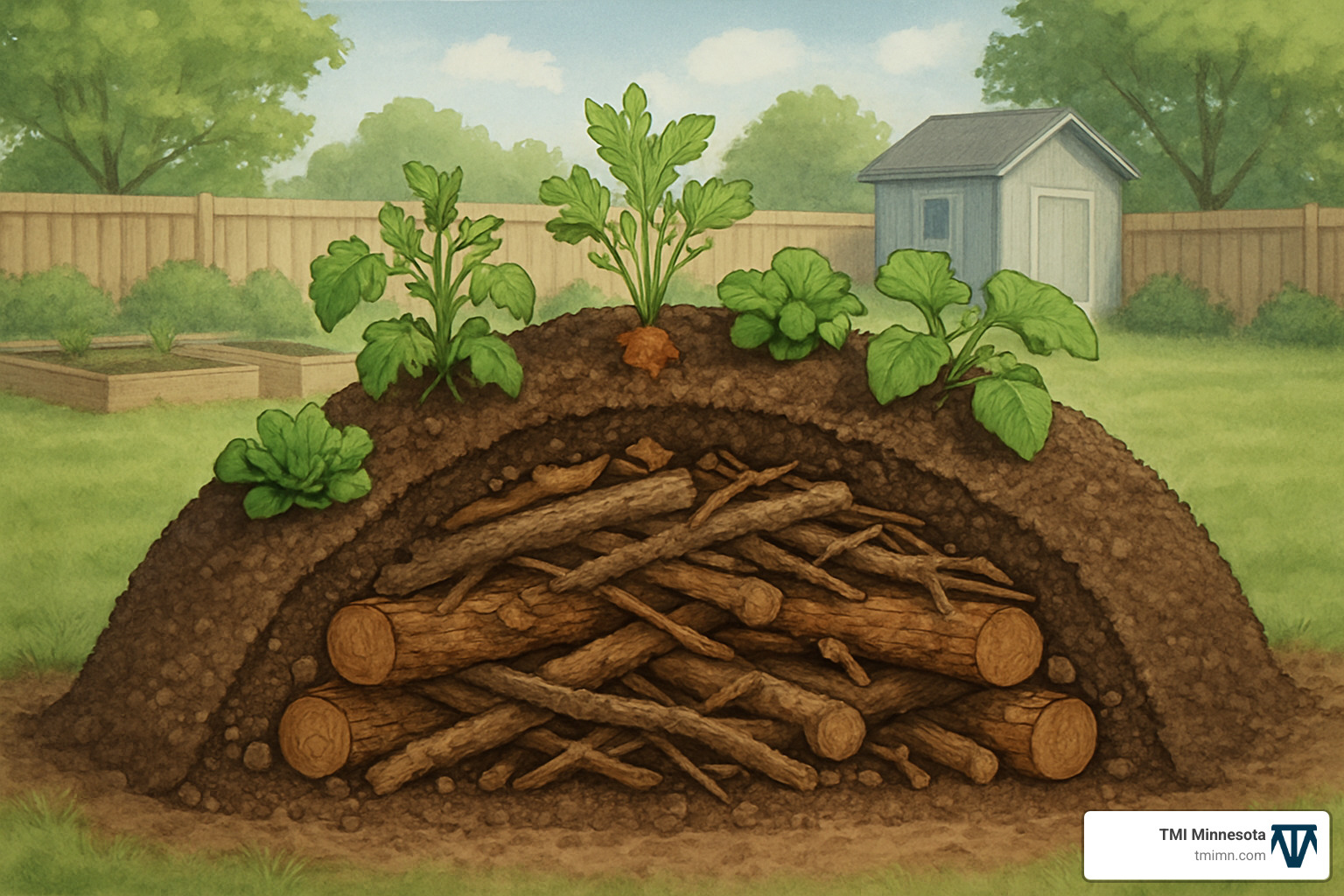
One simple but crucial tip: avoid soil compaction by minimizing foot traffic on planting areas and never working wet soil. Consider creating designated pathways through garden areas to keep your soil light and fluffy – just the way plant roots prefer it.
Managing stormwater on site
One of the most impactful sustainable landscaping techniques we implement at TMI Minnesota involves managing rainwater right where it falls rather than letting it rush off your property. This approach reduces flooding and erosion, naturally filters out pollutants, replenishes groundwater, and eases the burden on our municipal stormwater systems.
Let me share some effective strategies for managing stormwater that have worked wonderfully for our clients:
Replace those impervious surfaces like concrete with permeable alternatives that allow water to soak through. Options include attractive permeable pavers with gaps between them, natural gravel paths and patios, specialized permeable concrete or asphalt, or stepping stones set in gravel or low groundcover.
Rain gardens are among my favorite landscape features – these shallow depressions planted with water-tolerant native species capture runoff and allow it to infiltrate slowly. A well-designed rain garden can reduce stormwater runoff by an impressive 75-80% during normal rainfall. When planning yours, locate it at least 10 feet from your home’s foundation, size it to approximately 20-30% of the drainage area, use plants that can handle both wet and dry conditions, and always create an overflow path for those heavy Minnesota downpours.
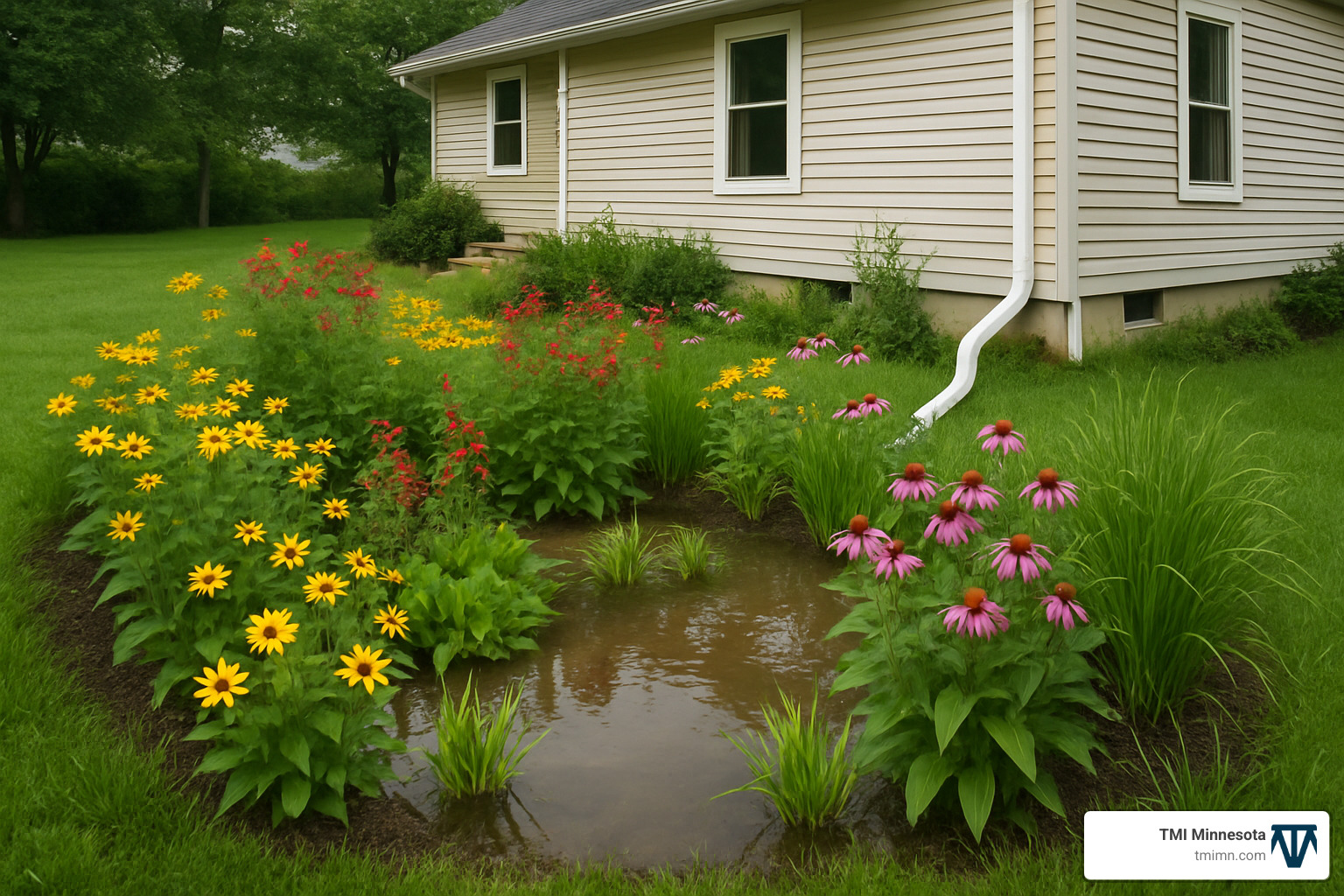
Bioswales work similarly to rain gardens but are designed as channels to move water slowly while filtering pollutants. These are particularly effective alongside driveways or on properties with natural slopes.
Using the “slow it, spread it, sink it” concept, swales and berms create shallow channels along contour lines with raised areas on the downhill side. This thoughtful system slows water movement across your property, spreads it horizontally along the contour, and allows it to gently sink into the soil rather than rushing away.
Don’t forget about rainwater harvesting – installing rain barrels or cisterns to collect roof runoff for later garden use. It’s amazing how quickly they fill – a modest 100 square foot section of roof can collect approximately 60 gallons of water from just a 1-inch rainfall!
At TMI Minnesota, we specialize in designing and installing these water management features to work seamlessly with your overall landscape design. Our Landscape Irrigation Solutions can complement these passive systems for complete water management that’s both beautiful and functional.
Energy, Hardscape & Wildlife Considerations
Creating a truly sustainable landscape goes beyond plants and water management. Let’s explore how energy efficiency, thoughtful hardscape choices, and wildlife support work together to create a complete ecosystem in your yard.
Sustainable hardscape materials & installation
The patios, walkways, and structures in your landscape leave a significant environmental footprint through their entire lifecycle. At TMI Minnesota, we believe beautiful hardscapes can also be environmentally responsible.
When selecting materials for your outdoor spaces, consider the story behind them. Locally sourced materials like Minnesota’s gorgeous limestone and granite not only look authentic in our landscape but also reduce transportation emissions while supporting local businesses and craftspeople.
Give materials a second life by incorporating recycled or reclaimed options. There’s something special about a patio made from recycled brick with its weathered character, or a pergola crafted from reclaimed barn wood that brings history to your backyard. These materials often have more character and visual interest than their new counterparts.
How materials are installed matters just as much as what you choose. Proper installation techniques protect existing trees, minimize soil disturbance, and incorporate appropriate drainage. When sealing or staining wood elements, opt for low-VOC products that reduce air pollution and health risks for your family and pets.
Our clients are often surprised by how beautiful permeable hardscapes can be. Beyond traditional permeable pavers, consider spaced flagstones with creeping thyme between them or decorative gravel set in stabilizing grids. These options allow water to soak into the ground while adding visual interest to your landscape.
Supporting local wildlife and pollinators
A truly sustainable landscape functions as a living ecosystem, not just a pretty backdrop. By supporting wildlife, you’ll create a space that’s more resilient, requires fewer inputs, and connects to the broader natural world.
Think of your garden as a year-round buffet for pollinators. Plan for a native flowering sequence with blooms from early spring through late fall. Early spring Wild Columbine gives way to summer Purple Coneflower, followed by fall Goldenrod—providing continuous nectar sources as different pollinators become active.
Wildlife needs more than just food—they need places to raise their young. Create habitat layers from canopy to ground level, with trees, shrubs, perennials, and groundcovers. Leave some leaf litter in garden beds and consider installing bird houses or bat boxes. Even a small brush pile tucked in a corner can become a wildlife haven.
Don’t forget about water! A simple bird bath (refreshed regularly) or shallow water feature can dramatically increase the wildlife value of your landscape. For butterflies, create small puddling areas—shallow depressions with sand and small stones where they can gather minerals.
For more specific guidance on creating pollinator paradise, check out this excellent pollinator plants link with regionally-appropriate suggestions.
Minimizing pesticides & fertilizers through Integrated Pest Management
The healthiest landscapes rely on natural systems rather than chemical interventions. At TMI Minnesota, we’ve found that Integrated Pest Management (IPM) offers a balanced approach that keeps gardens beautiful while minimizing environmental impact.
IPM starts with prevention—healthy soil and appropriate plants naturally resist many problems. When issues do arise, we identify exactly what we’re dealing with (many garden “pests” are actually beneficial!) and monitor to determine if action is really needed. A few nibbled leaves are part of a healthy ecosystem.
When intervention is necessary, we start with the gentlest approaches first. Physical controls like handpicking pests or using row covers often solve problems without chemicals. We also harness the power of nature by encouraging beneficial insects and birds that naturally control pest populations.
For fertilization, we focus on building living soil rather than force-feeding plants. Compost, organic mulch, and even compost tea provide slow-release nutrition that supports long-term plant health without the boom-and-bust cycle of synthetic fertilizers.
Want to reduce the amount of pesticides in your landscape? Consider companion planting—certain plant combinations naturally deter pests. Marigolds repel nematodes, while fragrant herbs like basil and rosemary confuse many insect pests with their strong scents.
Our Softscape Services incorporate these sustainable principles to create beautiful plantings that thrive with minimal chemical inputs, saving you time and money while protecting the environment.
Strategic tree placement around your home can significantly reduce energy costs—up to 25% for cooling and 10% for heating. Deciduous trees on the south and west sides provide summer shade while allowing winter sun, while evergreen windbreaks on the north side block cold winter winds. It’s a simple approach with year-round benefits for both your comfort and your wallet.
Transitioning & Maintaining Your Eco-Friendly Yard
Making the switch to a sustainable landscape doesn’t require an overnight change. In fact, taking it step by step often leads to better results and feels much more manageable for most homeowners. Let’s explore how you can successfully shift to sustainable landscaping techniques without feeling overwhelmed.
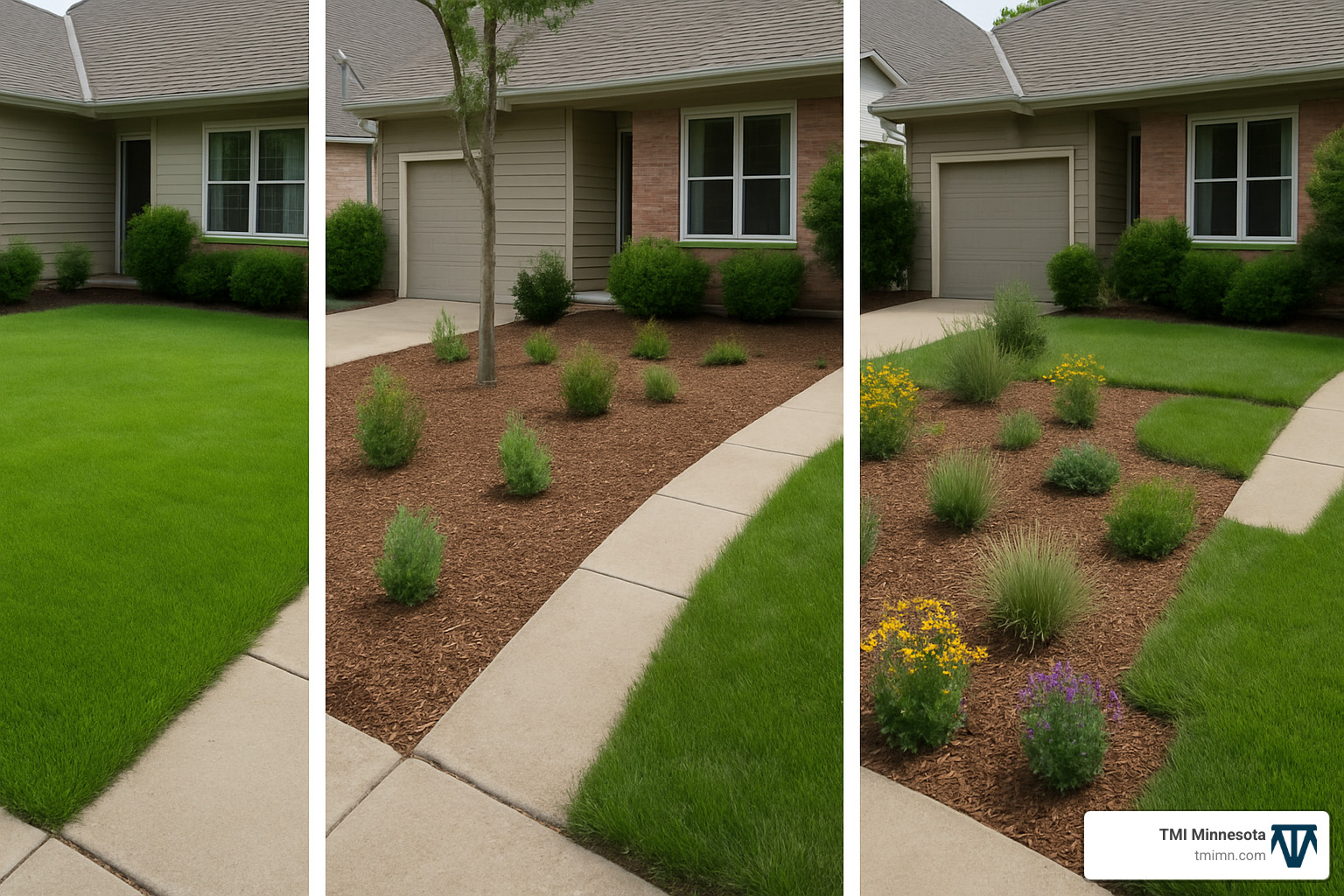
Site audit and planning
Before diving in, take some time to really get to know your yard. Walk around with a notepad and observe what’s already working and what needs improvement. Which areas turn into puddles after rain? Where does the sun shine brightest throughout the day? Which existing plants are thriving and which are struggling?
Testing your soil in different areas can reveal surprising variations across your property. You might find that your front yard needs different amendments than your backyard. Creating a simple map of sun patterns, drainage issues, and existing vegetation gives you a solid foundation for planning.
With this information in hand, sketch out a master plan that breaks the change into manageable chunks. Think about which areas bother you most—perhaps that constantly muddy corner or the section of lawn that always burns in summer heat—and prioritize those for early phases.
Phased conversion
Rome wasn’t built in a day, and neither is a sustainable landscape. I’ve found that breaking the process into phases keeps it from becoming overwhelming:
Start by simply stopping practices that harm your yard’s ecosystem. Put away the chemical fertilizers and pesticides, adjust your sprinklers to prevent wasteful runoff, and begin composting those grass clippings instead of bagging them. These small changes cost nothing but make a big difference.
Next, tackle some quick wins that offer immediate satisfaction. Installing a rain barrel at your downspout is a weekend project that immediately reduces water usage. Converting a small patch of lawn—perhaps that difficult-to-mow corner—into a native plant bed gives you a taste of success without a major commitment.
As you gain confidence, move on to larger projects like installing permeable walkways or creating more substantial rain gardens. The beauty of this approach is that you can spread the cost over time while learning what works best in your specific conditions.
Finally, expand your successful areas and connect them to create wildlife corridors. That initial native plant bed might grow to encompass the entire side yard, creating a continuous habitat that attracts beneficial insects and birds.
Maintenance considerations
One of the biggest misconceptions about sustainable landscaping techniques is that they create a “no-maintenance” yard. The reality is more nuanced—sustainable landscapes typically require less maintenance overall, but they need different kinds of attention throughout the seasons.
In spring, you’ll cut back last year’s perennial growth and divide any plants that have become crowded. Summer brings some weeding (though much less than in traditional landscapes) and monitoring for pest issues. Fall maintenance might include collecting seeds for next year and deciding which perennial stalks to leave standing for winter wildlife habitat. Winter becomes planning season—the perfect time to order seeds and dream up next year’s projects.
For those transitioning from a traditional lawn, consider replacing sections with beautiful alternatives. Native groundcovers like Pennsylvania Sedge offer the same neat appearance with far less maintenance. For areas you still mow, practice grasscycling—simply leaving clippings in place to return nutrients to the soil naturally. Your grass will be healthier, and you’ll save time not bagging clippings.
While some sustainable projects require upfront investment, they typically pay for themselves surprisingly quickly. Water bills often drop by up to 60%, and maintenance costs can be cut in half. Many homeowners are shocked to find how much they’ve been spending on fertilizers, pesticides, and gas for lawn equipment once they no longer need them. Some studies even suggest sustainable landscapes can boost property values by up to 15%—not to mention the roughly 25% reduction in cooling costs from strategically placed shade trees.
Some projects are perfect for DIY enthusiasts—installing rain barrels, creating small native gardens, and building compost bins are all weekend-friendly projects. Others, like complex drainage solutions or permeable paver installation, might benefit from professional expertise. At TMI Minnesota, we’re happy to guide DIY efforts or handle the whole project from design to installation. Our Environmentally Friendly Gardens services can help you create beautiful, sustainable outdoor spaces regardless of your starting point.
Sustainable landscaping techniques for small urban spaces
Limited space doesn’t mean limited sustainability! Even a small patio or balcony can become an eco-friendly oasis with some creative thinking.
Vertical space becomes your best friend in urban settings. Trellises, wall planters, and living wall systems allow you to grow upward instead of outward. I’ve seen stunning urban gardens where vining plants create privacy screens while providing habitat for pollinators, all without taking up precious floor space.
Container gardening takes on new dimensions with micro-swales—small interconnected container systems that allow water to flow from one pot to another. Position the first container to catch downspout water, and let gravity water your entire container garden! Self-watering containers with built-in reservoirs reduce maintenance while conserving water.
If you have access to a rooftop, you’ve struck gold! These spaces typically receive full sun and offer excellent growing conditions. Just be sure to use lightweight growing media designed specifically for rooftop applications, and focus on drought-tolerant plants to minimize the weight of water.
Even composting can be adapted to small spaces. Worm bins operate indoors with no odor when properly maintained, while compact tumbling composters fit neatly on balconies. If space is truly at a premium, look into community composting programs or the Bokashi fermentation system, which breaks down kitchen waste in a fraction of the space of traditional composting.
Adapting sustainable landscaping techniques to dry climates
While Minnesota isn’t typically considered arid, we certainly experience dry spells that can stress landscapes. Building resilience to these periods is a key aspect of sustainable landscaping techniques.
Creating designated xeriscape zones—areas that receive minimal or no supplemental water once established—allows you to maintain beautiful plantings even during water restrictions. Group extremely drought-tolerant native plants together, mulch them appropriately, and they’ll thrive with natural rainfall in all but the most extreme conditions.
Thoughtful design can dramatically reduce water needs through passive shading. Pergolas covered with deciduous vines provide cooling shade in summer while allowing warming sunlight in winter. Taller plants can shield more sensitive species from harsh afternoon sun. Even temporary shade cloth during extreme heat waves can make a significant difference in plant survival and water requirements.
In particularly hot, dry areas, consider using reflective mulch materials like light-colored gravel or even tumbled recycled glass. These materials reduce soil temperature and evaporation while adding visual interest to the landscape.
Common mistakes to avoid
Even with the best intentions, there are some common pitfalls when implementing sustainable landscaping techniques. I’ve seen many enthusiastic gardeners place plants in locations that simply don’t match their needs. That shade-loving fern won’t thrive in full sun, no matter how much you water it! Take time to research each plant’s requirements and match them to the specific conditions in different parts of your yard.
Skipping soil tests is another frequent mistake. Different plants have different soil preferences, and adding amendments without knowing what your soil actually needs can create more problems than it solves. A simple soil test takes the guesswork out of preparation.
Over-irrigation is perhaps the most common error I see with new sustainable landscapes. Yes, even drought-tolerant plants need regular water when first established, but continuing this intensive watering unnecessarily creates weak, shallow-rooted plants. Gradually reduce watering frequency to encourage deep root development, and use soil moisture meters rather than following a rigid schedule.
Finally, sustainable landscapes develop over time. Many native perennials follow the “sleep, creep, leap” pattern—minimal growth the first year as they establish roots, modest growth the second year, and then explosive growth in the third season. Patience pays off with stronger plants and more resilient ecosystems. Your landscape will continue improving year after year as soil health builds and plant communities mature.
Frequently Asked Questions about Sustainable Landscaping
How much can I really save on water bills?
One of the most common questions I hear from Twin Cities homeowners is about the potential water savings from sustainable landscaping techniques. The numbers are genuinely impressive – replacing your traditional thirsty lawn with drought-tolerant landscaping can slash your outdoor water use by up to 60%.
Let me put this in perspective: If your family currently uses 100 gallons daily for lawn irrigation during our Minnesota growing season, you could potentially cut that down to just 40 gallons through smarter landscaping choices.
The savings come from multiple approaches working together. Switching to drip irrigation alone can reduce water usage by 50-90% compared to conventional sprinklers. When you combine this with native plants that thrive on natural rainfall patterns, proper soil preparation that retains moisture, and rainwater harvesting systems to capture what nature provides – the results are substantial.
I’ve worked with many homeowners who report their summer water bills dropping by half after implementing these water-wise strategies. Your exact savings will depend on local water rates, but the reduction in usage is consistent across almost all projects we’ve completed.
Do sustainable landscaping techniques work in cold climates?
As a Minnesota landscaper, I hear this question constantly – and my answer is always an enthusiastic yes! Sustainable landscaping techniques aren’t just for warm, sunny states – they’re incredibly effective in our challenging northern climate.
In fact, some sustainable approaches offer special benefits during our Minnesota winters. Strategic placement of evergreens creates natural windbreaks that can significantly reduce your heating costs. Native plants that evolved in our region already have the genetic programming to handle our extreme temperature swings and freeze-thaw cycles.
When designing sustainable landscapes for cold climates like ours, we make specific adaptations. We select cold-hardy native species that thrive in our growing zone. Rain gardens are designed with deeper basins to accommodate spring snowmelt. For areas near roadways, we choose salt-tolerant plants that can withstand winter maintenance practices.
Snow management becomes part of the sustainable design process. We carefully plan pathways and driveways to direct snowmelt toward infiltration areas, essentially turning winter precipitation into a resource rather than a problem. We also designate specific snow storage zones that benefit from the slow moisture release as temperatures warm.
Many of our beautiful prairie and woodland natives have developed impressively deep root systems specifically to survive both our harsh winters and summer dry spells. These plants aren’t just surviving in Minnesota – they’re perfectly adapted to thrive here.
Will a rain garden attract mosquitoes?
I understand this concern completely – nobody wants to create a mosquito breeding ground in their yard! The good news is that properly designed rain gardens actually don’t attract mosquitoes, and there’s solid science behind this.
The key is drainage timing. A well-constructed rain garden is designed to drain completely within 24-48 hours after rainfall. Mosquitoes require standing water for 7-10 days to complete their life cycle, so a functioning rain garden simply doesn’t provide suitable breeding conditions for these pests.
Even better, rain gardens attract natural mosquito predators. The diverse plant life brings dragonflies, birds, and other wildlife that actively feed on mosquitoes and their larvae. Your rain garden becomes part of the solution to mosquito problems, not the cause.
You can further discourage mosquitoes by incorporating certain plants into your rain garden design. Lavender, lemon balm, and bee balm naturally repel mosquitoes while adding beautiful texture and color to your landscape.
For extra peace of mind, consider these additional precautions in your rain garden:
– Ensure proper soil preparation with excellent drainage characteristics
– Maintain the garden regularly to prevent any clogging that could slow drainage
– Add a small solar-powered fountain to keep water moving (mosquitoes prefer still water)
At TMI Minnesota, mosquito prevention is always a priority in our rain garden designs. We carefully engineer proper drainage into every project, ensuring your sustainable landscape manages water effectively without creating pest issues.

Conclusion & Next Steps
The journey to a more sustainable landscape is one that gets better with time – like watching a garden grow and flourish season after season. As you implement sustainable landscaping techniques in your yard, you’ll begin to notice some wonderful changes happening:
Your weekend to-do list will shrink as maintenance requirements drop off. Those hours previously spent mowing, watering, and treating your lawn transform into time you can actually enjoy your outdoor space. When that surprise summer drought hits or we get one of those Minnesota downpours, your yard will handle it with remarkable resilience – no panic watering or flooded areas.
You might find yourself reaching for the binoculars as your property becomes a hotspot for colorful birds, butterflies, and beneficial insects. There’s something deeply satisfying about watching a hummingbird visit flowers you planted specifically to support local wildlife. And let’s not forget the simple beauty that unfolds as your landscape develops its own rhythm through the seasons – spring ephemerals giving way to summer blooms, followed by fall colors and winter structure.
All while your wallet gets a break from constant spending on water bills, fertilizers, pesticides, and replacement plants that never quite thrived in your yard.
But your sustainable landscape does more than just benefit you personally. Each rain garden you install, each native plant you add, and each chemical you don’t use contributes to something bigger:
Your property helps filter water before it reaches our beloved Minnesota lakes and rivers. The pollinators visiting your flowers might be the same ones helping local farmers grow food. The carbon your plants pull from the atmosphere and lock into the soil helps in the fight against climate change. And when your neighbor asks about that gorgeous coneflower that’s buzzing with bees, you’ve started a conversation that might inspire another sustainable yard on your block.
Getting started with TMI Minnesota
Whether you’re ready to transform your entire property or just want to start with a small rain garden in that spot where water always pools, we at TMI Minnesota are here to help you make it happen. Our team brings together design creativity with ecological knowledge to create outdoor spaces that are beautiful, functional, and kind to our Minnesota environment.
We can help with everything from analyzing your specific site conditions to installing specialized features like rain gardens or permeable patios. We’ll help you select native plants that will thrive in your unique conditions – whether you have a sunny, dry hillside or a shady, wet corner. And we can create a maintenance plan that supports your landscape’s long-term health without chemical dependencies.
For homeowners looking for a mixed approach, our ForeverTurf solutions can provide low-maintenance, water-saving artificial turf in specific areas like play spaces, while allowing you to dedicate other parts of your yard to native plantings and natural water management.
Taking the first step
You don’t have to do everything at once. Even small changes make a difference – maybe start by replacing that struggling patch of lawn with native wildflowers, or installing a simple rain barrel at your downspout. As you see these initial efforts succeed, you’ll likely find yourself inspired to take the next step, and then another.
The beauty of sustainable landscaping techniques is that they’re adaptable to your unique situation. Your sustainable yard won’t look exactly like your neighbor’s – it will reflect your specific site conditions, your climate challenges, and your personal preferences. There’s no one-size-fits-all approach, just a thoughtful process of working with nature rather than against it.
By starting your sustainable landscaping journey today, you’re creating a legacy that improves with age – benefiting you, your community, and our shared environment for years to come. Like the old proverb says: “The best time to plant a tree was twenty years ago. The second best time is now.”