
Why Stained Concrete Driveways Are Changing Minnesota Homes
Stained concrete driveway changes offer homeowners a permanent, fade-resistant way to boost curb appeal and property value without the hassle of full replacement. Here’s what you need to know:
- Cost: $2-$4 per sq. ft. for existing driveways (640 sq. ft. = $1,280-$2,560)
- Lifespan: Lasts as long as the concrete itself when properly sealed
- Color Options: Earth tones (acid stains) or full spectrum (water-based stains)
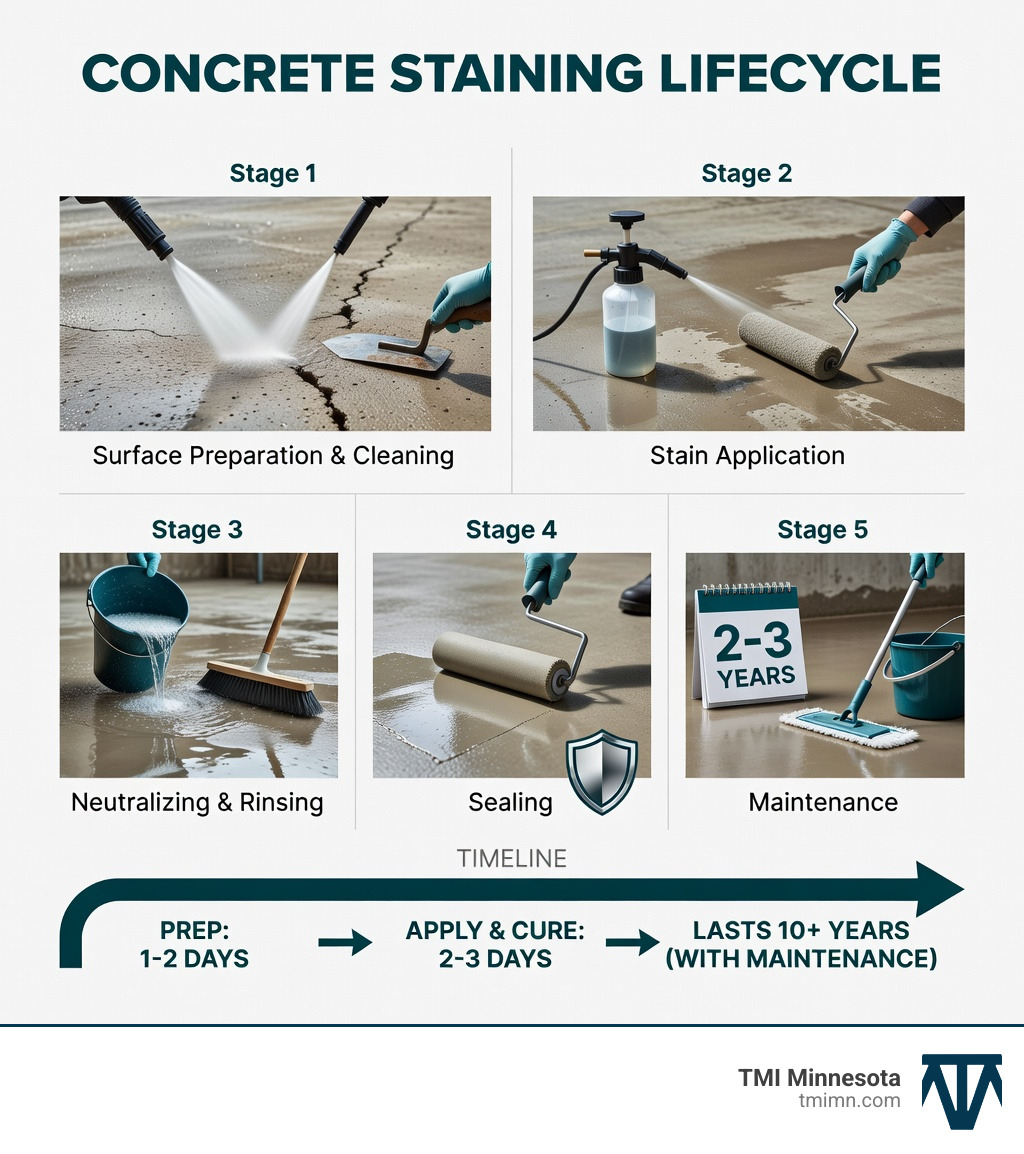
- Application: Clean, apply stain, neutralize/rinse, seal
- Best For: Homeowners wanting durable color that won’t chip or peel like paint
What makes staining different? Unlike paint that sits on the surface, concrete stain penetrates deeply into the pores for permanent color that resists fading, chipping, and peeling.
Functionality matters most for driveways, but first impressions count too. A plain gray concrete driveway gets the job done, yet it often feels cold and unfinished—especially when you’re hosting family gatherings or welcoming guests. Staining transforms that drab surface into a design element that complements your home’s architecture and landscaping.
The process sounds simple: clean the concrete, apply stain, seal it. But achieving even color saturation and avoiding blotchy results requires understanding surface preparation, moisture testing, application techniques, and proper sealing—details that separate professional results from DIY disappointments.
I’m Christopher Deanovic, Operations Leader at TMI Minnesota, where we’ve transformed countless stained concrete driveways across the Twin Cities region using both acid-based and water-based staining techniques. My team and I have seen how proper surface preparation and professional application create stunning, long-lasting results that homeowners love for decades.
Key Stained concrete driveway vocabulary:
Why Choose a Stained Concrete Driveway for Your Home?
When we talk to homeowners in the Twin Cities, the most common complaint we hear about standard driveways is that they look “boring.” A stained concrete driveway is the antidote to that dull, industrial gray. Staining is a permanent color solution that doesn’t just sit on top of the concrete; it becomes part of it.
Because the stain penetrates the porous surface, it is incredibly fade-resistant. This is a major plus for Minnesota homes that face intense UV exposure in the summer and harsh, snowy conditions in the winter. The versatility is another huge draw. Whether you want your driveway to look like weathered leather, natural stone, or even polished marble, staining makes it possible.
For those interested in exploring the artistic side of concrete, check out Concrete Driveway Info Design Ideas for inspiration. At TMI Minnesota, we believe every home deserves a grand entrance, and a stained surface is one of the most cost-effective ways to achieve it.
Is a Stained Concrete Driveway Better Than Paint?
We often get asked: “Can’t I just paint my driveway?” Technically, you can, but we usually advise against it. The main issue with paint is surface adhesion. Paint forms a film on top of the concrete. In a high-traffic area like a driveway, that film is under constant stress from hot tires and heavy vehicles.
Staining, however, allows the concrete to “breathe.” It doesn’t trap moisture underneath, which is vital in our climate where freeze-thaw cycles can cause paint to bubble and flake off.
| Feature | Staining | Painting |
|---|---|---|
| Adhesion | Penetrates deep into pores | Sits on the surface |
| Durability | Won’t chip or peel | Prone to chipping and hot-tire pickup |
| Appearance | Translucent, natural, mottled | Solid, opaque, “plastic” look |
| Maintenance | Low (periodic resealing) | High (frequent repainting) |
| Breathability | Allows moisture vapor to escape | Traps moisture (leads to peeling) |
For long-term value in the Twin Cities, staining is the superior choice. It handles the weight of SUVs and the scrape of snow shovels far better than any paint ever could.
The Pros and Cons of Concrete Staining
Like any home improvement project, there are trade-offs to consider. We want our clients to have a full picture before they start.
The Pros:
- Durability: It lasts as long as the concrete itself.
- Cost-effectiveness: It’s much cheaper than tearing out old concrete and replacing it with pavers or natural stone.
- Unique Mottling: Especially with acid stains, you get a variegated look that is impossible to replicate with other materials.
The Cons:
- Transparency: Stains are semi-transparent. They won’t hide major cracks or patches. If your concrete is in bad shape, we might recommend a textured overlay first.
- Surface Imperfections: Any oil stains or spills that aren’t perfectly cleaned will show through the stain.
- Professional Skill Requirements: It’s not as easy as it looks on YouTube. Timing and neutralizing are critical to getting the color right.
Acid-Based vs. Water-Based: Choosing the Right Concrete Stain
Choosing the right type of stain is the most important decision you’ll make for your stained concrete driveway. The two main contenders are acid-based and water-based stains. Each produces a vastly different look and requires a different application method.
If you are looking for that classic, old-world “mottled” look, you’re likely looking for an acid stain. If you want a specific, consistent color like a deep navy or a bright terra cotta, water-based is the way to go. You can find a deeper dive into these options in our ultimate guide to concrete driveways or through resources like Concrete Network.
Understanding Acid Stains
Acid stains are reactive. They contain metallic salts that react chemically with the calcium hydroxide in the concrete. This reaction etches the surface and deposits color permanently into the pores.
The result is a beautiful, variegated look that mimics natural stone or aged leather. Because it’s a chemical reaction, the color won’t be perfectly uniform—and that’s the point! It gives the driveway a “soul” and a custom, high-end feel. However, the palette is limited to earth tones: tans, browns, terra cottas, and soft greens.
The Benefits of Water-Based Stains
Water-based stains are non-reactive. Think of them more like a high-tech ink that soaks into the concrete. Because they don’t rely on a chemical reaction, the color you see in the bottle is pretty much what you get on the driveway.
These stains offer a full spectrum of hues, from vibrant oranges to sleek blacks and grays. They are also low-VOC (volatile organic compounds), making them more eco-friendly and easier to work with. One of the coolest features of water-based stains is their layering capability. We can apply multiple colors to create “faux finishes” or custom gradients that acid stains just can’t do.
Step-by-Step Guide to Staining Your Driveway
Ready to get to work? Whether you’re hiring us or attempting a small section yourself, understanding the workflow is key. Preparation is 90% of the job. If the surface isn’t ready, the stain won’t take, and you’ll end up with a blotchy mess.
Preparing the Surface
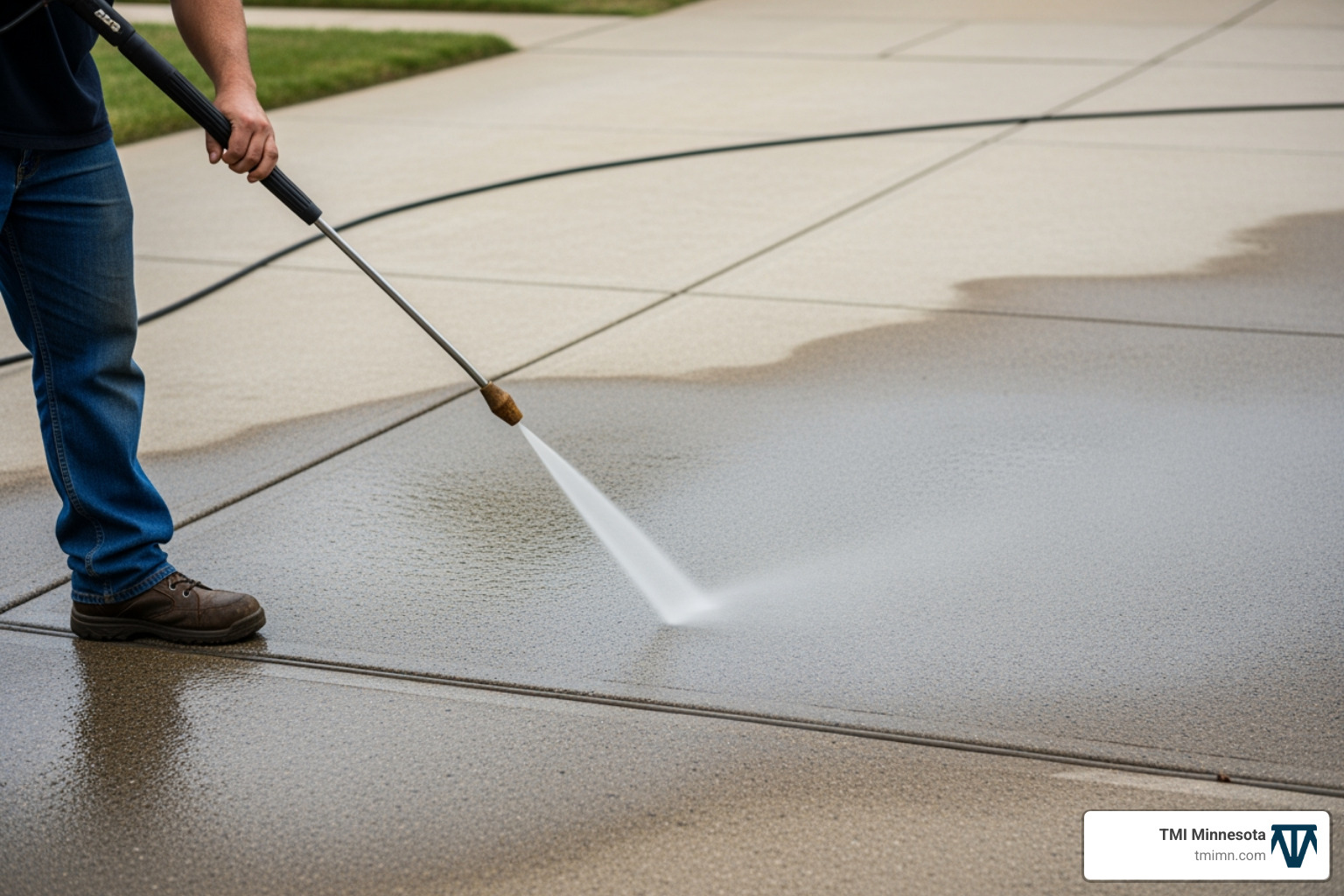
First, we clear the area. Then comes the deep clean. We use professional-grade pressure washers and specialized degreasers to remove oil, grease, and old sealers. If there’s oil on the concrete, the stain will simply bead up and roll off.
- Oil Stain Hack: For small oil spots, apply baking soda, let it sit for 60 minutes, scrub with a stiff brush, and rinse.
- Crack Repair: We inspect the surface for cracks. While some people like the “rustic” look of stained cracks, most prefer them filled with a color-matched concrete filler.
- Masking: We mask off the garage door, siding, and any nearby landscaping. Concrete stain is permanent—you don’t want it on your brickwork!
- Drying Time: This is crucial. The concrete needs to be bone-dry before staining. In Minnesota humidity, we usually wait at least 24 to 48 hours after washing.
Application and Sealing
Once dry, the fun begins. We typically use a high-quality pump sprayer to apply the stain.
- Application: We move in small, circular motions to avoid “lap marks” or stripes. For a more natural look, we might follow up with a microfiber mop to work the stain into the pores.
- Neutralizing (Acid Only): If we’re using acid stain, we must neutralize the surface with a mixture of water and baking soda (or ammonia) to stop the chemical reaction. Then, we rinse until the water runs clear.
- Sealing: After the stain has dried and cured, we apply a UV-resistant acrylic sealer. This “wakes up” the color and protects it from the elements.
- Slip-Resistance: Driveways can get slippery when wet. We always recommend adding a slip-resistant additive (like SharkGrip) to the final coat of sealer to ensure your stained concrete driveway is safe for walking and driving.
Design Ideas and Popular Colors for a Stained Concrete Driveway
This is where your property really starts to shine. A stained concrete driveway doesn’t have to be a single solid color. By using different techniques, we can create patterns that look like expensive masonry.
Creative Patterns and Borders
One of our favorite techniques is using saw cuts. By cutting shallow grooves into the concrete after it’s cured, we can create a grid that looks like large stone tiles. We can then stain the “tiles” one color and the borders another.
Other ideas include:
- Stenciling: Adding a compass rose or a family crest in the center of a turnaround.
- Faux Brick: Using tape or stencils to create a brick-look border along the edges of the driveway.
- Geometric Shapes: Contrasting colors in large triangles or squares for a modern, architectural look.
Popular Color Palettes
In the Twin Cities, we see a lot of “Walnut” and “Graphite” requests. These colors tend to hide tire marks well and complement the natural stone accents found on many Minnesota homes. “Adobe” and “Terra Cotta” are great for adding warmth to a landscape, while “Arctic Black” provides a sleek, high-end finish for modern builds.
Cost, Maintenance, and Longevity
Let’s talk numbers. The cost to install a brand-new driveway with decorative staining usually ranges from $8 to $12 per sq. ft. For a standard 2-car driveway (about 640 sq. ft.), you’re looking at roughly $5,120 to $7,680.
However, if your concrete is already in good shape, staining an existing driveway is much more affordable, costing between $2 and $4 per sq. ft. That brings the total for a 2-car driveway down to $1,280 – $2,560. When you compare that to the cost of a full tear-out and replacement, it’s a no-brainer for many homeowners. Check out more driveway ideas to see how these costs fit into different design styles.
How to Maintain Your Stained Concrete Driveway
Maintenance is surprisingly simple, but it can’t be ignored.
- Routine Cleaning: Sweep away debris and rinse with a garden hose once a month.
- Resealing: In our climate, we recommend a fresh coat of sealer every 2 to 3 years. This keeps the color vibrant and protects the concrete from salt damage.
- Salt Proofer: If you live in an area where road salt is heavily used, using a penetrating salt proofer over your stained surface is a wise investment to prevent pitting.
DIY vs. Professional Installation
Can you do this yourself? Yes. A small 400 sq. ft. project might take a DIYer about 2 days. However, there are risks. Concrete is unpredictable. If you don’t neutralize an acid stain correctly, the sealer will fail. If you apply the stain unevenly, you’ll have permanent “hot spots” of color that can’t be erased.
At TMI Minnesota, we have the heavy-duty equipment and the experience to handle large square footages (like 2,200 sq. ft. drives) in just a few days with perfect color saturation. Hiring a professional often saves money in the long run by avoiding costly mistakes and ensuring the job is done right the first time.
Frequently Asked Questions about Stained Concrete
How much does it cost to stain an existing driveway?
For an existing surface in the Twin Cities, expect to pay between $2 and $4 per square foot. This includes cleaning, staining, and sealing.
How long does stained concrete last on a driveway?
If properly sealed and maintained, the stain will last as long as the concrete itself. It won’t fade or peel because the color is inside the concrete pores.
Can I stain my driveway myself in one weekend?
It is possible for a small driveway (under 600 sq. ft.), but it is a labor-intensive process. You need to account for deep cleaning, a 24-hour drying period, staining, and then another drying period before sealing. Most professional jobs take 2-4 days depending on the complexity.
Conclusion
A stained concrete driveway is more than just a place to park your car; it’s an investment in your home’s aesthetic and value. From the rustic charm of acid stains to the bold, modern look of water-based colors, the possibilities are nearly endless.
At TMI Minnesota, we specialize in hardscape installations that lift your outdoor living experience. Whether you’re in the heart of the Twin Cities or the surrounding suburbs, our team is ready to help you transform your property with our concrete driveway ideas. Let’s turn that “boring” gray slab into the talk of the neighborhood!