
Why a Xeriscape Front Yard is the Smart Choice for Minnesota Homeowners
A xeriscape front yard is a water-wise landscaping approach that uses drought-tolerant plants, efficient irrigation, and smart design to create a beautiful, low-maintenance outdoor space. Here’s what you need to know:
- Saves Water: Reduces outdoor water use by up to 50-90% compared to traditional lawns
- Cuts Maintenance: Less mowing, weeding, and fertilizing means more time to enjoy your yard
- Boosts Curb Appeal: Modern designs combine colorful plants, varied textures, and neat hardscaping
- Increases Home Value: Well-designed xeriscapes improve property value and attract buyers
- Supports Wildlife: Native plants and diverse plantings create habitat for pollinators and birds
Many homeowners worry that xeriscaping means a dull expanse of rocks. That’s a myth. Today’s xeriscape designs bring together structure, color, and native plants to create stylish and sustainable spaces that thrive in Minnesota’s climate.
As someone who struggles with outdated landscaping and limited time, you’re not alone. Traditional lawns use as much water as an entire family uses indoors—and they demand constant care. Xeriscaping flips that equation, giving you a vibrant front yard that works with your climate instead of fighting against it.
The concept comes from the Greek word “xeros,” meaning dry, but it’s built on seven practical principles: planning and design, soil improvement, limiting turf, efficient irrigation, appropriate plant selection, mulching, and proper maintenance. Each principle works together to create a landscape that conserves water while looking better than ever.
I’m Christopher Deanovic, Operations Leader at TMI Minnesota, where we’ve helped countless homeowners transform their landscapes with water-wise designs that improve both beauty and function. Over the years, I’ve seen how a well-planned xeriscape front yard can solve the common frustrations of high maintenance, water waste, and lackluster curb appeal while creating outdoor spaces that families actually use and enjoy.
In this guide, you’ll find creative design ideas, plant and material selections, and practical tips to create a stunning xeriscape that fits your lifestyle and Minnesota’s unique climate.
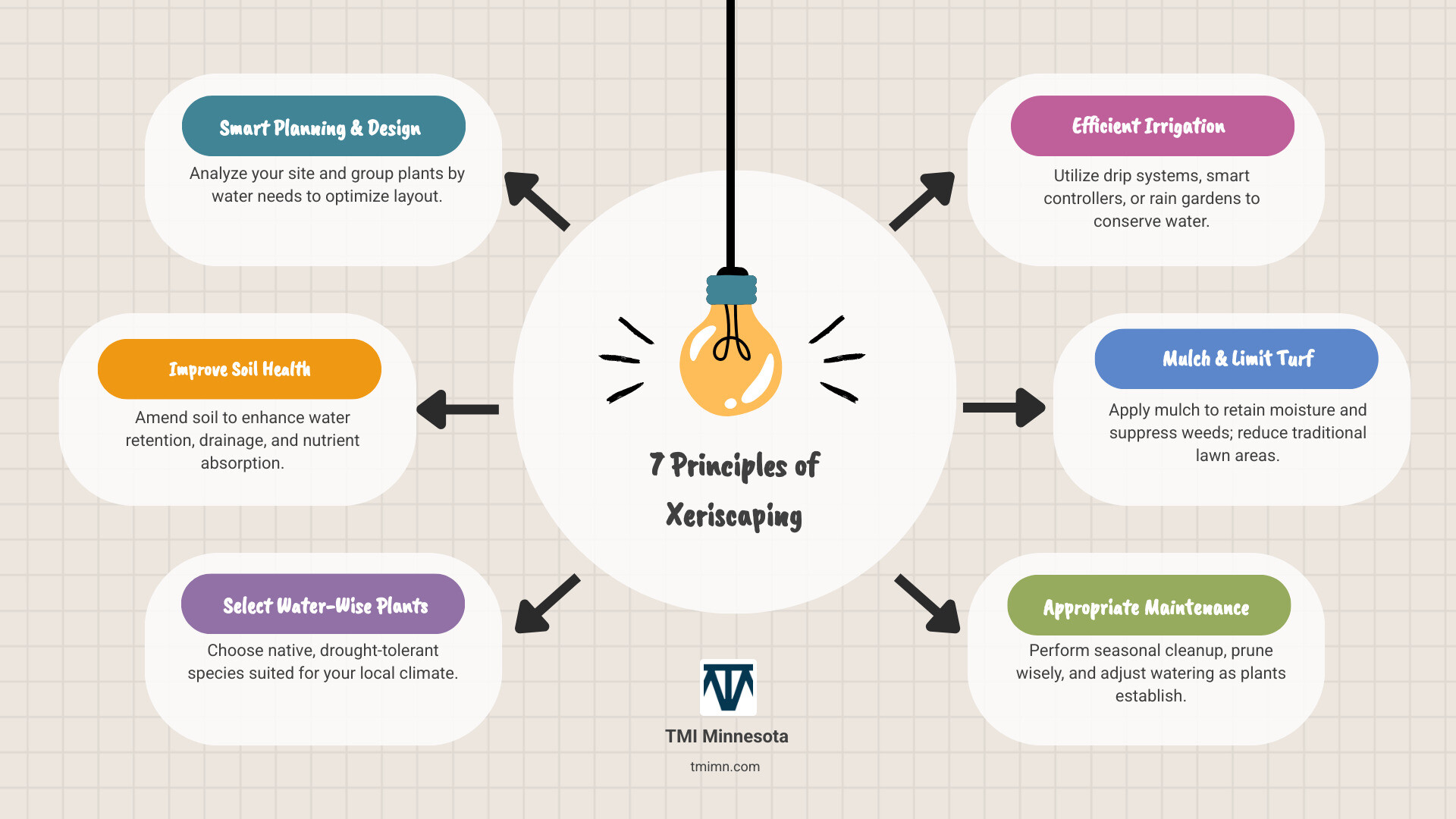
Quick xeriscape front yard terms:
Foundational Principles for a Thriving Xeriscape
Creating a successful xeriscape front yard isn’t just about picking pretty plants; it’s about understanding and applying a set of foundational principles that guide the entire design and implementation process. These principles ensure your landscape is not only beautiful but also sustainable, water-efficient, and easy to maintain. We approach every project with these in mind, blending the art of design with the science of horticulture. For a deeper dive into these concepts, explore the Principles of Water Wise Landscape Design (PDF). Our expertise in Softscaping and Hardscaping allows us to integrate these principles seamlessly into your outdoor space.
Create a Smart Plan and Improve Your Soil
The first step to any successful xeriscape front yard is a well-thought-out plan. We begin with a thorough site analysis, evaluating sun exposure, slopes, existing structures, and how you intend to use your outdoor space. This helps us define “hydrozones”—areas grouped by similar water needs. For example, plants that require more water (like certain perennials) can be placed closer to your home or in natural low points, while drought-tolerant species can thrive in drier, sunnier spots further away. Grouping plants this way optimizes water use and simplifies irrigation.
Next, we address your soil. In the Twin Cities, soils can vary, but often benefit from improvement to improve water retention and drainage. Amending the soil with organic matter like compost can drastically improve its structure, allowing it to hold moisture more effectively while still draining well. This is particularly beneficial for non-native drought-tolerant plants. However, many true Minnesota native plants are already adapted to local soil conditions and may require minimal or no amendments. This smart planning is a cornerstone of Sustainable Landscaping Techniques.
Incorporate Efficient Water Systems
Even drought-tolerant plants need some water, especially during establishment. The key is how we deliver that water. Efficient irrigation systems are paramount for a xeriscape front yard. We highly recommend drip irrigation for planting beds, trees, and shrubs. Drip systems deliver water directly to the plant’s root zone, minimizing evaporation, runoff, and overspray. This can save 50% to 90% of water compared to traditional sprinklers.
Smart irrigation controllers take efficiency a step further, adjusting watering schedules based on local weather data, soil moisture, and plant needs. This “set it and forget it” approach ensures your plants get exactly what they need, when they need it, without waste.
Beyond irrigation, we can integrate natural water conservation techniques like rain gardens and bioswales. A Rain Garden Design MN captures stormwater runoff from your roof or paved surfaces, allowing it to slowly infiltrate the soil rather than flowing into storm drains. Bioswales are similar, often linear, planted depressions designed to slow down and filter rainwater. For hardscaped areas, permeable pavers are an excellent choice. Unlike traditional concrete or asphalt, Permeable Paver Driveways allow rainwater to seep through, recharging groundwater and reducing runoff.
Use Mulch and Limit Traditional Lawn Space
Mulch is a xeriscape front yard‘s best friend. Applying a 2-4 inch layer of mulch to all exposed soil surfaces is one of the most effective strategies for water conservation. Mulch helps:
- Retain Moisture: It acts as a blanket, reducing evaporation from the soil surface.
- Suppress Weeds: It blocks sunlight, preventing weed seeds from germinating and growing.
- Regulate Soil Temperature: It keeps plant roots cooler in summer and warmer in winter.
- Improve Soil Health: Organic mulches break down over time, adding nutrients and improving soil structure.
We use both organic mulches (like wood chips or bark) and inorganic mulches (like gravel or decorative rock). Organic mulches are ideal for planting beds, while gravel or decomposed granite work beautifully in pathways or as a decorative ground cover. For more on plant choices, see our guide on Ground Cover Xeriscaping Plants.
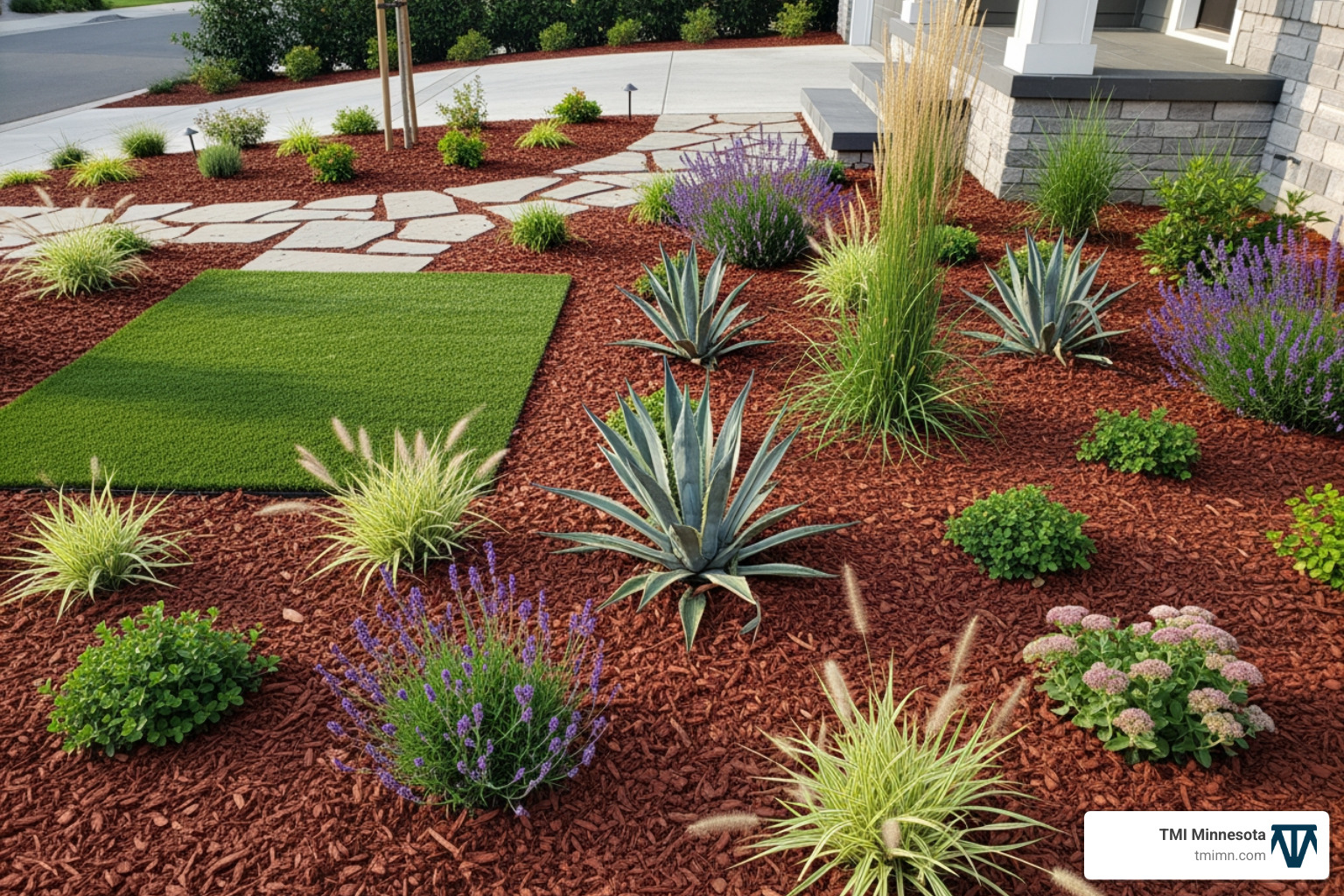
A significant water-saver in xeriscaping is reducing or replacing traditional turfgrass. Lawns are notoriously thirsty, consuming a vast amount of household water. While we don’t advocate for entirely eliminating grass if you enjoy it, we do recommend limiting its use to functional areas where it’s truly needed, like a play space or a small, defined green area. For those looking to go completely lawn-free, or seeking a truly low-maintenance alternative, Artificial Grass Benefits offer a green look without the watering or mowing.
9 Inspiring Xeriscape Front Yard Design Ideas
A xeriscape front yard doesn’t mean sacrificing beauty or style. In fact, it opens up a world of creative possibilities, blending diverse textures, colors, and forms to create a truly unique and inviting space. Our goal is always to improve your Curb Appeal Landscaping and create stunning Front Yard Gardens that reflect your personal taste while being water-wise. Here are nine inspiring design ideas we love to implement:
1. The Modern Minimalist
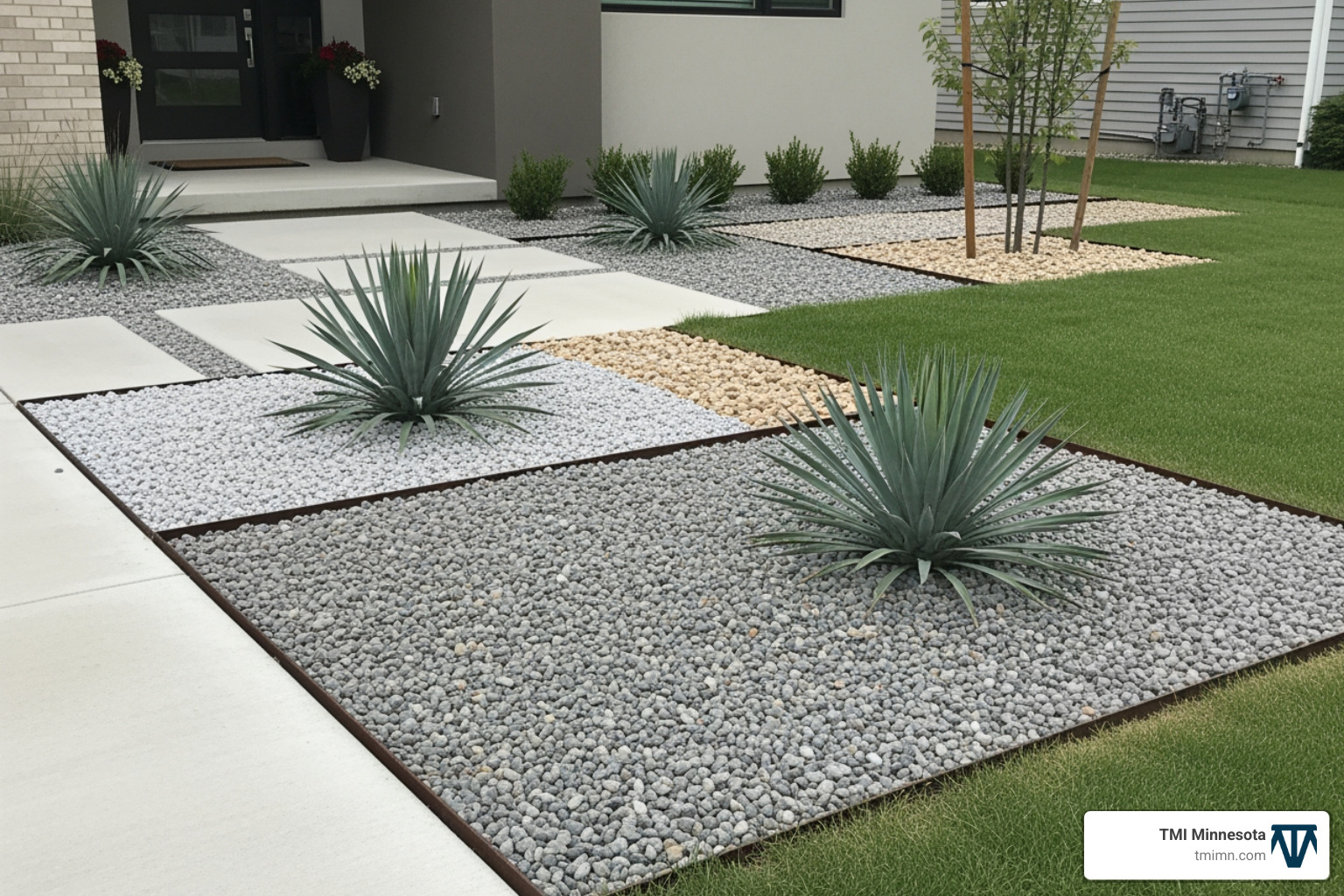
This design accepts clean lines, geometric shapes, and a restrained plant palette. We create symmetrical gravel beds, often anchored by sculptural, Minnesota-hardy plants like certain ornamental grasses, upright junipers, or cold-hardy succulents. The repetition of elements and the contrast between smooth gravel and textured plants give a crisp, architectural feel. It’s about intentionality and visual calm, making a bold statement with fewer elements. This style perfectly complements Modern Outdoor Designs.
2. The Lush Pollinator Haven
Imagine a vibrant mix of color and life, attracting bees, butterflies, and hummingbirds right to your doorstep. We design pollinator-friendly xeriscapes using a rich variety of Minnesota native plants and other drought-tolerant perennials with staggered bloom times. This ensures continuous seasonal interest and provides a steady food source for our winged friends. Think coneflowers, salvia, bee balm, and various native grasses, creating a truly alive and beautiful space. This approach aligns perfectly with creating a Pollinators Stop Here environment and embracing Native Plant Landscaping.
3. The Dry Creek Bed
A dry creek bed is a fantastic way to combine aesthetics with functionality in your xeriscape front yard. We construct these winding features using river rocks, decorative stones, and sometimes larger boulders, mimicking the natural flow of water. Beyond their visual appeal as a focal point, dry creek beds serve as excellent Landscape drainage solutions, channeling stormwater runoff away from your home’s foundation and into planted areas. They add a natural, organic feel and can be integrated beautifully into Backyard Rock Garden Ideas.
4. The Textured Gravel and Rock Garden
This design idea celebrates the beauty of natural stone and varied textures. We use different sizes and colors of gravel mulch, combined with strategically placed accent boulders, to create a visually rich landscape. Drought-tolerant plants, chosen for their unique forms and textures, are nestled among the rocks. While true agaves and yuccas are often associated with warmer climates, we can achieve a similar sculptural effect with Minnesota-hardy alternatives like certain sedums, upright junipers, and ornamental grasses. This design highlights the inherent beauty of Natural Stone Hardscapes.
5. The Functional Pathway
Pathways are more than just a way to get from point A to point B; they guide the eye, define spaces, and add crucial structure to your xeriscape front yard. We often use permeable pavers, flagstone, or decomposed granite for these paths. Permeable materials allow rainwater to soak into the ground, reducing runoff. The choice of material can also dictate the style – flagstone for a natural look, geometric pavers for modern, or decomposed granite for a rustic charm. These pathways can create distinct zones within your garden and are a key element in our Garden Pathway Ideas. They can also be beautifully integrated with other materials, such as in Pavers and Fake Grass designs.
6. The Raised Planter Design
Adding height and dimension dramatically improves a xeriscape front yard. We achieve this through the use of raised planters and retaining walls. These structures, built from stone, brick, or even modern Corten steel, define planting areas, create visual interest, and can make gardening more accessible. They also provide excellent opportunities for integrating Hardscape Lighting, illuminating your beautiful plants and pathways at night. Our Retaining Wall Design Services ensure these features are both stunning and structurally sound.
7. The Lawn Alternative Meadow
Say “goodbye grass” to high-maintenance lawns! We can transform your traditional turf into a beautiful and ecologically beneficial meadow. This design idea features swathes of drought-tolerant ground covers, various ornamental grasses, and even Minnesota-hardy wildflowers. It creates a soft, naturalistic look with minimal water and maintenance requirements. Imagine the gentle sway of native grasses and the seasonal bloom of wildflowers replacing endless mowing. This is a truly sustainable and beautiful alternative, drawing inspiration from projects like Goodbye Grass and showcasing the versatility of Ground Cover Xeriscaping Plants.
8. The Mediterranean Courtyard
While the Twin Cities aren’t the Mediterranean, we can capture the essence of this neat, drought-friendly style by focusing on key design elements and selecting Minnesota-hardy plant equivalents. We create intimate courtyard spaces using gravel ground cover, often accented with large terracotta pots. For plant choices, we might use lavender (a common Mediterranean plant that thrives here), rosemary (hardy varieties), or dwarf evergreens to mimic the look of olive trees. It’s about creating a sense of enclosure and warmth, perfect for a cozy seating area. Explore more Courtyard Design Ideas that can be adapted to our climate, using plants from our Xeriscape Garden Plants Complete Guide.
9. The Container Garden Oasis
Don’t underestimate the power of pots! Container gardens offer incredible flexibility and a fantastic way to add bursts of color and texture to your xeriscape front yard, especially on hardscaped areas like patios or pathways. We group various sizes and styles of pots, planting them with drought-tolerant succulents, vibrant annuals, or even small ornamental grasses that thrive in Minnesota. This allows for seasonal changes and experimentation without impacting the permanent landscape. It’s a versatile way to integrate a splash of green and color. For inspiration, check out our Overview of Container Gardening and Flower Garden Designs.
Plant and Material Selection for Your Xeriscape Front Yard
Choosing the right plants and hardscape materials is crucial for a successful and beautiful xeriscape front yard. Our expertise in Drought Tolerant Garden Design and Hardscape Design Services ensures we select elements that thrive in Minnesota’s climate while meeting your aesthetic goals.
| Mulch Type | Cost (General) | Water Retention | Heat Absorption | Best Use Cases |
|---|---|---|---|---|
| Organic (Wood Chips, Bark) | Moderate | High | Low | Planting beds, around trees/shrubs |
| Inorganic (Gravel, Rock) | Moderate-High | Moderate | High | Pathways, modern designs, rock gardens, drainage |
Choosing Water-Wise Plants
The cornerstone of any xeriscape front yard is plant selection. We focus on plants that are naturally adapted to periods of drought, or that can survive with minimal supplemental irrigation once established. For Minnesota homeowners, this means prioritizing:
- Native Plants: These are the superstars of xeriscaping in our region. Minnesota native plants are perfectly suited to our climate and soil conditions, often requiring less water, fertilizer, and pest control. They also provide vital habitat and food for local wildlife and pollinators.
- Drought-Tolerant Perennials: Many beautiful perennials can thrive with less water, offering vibrant blooms and foliage year after year. Examples include certain varieties of coneflower, salvia, sedum, and yarrow.
- Succulents: While many succulents are associated with deserts, there are numerous cold-hardy varieties that do exceptionally well in Minnesota, such as hardy sedums and sempervivums (hens and chicks), adding unique form and texture.
- Ornamental Grasses: These provide year-round interest, texture, and movement, often requiring very little water once established. Varieties like little bluestem, switchgrass, and prairie dropseed are excellent choices.
- Shade Trees: Strategically placed drought-tolerant trees can provide cooling shade for your home and garden, further reducing water needs for underplantings. Consider trees like bur oak or hackberry, which are native and resilient.
When we design, we always group plants by their water needs (hydrozoning) to ensure efficient irrigation and plant health. Our comprehensive Xeriscape Garden Plants Complete Guide offers more detailed options for your Minnesota landscape.
Selecting Hardscape Materials
Hardscaping provides the structure and framework for your xeriscape front yard. The right materials improve aesthetics, reduce planting areas (and thus water needs), and offer functional benefits. For What is Hardscape Installation, we often recommend:
- Permeable Pavers: Ideal for driveways, walkways, and patios, these allow rainwater to infiltrate the ground, reducing runoff and supporting groundwater recharge.
- Decomposed Granite: A versatile material for pathways, patios, and planting bed borders, offering a natural, earthy look and excellent drainage.
- Flagstone: Creates beautiful, natural-looking pathways and patios, with irregular shapes that can be laid dry or with permeable joint fillers.
- Boulders and River Rock: Used for focal points, dry creek beds, erosion control, and adding natural texture. They are incredibly durable and require no maintenance.
We prioritize materials that are durable, aesthetically pleasing, and contribute to the overall water-wise goals of your xeriscape.
Maintenance and Common Mistakes
One of the biggest appeals of a xeriscape front yard is its promise of reduced maintenance. While it’s not “no maintenance,” it certainly requires less effort than a traditional lawn. This shift in routine contributes significantly to Sustainable Outdoor Living.
How Xeriscape Maintenance Differs from a Traditional Lawn
The maintenance rhythm of a xeriscape is fundamentally different from that of a traditional lawn:
- Less Mowing: This is perhaps the most obvious difference. With reduced turf areas or lawn alternatives, the weekly chore of mowing becomes a distant memory.
- Less Watering: Once established, xeriscape plants require significantly less supplemental water. This means less time spent dragging hoses or adjusting sprinklers, and lower water bills.
- Seasonal Cleanup vs. Constant Care: Instead of continuous weekly tasks, xeriscaping often involves more seasonal efforts: spring cutbacks of perennials and grasses, occasional weeding, and a check of the irrigation system.
- Weeding: While mulch helps suppress weeds, some will inevitably pop up. Weeding in a xeriscape is typically less frequent and often easier than battling weeds in a large, open lawn.
- Mulch Replenishment: Organic mulches will break down over time and may need to be topped up every 1-3 years to maintain their effectiveness.
- Pruning: Drought-tolerant shrubs and trees may require minimal pruning to maintain their shape or remove dead branches, but generally less than high-maintenance ornamentals.
Overall, a xeriscape translates to more time enjoying your yard and less time working in it, aligning perfectly with Eco-Friendly Landscape Design principles.
Common Mistakes to Avoid in Your Xeriscape Front Yard
Even with the best intentions, it’s easy to fall into common pitfalls when designing or implementing a xeriscape front yard. We’ve seen these mistakes and can help you avoid them:
- Poor Planning: Rushing into planting without a detailed plan is a recipe for disaster. Failing to consider sun exposure, drainage, and mature plant sizes leads to wasted effort and plant loss.
- Forgetting Hardscapes: A landscape solely of plants can feel overwhelming. Neglecting hardscaping elements like pathways, patios, or boulders misses opportunities for structure, definition, and reduced water needs.
- Using Plastic Weed Barriers: While they seem like a good idea, plastic weed barriers prevent water and nutrients from reaching plant roots and can create unhealthy soil conditions. We recommend organic mulches or permeable landscape fabric for pathways only.
- Planting High-Water-Use Plants: Mixing thirsty plants with drought-tolerant ones defeats the purpose of xeriscaping and makes efficient irrigation impossible. Stick to hydrozoning.
- Improper Mulch Depth: Too little mulch won’t be effective, while too much can suffocate plants. A 2-4 inch layer is generally ideal for most organic mulches.
- Ignoring Soil Type: Not understanding your soil’s composition (e.g., heavy clay or sandy loam in Minnesota) can lead to poor plant establishment and water inefficiency. Amending the soil appropriately is key.
- Over-reliance on a Single Plant Type: A common misconception is that xeriscapes are just cacti and rocks. This leads to a monotonous design. A rich variety of drought-tolerant plants, textures, and colors creates a dynamic and interesting landscape.
Avoiding these mistakes ensures your investment in a xeriscape front yard pays off with lasting beauty and sustainability. If you’re considering a significant change, our Landscape Renovation Services can guide you through the process seamlessly.
Conclusion: Create a Stunning, Sustainable Front Yard
Changing your front yard into a xeriscape is more than just a trend; it’s a smart, sustainable choice that offers immense benefits for homeowners in the Twin Cities. We’ve seen how a thoughtfully designed xeriscape front yard can truly lift a home, providing significant water savings, drastically reducing maintenance, and boosting curb appeal with its unique beauty and vibrant plant life. It’s about creating an outdoor space that works harder for you, while also being kinder to the environment by supporting pollinators and conserving precious resources.
At TMI Minnesota, we believe your landscape should be a source of joy, not endless chores. Our team of Landscape Design Experts is passionate about creating custom outdoor spaces that reflect your style and thrive in Minnesota’s unique climate. With a xeriscape front yard, you’re not just choosing a landscape; you’re choosing a lifestyle of beauty, efficiency, and sustainability.
For professional help changing your yard with a beautiful, water-wise design, explore our xeriscape landscaping ideas and contact us for a consultation.