
Changing Your Outdoor Space with Artificial Grass on Block Paving
Artificial grass on block paving is not only possible—it’s a practical and attractive solution for modernizing your outdoor space. Here’s what you need to know:
Can You Install Artificial Grass on Block Paving?
- Yes, artificial grass can be laid on block paving with proper preparation
- Drainage is the most critical factor—your pavers must allow water to escape
- Surface condition matters—pavers should be stable, level, and crack-free
- Two main methods: Direct lay with shock pad underlay, or using a fine aggregate base layer
- Expected lifespan: 10-15+ years with quality materials and proper installation
Many homeowners face the challenge of block paving that’s either cracked and uneven, creating puddles when it rains, or simply looking dull and outdated. The gaps between pavers collect weeds that require constant maintenance. Installing artificial grass over these pavers offers a way to transform your patio into a vibrant, low-maintenance oasis without the expense and hassle of removing all that hardscaping.
The combination delivers the best of both worlds—the durability and structure of block paving underneath with the lush, green aesthetic of a lawn on top. You eliminate mowing, watering, and weeding while creating a softer, safer surface for children and pets. Whether you’re enhancing a patio, walkway, or entertainment area, this approach saves time and money compared to full excavation.
Based on our experience with countless landscape changes throughout Minnesota, we know that proper preparation—especially drainage—makes all the difference. It’s the key to ensuring your new surface lasts for a decade or more, rather than failing in just a few years.
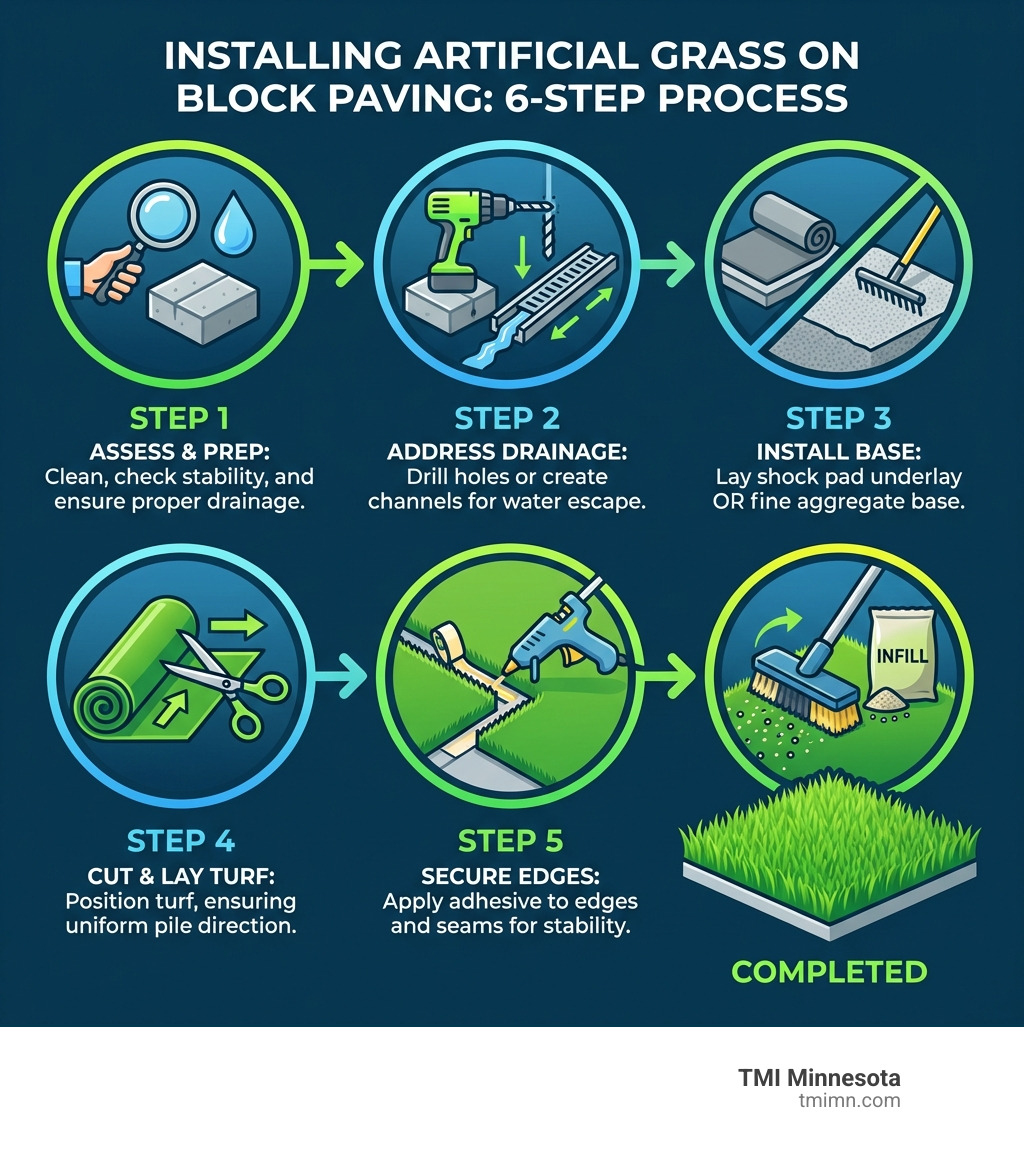
Find more about artificial grass on block paving:
Why Choose Artificial Grass Over Block Paving?
Changing your existing block paving with artificial grass can revitalize your outdoor living space in ways you might not have imagined. We’ve seen this approach gain immense popularity among homeowners in the Twin Cities, and for good reason!
Aesthetic Improvement: Color and Texture Balance
Dull, weathered pavers can make an outdoor space feel lifeless. Installing plush artificial grass on block paving is the perfect way to provide more balance and color within your space, instantly elevating its aesthetic appeal. The vibrant green of the artificial turf creates a striking contrast with the hard lines and tones of your pavers, introducing a soft, organic texture that natural grass might struggle to provide in shaded or high-traffic areas. This combination offers a visually appealing contrast that can truly make your patio pop. For instance, pairing a short pile turf with gray pavers can create a modern, sleek look, while a taller, softer pile can offer a cozy, inviting feel. It’s about achieving that perfect blend of modern artificial grass design with functional hardscaping. For broader inspiration on mixing hard and soft landscaping elements, you might also explore design ideas on resources like landscape architecture.
Low Maintenance Living: No Mowing or Weeding
One of the most compelling reasons our clients choose artificial grass on block paving is the promise of a truly low-maintenance outdoor space. Traditional lawns demand constant attention: mowing, watering, fertilizing, and battling weeds. Artificial turf completely eliminates these labor-intensive routines. Imagine reclaiming your weekends from yard work! This means no more dragging out the mower, no more worrying about brown patches during a dry spell, and significantly less weeding between those pesky paver gaps. It’s an easy-care outdoor design that fits perfectly with busy Minnesota lifestyles, allowing you to enjoy your outdoor oasis rather than constantly working on it.
Water Conservation
In addition to saving time, artificial turf is a champion for water conservation. It eliminates the need for regular watering, which can be a significant benefit for homeowners looking to reduce their environmental footprint and water bills. This eco-friendly aspect is increasingly important, and artificial grass provides a sustainable solution for a beautiful lawn without the thirsty demands of natural grass.
Durability and Longevity
High-quality artificial grass is designed to withstand the elements and heavy foot traffic, offering remarkable durability. When properly installed over a stable block paving base, it can last for 10-15 years or even longer. The lifespan ultimately depends on factors such as the quality of the turf itself, the amount of foot traffic it receives, and the level of care. This long-lasting nature makes it a smart investment for your outdoor space.
Safe Play Surface for Kids and Pets
For families with children and pets, artificial grass on block paving offers a safer, more comfortable surface than bare pavers or concrete. It provides a cushioned landing spot, reducing the impact of falls, which can be particularly important for active kids. Unlike natural grass, there are no muddy patches after rain, and it’s free from pesticides and allergens. This makes it an ideal choice for creating a dedicated play area that’s both clean and safe. Our safe turf for kids options are designed with these considerations in mind, providing peace of mind for parents.
Cost-Effectiveness vs. Paver Removal
A common question we hear is whether it’s more cost-effective to install artificial grass over existing pavers or to remove them entirely. The answer is almost always the former. Installing artificial grass over existing block paving is a budget-friendly option because it avoids the significant costs associated with excavation, hauling away debris, and skip hire. Removing a large concrete slab, for example, can involve considerable labor and disposal fees. By utilizing your existing hardscaping as a sub-base, you’re changing your space efficiently and economically. This approach allows us to deliver stunning results without the extensive demolition work, making it a win-win for your wallet and your yard. For a deeper dive into the overall advantages, explore our guide on artificial grass benefits.
Pre-Installation: Preparing Your Pavers for Turf
Before we roll out that lush green carpet, proper preparation of your existing block paving is absolutely crucial. Think of it like building a house – a strong foundation is everything! This step ensures the longevity, drainage, and aesthetic appeal of your new artificial lawn.
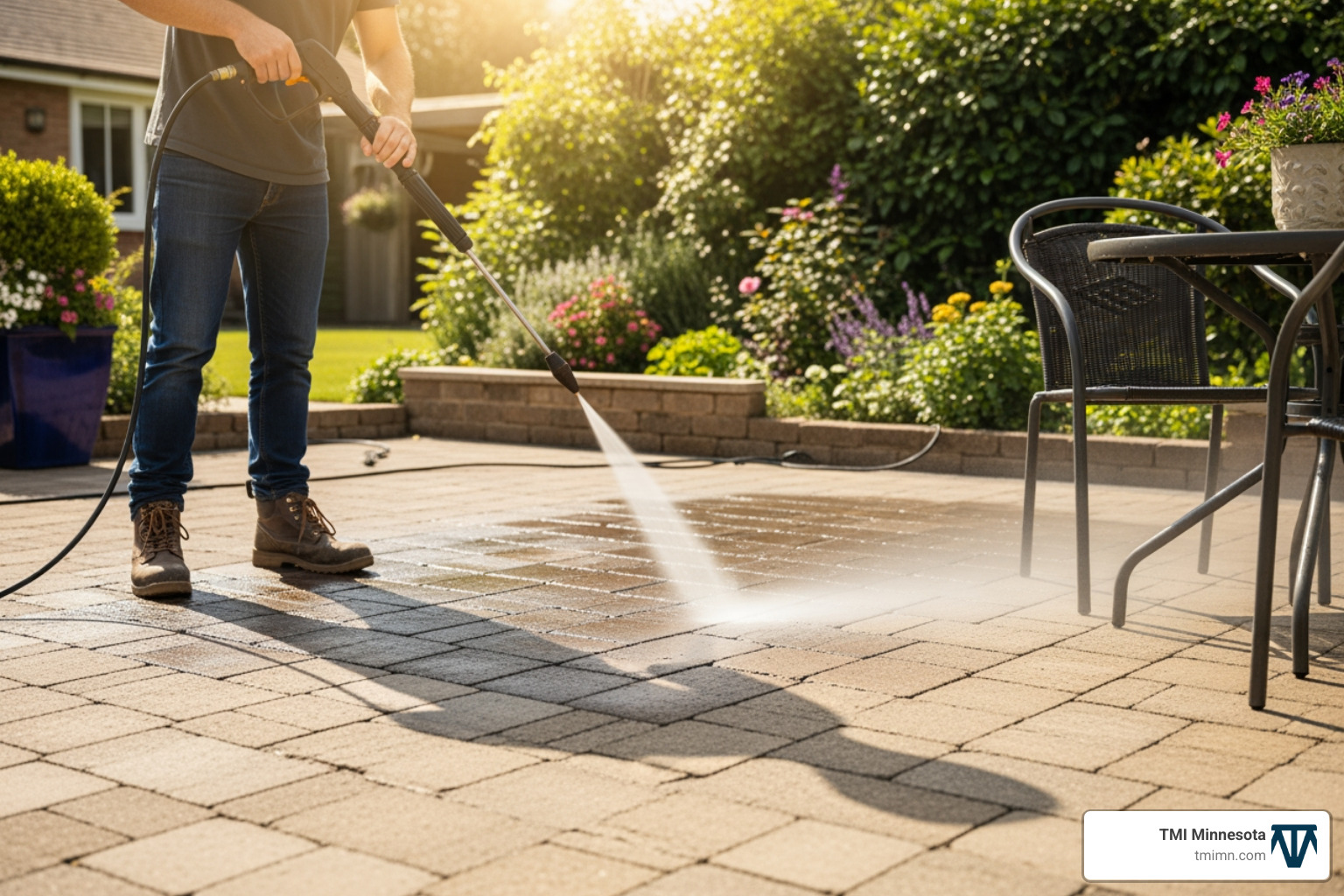
Surface Assessment: Stability, Levelness, Cracks, and Damage
Our first step is always a thorough assessment of your existing block paving. We need to check for several key factors:
- Stability Check: Are your pavers wobbly or loose? If individual blocks are shifting, they need to be re-seated or repaired. An unstable base will lead to an uneven and potentially unsafe artificial turf surface.
- Levelness: We use a long level to check for any significant dips or humps. While artificial grass can smooth out very minor imperfections, major undulations (more than 20mm, or about ¾ of an inch) need to be addressed. Large bumps or depressions will show through the turf, creating an unnatural look. For minor unevenness, a self-levelling compound or a skim of towelled concrete can work wonders.
- Cracks and Damage: Inspect the pavers for any cracks or broken sections. Cracks wider than 20mm (about ¾ inch) can indicate underlying issues and should be repaired. Any severely damaged pavers should be replaced. This ensures a solid, continuous surface for the artificial grass.
Thorough Cleaning: Weed and Debris Removal
Once the structural integrity is confirmed, it’s time for a deep clean. This is one of the most satisfying parts!
- Weed Removal: Any existing weeds, moss, or grass growing between the pavers must be completely removed. Weeds are persistent, and if left unchecked, they can eventually try to push through the artificial turf, even with a weed barrier. A good weed killer application followed by thorough removal is essential.
- Debris Removal: Sweep away all dirt, leaves, and other organic debris. We often use a pressure washer for this step – it’s incredibly effective and, let’s be honest, a lot of fun! This ensures the surface is pristine, allowing any subsequent layers or adhesives to bond properly. If you’ve ever had oil stains on your block paving, you might want to consult our guide on how to remove oil from block paving driveway to ensure a completely clean slate.
Addressing Drainage for Artificial Grass on Block Paving
This is arguably the most critical aspect of preparing your artificial grass on block paving project. Without proper drainage, you risk water pooling, leading to mold, odors, and a significantly reduced lifespan for your artificial turf.
Permeable vs. Non-Permeable Pavers
The first thing we consider is the type of block paving you have. Some pavers are designed to be permeable, allowing water to filter through. Others are less permeable, and water tends to sit on the surface. Understanding this helps us determine the best drainage strategy.
Puddle Test
A simple “puddle test” can tell us a lot. After a good rain, or by hosing down the area, observe how quickly water drains from your block paving. If you see significant puddles forming and lingering for hours, we definitely need to improve the drainage.
Drilling Drainage Holes
For non-permeable pavers or areas with poor drainage, drilling holes is a highly effective solution. We typically drill 15mm (about ⅝ inch) cores at 1-meter (about 3 feet) intervals across the paved area. These holes are then backfilled with pea shingle or coarse gravel to create clear channels for water to escape. This ensures that any water that penetrates the artificial grass can drain through the pavers and into the ground below.
Creating Drainage Channels
In some cases, especially if the paving is very uneven or if there are existing low points, we might create small drainage channels around the perimeter or in specific areas. These can be filled with pea gravel and covered with a geotextile membrane to prevent clogging, directing water away from the artificial grass. For an exhaustive understanding of how to manage water flow, our artificial grass drainage solutions guide offers even more detailed insights. Proper drainage is the secret sauce to a long-lasting, problem-free artificial lawn.
How to Install Artificial Grass on Block Paving: A Step-by-Step Guide
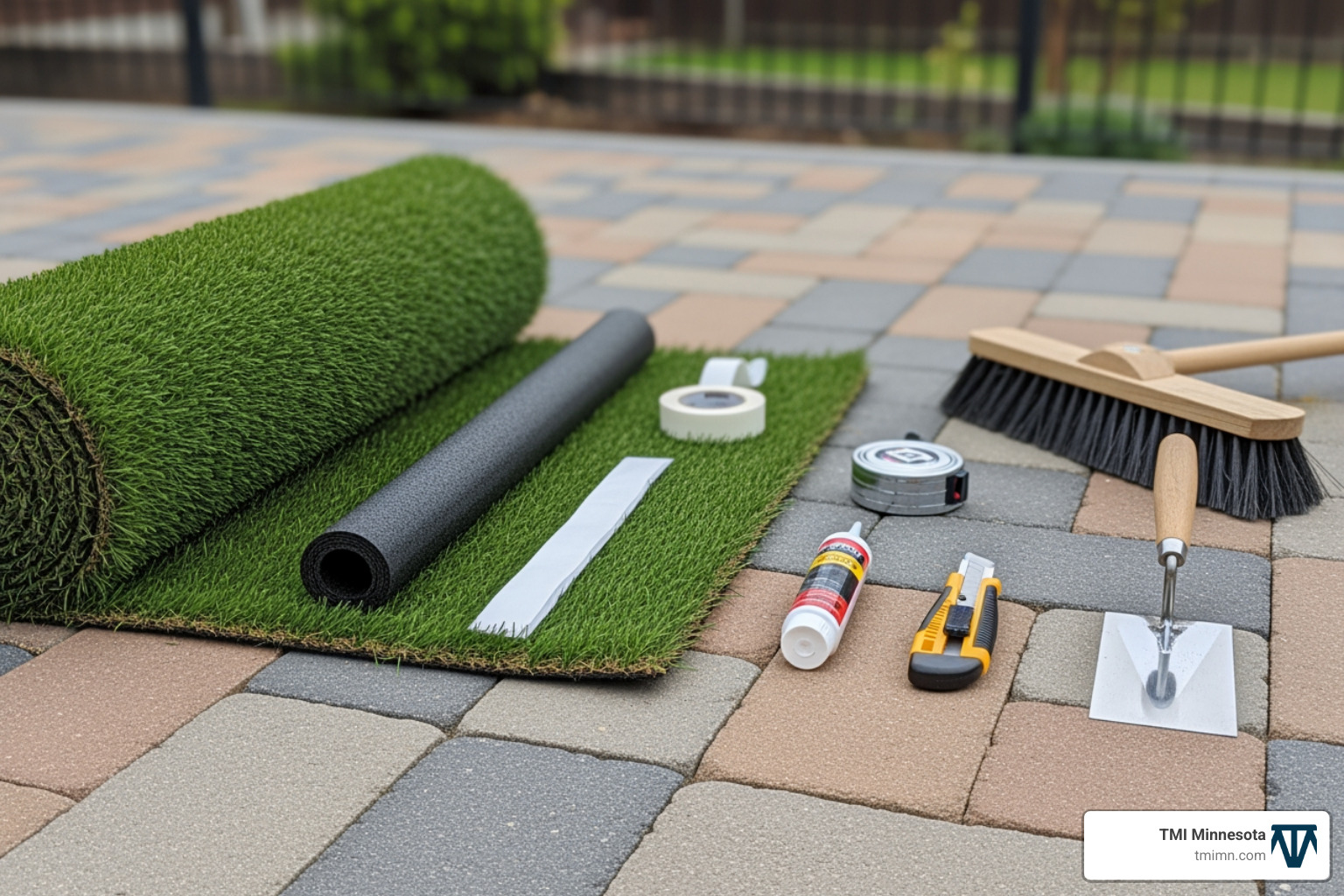
Here’s a list of materials we’ll typically require for this project:
- Quality Artificial Turf: Choose a turf suitable for your climate and intended use (e.g., foot traffic, pets).
- Shock Pad / Underlay: Essential for cushioning, smoothing minor imperfections, and often aiding drainage.
- Joining Tape: For seamlessly connecting multiple pieces of turf.
- Artificial Grass Adhesive: A strong, weather-resistant adhesive suitable for outdoor use.
- Sharp Utility Knife or Turf Cutter: For precise cutting and trimming.
- Measuring Tape: For accurate measurements.
- Stiff Broom or Power Brush: For brushing up the pile and distributing infill.
- Kiln-Dried Sand (Infill): To help blades stand upright, add weight, and aid drainage.
- Optional: Timber Battens / Edging: For securing the perimeter if not directly gluing to pavers.
- Optional: Non-Galvanized Nails or Landscape Staples: For securing turf to timber battens or ground if applicable.
For a comprehensive overview of our installation practices, check out our artificial turf installation guide.
Method 1: The Direct Lay with Underlay
This method is ideal when your block paving is relatively stable and level, requiring minimal adjustment. The underlay plays a crucial role here, providing both comfort and a smoother surface.
- Laying the Shock Pad / Underlay: First, we roll out the shock pad underlay across the entire paved area. This layer is vital for several reasons: it provides cushioning underfoot, helps to hide any minor irregularities in the pavers that might otherwise show through the turf, and offers an additional layer of protection for the turf’s backing. We tape the lengths of the underlay together, ensuring a continuous, smooth surface. It’s important to leave a small perimeter gap (around 2 inches) if you plan to glue the turf directly to the paving.
- Securing the Underlay: Depending on the type of underlay, it might be glued down in sections or simply laid flat. The key is to ensure it’s taut and free of wrinkles.
- Applying Adhesive: Once the underlay is down, we carefully apply the artificial grass adhesive. We typically use a notched trowel to spread the adhesive evenly over the underlay, working in manageable sections (approximately half the size of the grass panel you’re about to lay). We often leave small gaps (about 20mm or ¾ inch) in the glue around the edges to allow for water drainage.
- Laying the Turf: With the adhesive applied, we carefully position the artificial grass over it, pressing it firmly into place. It’s crucial to align the turf correctly from the start, ensuring the pile direction is consistent across all panels for a uniform look. We allow the turf to relax in the sun for at least 30 minutes (or even a few hours) before making final cuts – this makes it more pliable and easier to work with.
Method 2: Using a Fine Aggregate Base
This method is suitable if your pavers have slight unevenness or if you prefer an additional sub-base layer for improved drainage and stability. This method is often preferred for a more traditional artificial grass base, adapted for existing hard surfaces.
- Creating a Perimeter: If we’re building up a base, we first install timber fixings (tanalised wooden battens) around the perimeter of the area. These battens act as a containment system for our aggregate base and provide a secure edge to which we can later attach the artificial grass.
- Spreading and Compacting a Fine Aggregate Layer: We then spread a layer of fine aggregate, such as granite dust or a mix of crushed granite and sand, over the block paving. This layer typically ranges from 1 to 2 inches (25-50mm) in thickness. This material helps to create a perfectly level and stable surface, absorbing any minor imperfections in the pavers. We compact this layer thoroughly using a plate tamper or heavy roller to ensure a dense, firm base. This compaction is critical for preventing dips and humps in your finished lawn. Seeing a base preparation in action can provide a helpful visual of this process.
- Laying the Turf: Once the aggregate base is perfectly level and compacted, we lay a geotextile weed barrier over it. This provides an extra layer of weed prevention and helps stabilize the sub-base. Then, similar to Method 1, we unroll the artificial grass, ensuring the pile direction is consistent, and begin securing it.
Finishing Touches for a Professional Look
Regardless of the method chosen, the finishing touches are what truly make your artificial grass on block paving project shine.
- Cutting and Trimming Edges: Using a sharp utility knife, we carefully cut and trim the artificial grass to fit the exact contours of your patio. We always cut from the back of the turf for cleaner lines, ensuring a neat finish around all edges and any obstacles.
- Joining Seams: If your area requires more than one piece of artificial grass, seamless joins are essential. We use specialized joining tape and adhesive. The tape is laid underneath the seam, and adhesive is applied in a zigzag pattern. We then carefully butt the two pieces of turf together, ensuring no fibers are caught in the seam, and press firmly. Making sure the blades of grass face the same direction when joining pieces is a critical tip for an undetectable seam!
- Securing the Perimeter: The edges of the artificial grass need to be securely fastened to prevent lifting or shifting. If we used timber battens, we’ll nail or screw the turf directly to them. If we’re adhering directly to the pavers (with or without an underlay), we apply a continuous bead of adhesive around the perimeter, pressing the turf firmly down. Non-galvanized nails or landscape staples can also be used every 6-12 inches along the edges for added security.
- Brushing the Pile: After installation, the turf fibers will likely be flattened. We use a stiff broom or a power brush to brush the pile against the grain. This lifts the fibers, making the grass look lush and natural.
- Adding Infill: The final step for many installations is adding infill, typically kiln-dried silica sand. We spread this sand evenly over the turf and brush it deep into the pile. Infill serves several purposes: it helps the blades stand upright, adds weight to the turf to prevent shifting, and contributes to better drainage. For areas with high footfall or regular play, infill is particularly beneficial.
Frequently Asked Questions
When considering artificial grass on block paving, it’s natural to have questions about its longevity, maintenance, and suitability for various uses. Here are some of the most common inquiries we receive in the Twin Cities.
How long does artificial grass last on block paving?
With proper installation and a good-quality artificial grass, you can expect your new surface to last for 10-15 years or more. We’ve even seen installations last up to 20 years with diligent care! The lifespan is influenced by several factors:
- Quality of Turf: Investing in a high-density, UV-resistant artificial grass from a reputable supplier pays off in the long run. Cheaper alternatives might degrade faster.
- Foot Traffic: Areas with very high foot traffic, like a main walkway, might show wear sooner than a decorative patio space.
- Proper Installation: As we’ve emphasized, adequate base preparation, drainage, and secure fastening are paramount. A poorly installed turf will fail prematurely.
- UV Resistance: Our artificial grass products are specifically chosen for their UV stability, crucial for resisting fading and degradation under the Minnesota sun.
We choose products that are built to last, ensuring your investment provides years of enjoyment.
What maintenance is required for artificial grass on block paving?
One of the biggest draws of artificial grass on block paving is its low maintenance. While it’s not “no maintenance,” the tasks are minimal compared to natural grass.
- Regular Brushing: Periodically brush the artificial grass with a stiff broom or plastic rake, especially in high-traffic areas, to keep the pile upright and looking fresh. This also helps distribute the infill.
- Removing Debris: Sweep or use a leaf blower to remove leaves, dirt, and other organic debris. This prevents accumulation that could hinder drainage or lead to weed growth.
- Rinsing Spills: For spills or pet accidents, a simple hose-down with water is usually sufficient. For tougher stains, a mild detergent and water can be used.
- Weed Prevention at Edges: While a good weed barrier and proper installation minimize weeds, an occasional straggler might appear at the very edges or through the infill. Promptly remove any weeds you spot.
- Annual Check-up: We recommend an annual check for any loose seams or edges and to top up infill if needed.
For a comprehensive guide on keeping your artificial lawn pristine, dive into our artificial grass maintenance complete guide.
Is it a good option for pets?
Absolutely! Artificial grass on block paving is a fantastic option for pet owners in the Twin Cities, offering a clean, durable, and low-odor solution for pet play areas.
- Durability: Our artificial grass is tough enough to stand up to playful paws and energetic pets.
- Easy to Clean: Pet waste is easy to pick up, and urine simply drains through the permeable backing. A quick rinse with a hose is usually all that’s needed to keep the area clean and fresh.
- Proper Drainage is Key: This is especially important for pet areas. Ensuring excellent drainage through the block paving prevents urine from pooling and causing odors. We might recommend specific drainage solutions during installation for pet-heavy areas.
- Odor-Blocking Infills: For pet installations, we often recommend specialized infills like Envirofill. This infill contains antimicrobial properties that help neutralize odors from pet urine, keeping your patio smelling fresh.
- PU-Backed Turf: For the ultimate pet-friendly solution, we might suggest artificial grass with a polyurethane (PU) backing. This type of backing is less absorbent than traditional latex backings, further preventing the trapping of urine and associated odors. When installing PU-backed grass for pets, we often advise against using an additional weed membrane, as it can sometimes trap odors.
With the right products and installation techniques, your pets will love their new, clean, and comfortable outdoor space, and you’ll love the easy cleanup!
Conclusion: A Perfect Pairing for Modern Landscapes
Changing your outdoor space with artificial grass on block paving is more than just a renovation; it’s an investment in a lifestyle of ease, beauty, and enjoyment. We’ve explored how this innovative pairing brings together the best of both worlds: the robust foundation of your existing pavers with the lush, year-round greenery of artificial turf.
You’ll gain aesthetic appeal, a balanced and inviting outdoor living area, and the sheer joy of a low-maintenance landscape. No more mowing, no more constant weeding between pavers, and no more worrying about muddy footprints. Instead, you’ll have a durable, long-lasting surface that’s safe and comfortable for children and pets alike. This cost-effective solution breathes new life into tired patios and walkways without the significant expense and disruption of full paver removal.
While the prospect of a DIY installation is certainly feasible for the handy homeowner, proper preparation and attention to detail, especially regarding drainage and base stability, are paramount for a successful and enduring result. Our expertise in hardscape installations and softscape designs means we understand the nuances of integrating these elements seamlessly for the unique climate and conditions of the Twin Cities.
At TMI Minnesota, we specialize in changing outdoor spaces with unique designs, utilizing leading-edge products to lift your yard living experience. We pride ourselves on creating outdoor havens that are not only beautiful but also perfectly suited to your needs and lifestyle. For a comprehensive look at integrating turf and hardscapes, and to see how we can bring your outdoor vision to life, we invite you to explore our Artificial Turf with Pavers guide. Let’s create an outdoor space you’ll love for years to come!