
Your Personal Paradise Awaits
Tropical landscape designs transform backyards into lush, exotic retreats that feel like a permanent vacation. With vibrant blooms, bold foliage, and the soothing sound of water, these gardens create tranquil sanctuaries at home.
Key Elements of Tropical Garden Design:
- Bold, Large-Leafed Foliage – Plants like palms, elephant ears, and banana trees create instant visual impact
- Vibrant Color Palette – Bright flowers in pink, yellow, orange, and red mixed with varied shades of green
- Water Features – Fountains, ponds, or waterfalls add tranquility and cooling effects
- Dense, Layered Planting – Multiple heights and textures create a jungle-like atmosphere
- Natural Materials – Teak, bamboo, rattan, and stone improve the authentic tropical feel
The appeal is clear: tropical gardens are a growing trend for homeowners seeking to replicate the lush feeling of a tropical holiday. These designs offer inspiration for creating stress-free sanctuaries where worries melt away. The best part? You don’t need a tropical climate to achieve this look. With the right plants and design, you can bring the tropics to any region, even Minnesota.
The magic lies in understanding that tropical style is less about geography and more about creating a sensory experience. It’s the dense foliage, trickling water, vibrant colors against deep greens, and the feeling of being surrounded by nature’s abundance. When done well, stepping into your backyard can feel like stepping onto a faraway island.
I’m Christopher Deanovic, Operations Leader at Task Masters. I’ve spent years helping Minnesota homeowners transform their outdoor spaces. My experience with tropical landscape designs shows that even in our northern climate, you can create a lush, exotic atmosphere with strategic plant selection, layering, and attention to detail.
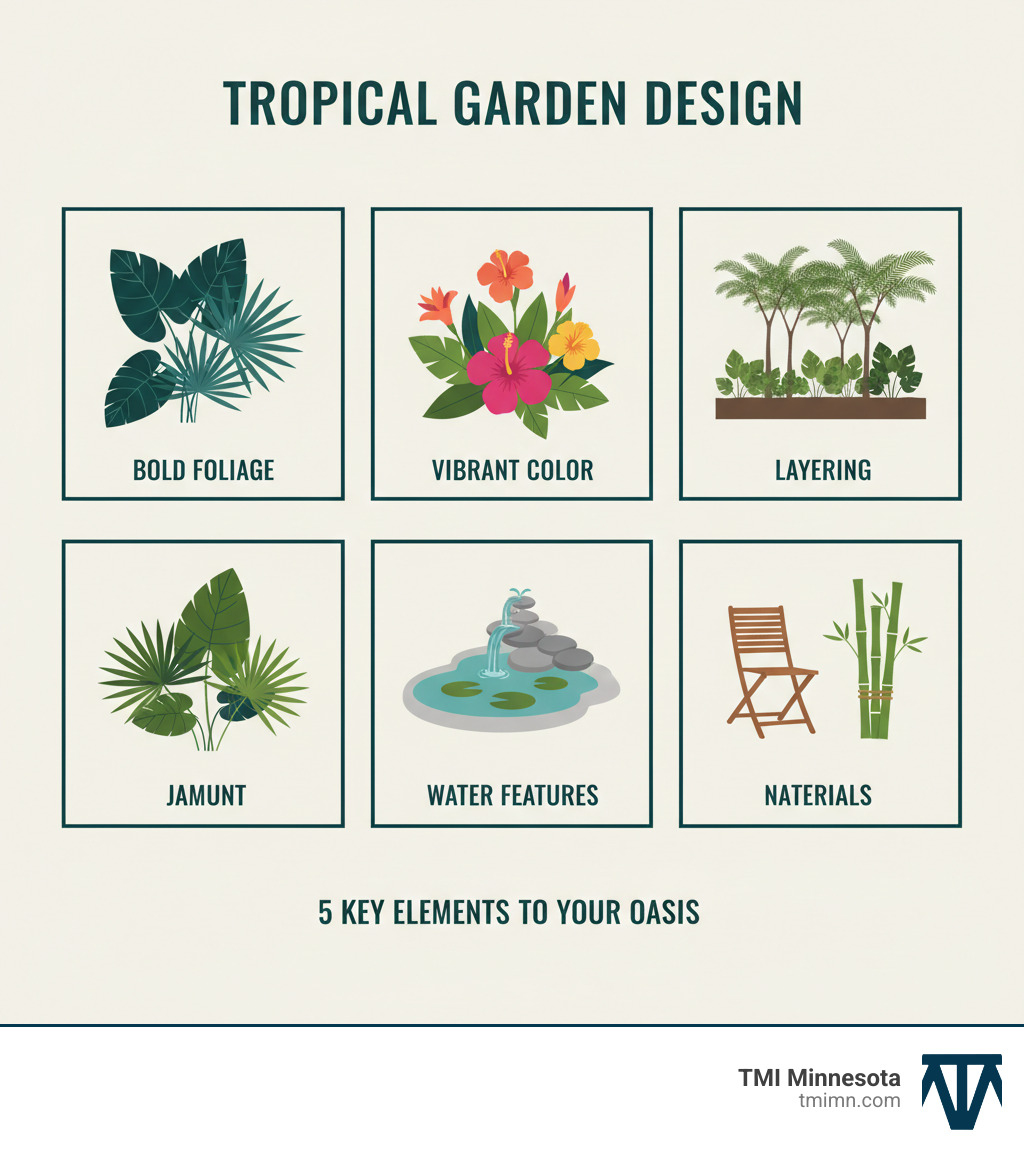
Tropical landscape designs terminology:
The Hallmarks of Tropical Landscape Designs
A great tropical garden feels like another world, changing a backyard into a lush jungle hideaway. This magic doesn’t happen by accident. Tropical landscape designs follow specific principles, and understanding these hallmarks is the first step to creating your own paradise.
Defining Characteristics: Lushness and Layers
The heart of any tropical garden is its incredible lushness. This means dense, abundant greenery that creates a jungle atmosphere. Unlike more restrained designs, tropical style accepts the idea that more is more.
The secret is layering plants at multiple heights, like a rainforest. Ground covers carpet the earth, mid-height shrubs fill the middle zone, and tall plants create a canopy. This vertical layering creates depth and a sense of enclosure.
Bold foliage with large leaves takes center stage. Think elephant ears or banana plants with their dramatic, architectural fronds. Varied textures also matter. Pairing glossy canna lily leaves with feathery ferns creates visual interest.
The goal is a naturalistic style where plants seem to grow wild, though every placement is intentional. The goal is an immersive experience. This is what we focus on with thoughtful Softscape Design, using living elements to build a tranquil sanctuary.
Adapting for Non-Tropical Climates
We often get asked: “Can I really have a tropical garden in Minnesota?” The answer is yes, with smart adaptations.
The key is understanding microclimates and plant hardiness zones. Your yard has warmer, protected spots. A south-facing wall or a corner sheltered by a garage is perfect for tender plants.
Using hardy alternatives is where the magic happens. You don’t need actual tropical plants to create a tropical feel—you need plants that look tropical. A hardy fiber banana (Musa basjoo) can survive our winters, and hostas provide big, bold leaves. Japanese Forest Grass adds a soft, flowing texture.
For plants that can’t handle our winters—like hibiscus or elephant ears—you have options. Treat them as annuals, or overwinter them indoors. Protecting plants from frost with strategic placement, heavy mulching, or temporary coverings extends your growing season.
We’ve perfected adapting tropical style for Minnesota landscapes. The contrast between our northern setting and the lush, exotic feeling is dramatic. Stepping into your jungle-like backyard on a summer evening provides a real sense of escape. Learn more about how we transform Minnesota Landscapes into these unique retreats.
The Tropical Plant Palette: Foliage, Flowers, and Color
The soul of any tropical landscape design is its plants. The right selections feel dramatic, bold, and bursting with life, as if you’ve stepped onto an island paradise.
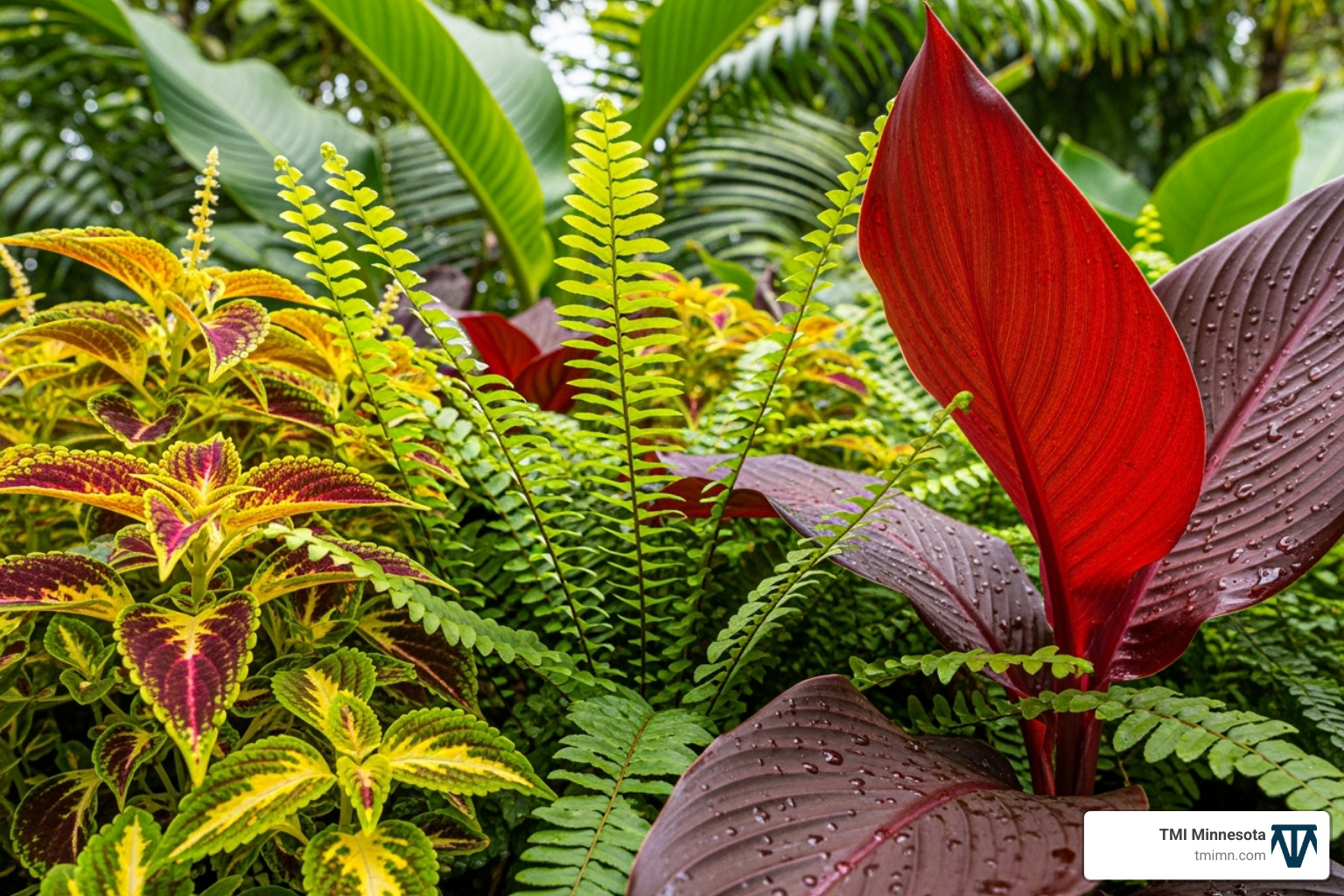
Essential Plants for a Tropical Look
Clients often ask what plants create that vacation feeling. The answer is specimens with bold foliage and vibrant colors that command attention and create exotic abundance.
- Palms are an obvious starting point, instantly transporting you somewhere warm. In Minnesota, we often use large containers so they can be moved to a protected space for winter.
- Ferns fill the understory with lacy, lush texture, creating a dense, jungle-like feel.
- Banana plants (Musa spp.) offer pure drama with enormous leaves that create instant scale.
- Elephant ears (Colocasia and Alocasia) are showstoppers with leaves that can grow several feet across.
- Hibiscus and Bird of Paradise bring flamboyant, recognizable blooms.
- Bromeliads add unique texture with their rosette forms and colorful flower spikes.
- Canna lilies deliver both large, variegated leaves and vibrant flowers.
- Cordyline adds vertical interest with sword-like leaves in various colors.
These plants all share visual qualities: large, dramatic leaves, bold architectural forms, and flowers with warm, intense colors. This combination creates the exuberant feeling that defines tropical style. For more ideas on working with flowering plants, check out our Flower Garden Designs.
Cold-Zone Alternatives and Mass Plantings
The good news for those in cold climates is that you don’t have to give up on tropical style. We use creative hardy alternatives that capture the tropical aesthetic while surviving Minnesota winters.
- Hostas create a lush, layered look with their large, textured leaves.
- The hardy fiber banana is a game-changer, providing iconic banana leaves without annual replanting.
- Japanese Forest Grass adds soft, flowing texture reminiscent of tropical grasses.
- Some sumac varieties offer large leaves that look palm-like from a distance.
The secret to cold-zone tropical gardens is mass planting. Grouping plants in generous sweeps, rather than dotting them around, creates visual impact and mimics the dense, abundant growth of tropical ecosystems.
For example, picture masses of bright Lemon Coral® sedum next to deep burgundy ColorBlaze® Wicked Witch™ coleus, or a carpet of orange SunPatiens® Compact impatiens under a palm. These repeating patterns create the rhythm and lushness that define tropical style.
By selecting native and hardy plants with tropical qualities, your garden can thrive with less fuss while still delivering a vacation-at-home feeling. This approach draws from Native Plant Landscaping principles, working with nature to build something beautiful and sustainable.
Crafting a Lush, Jungle-Like Atmosphere
The magic of tropical landscape designs is how plants work together to create an immersive experience. A successful tropical garden makes you feel surrounded by nature, quieting your mind and awakening your senses.
This jungle-like atmosphere comes from thoughtful layering and density. Create natural-looking groupings at different heights: ground covers, mid-height plants, and taller specimens for a canopy. This vertical layering mimics nature, creating enclosure and privacy. Mixing broad, glossy leaves with feathery fronds adds visual interest and dynamism.
The Essential Role of Water Features
Water is a transformative element in a tropical garden. The sound of water is instantly relaxing, evoking the peace of a rainforest stream.
We incorporate water features because they work on multiple levels. Ponds create reflective surfaces, waterfalls add drama, and fountains provide soothing sound. Even small streams can transform the experience.
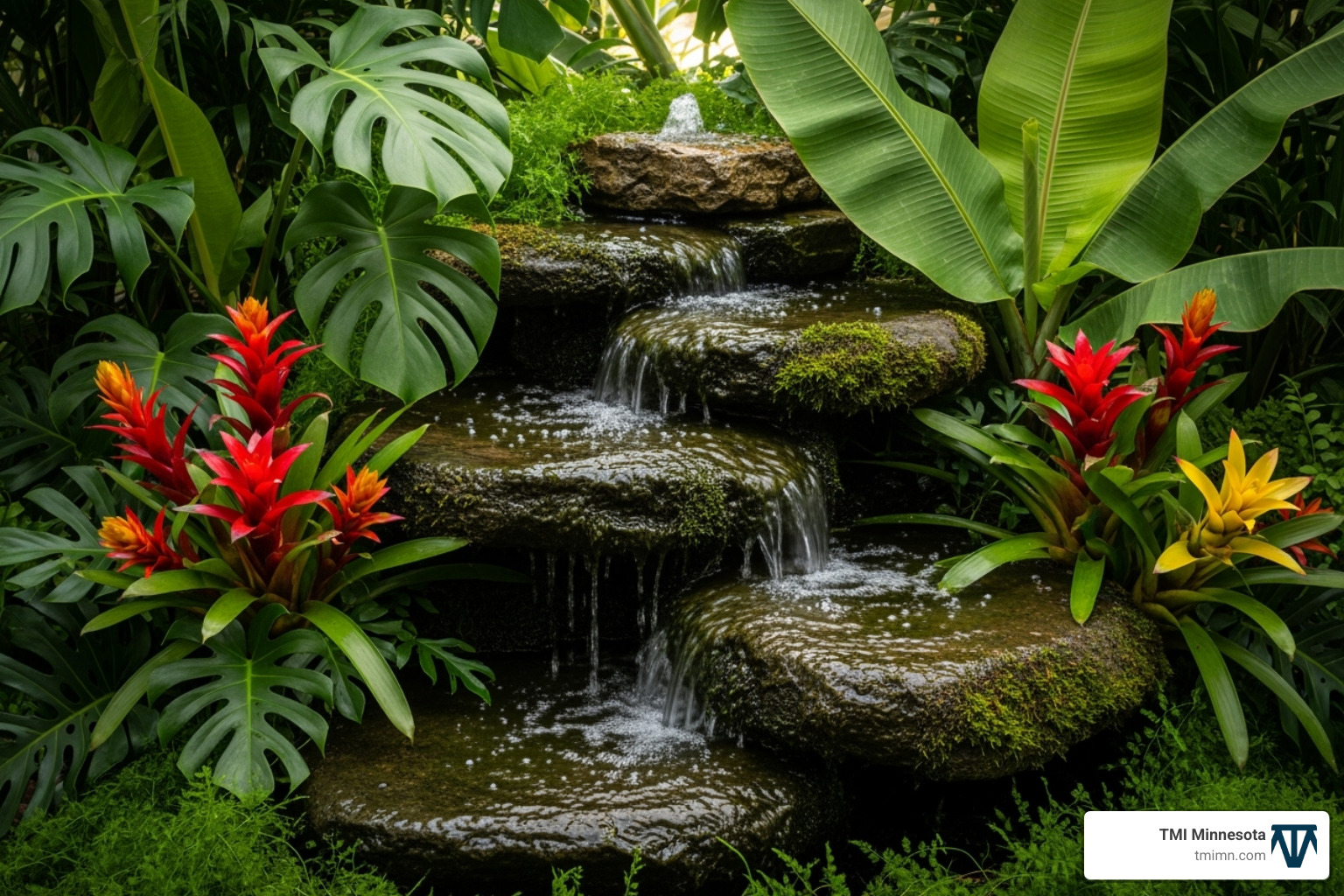
Water features also provide a cooling effect, welcome on hot Minnesota summer days. The evaporation lowers the surrounding temperature, making your space more comfortable. A water feature can work at any scale; what matters most is that you can hear it. For more inspiration, explore our Backyard Water Features options.
Strategic Use of Containers and Self-Watering Systems
Containers are secret weapons in tropical garden design, especially in Minnesota. They offer flexibility, allowing tender tropicals to be featured in summer and moved to protection in fall.
Large pots (at least 18 inches across) create instant focal points. Grouping several containers at different heights creates beautiful, designed vignettes. We use the classic “thriller, filler, spiller” approach: a tall thriller for height, bushy fillers for volume, and trailing spillers to soften the edges. A well-designed container is a miniature garden.
Tropical plants are often thirsty and love consistent moisture, so containers can dry out quickly in summer. Self-watering containers are game-changers. They maintain a water reservoir, reducing watering frequency and keeping plants healthier. This removes the stress from container gardening, especially for busy homeowners.
Strategic container placement and reliable watering systems let you experiment with more exotic plants without worry. For more advanced solutions, check out our Garden Irrigation Systems to keep everything lush with minimal effort.
Enhancing Your Oasis: Furniture, Lighting, and Entertainment
Your tropical landscape designs need comfortable spaces where you can enjoy the paradise you’ve created. Furnish it like an outdoor room that invites you to linger, gather with friends, or unwind under the stars.
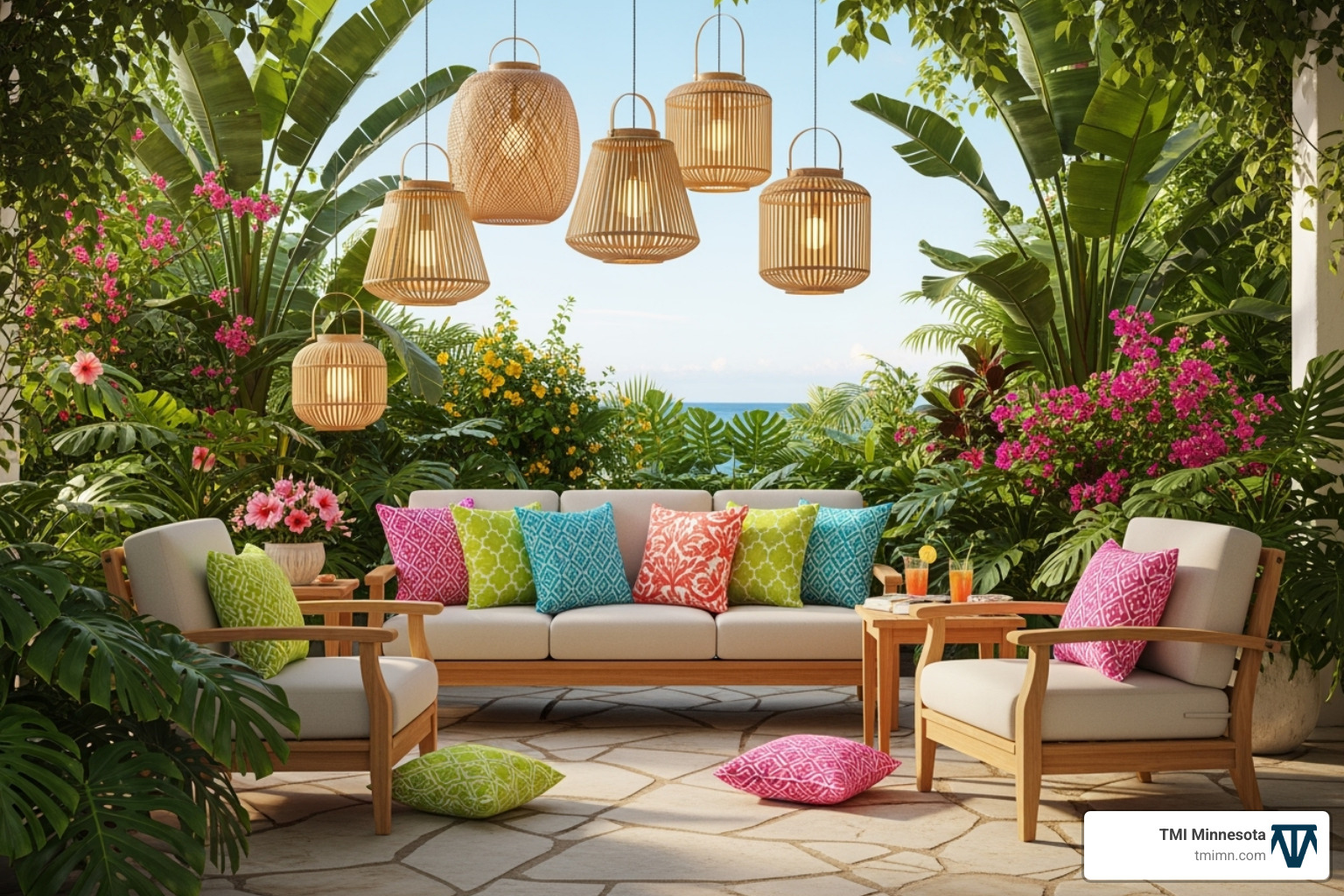
Outdoor Living and Entertainment Spaces
Blend natural materials with spaces for real living. Teak furniture is a great choice, as it weathers beautifully. Rattan and wicker add an authentic resort feel, especially with colorful pillows. These accents add personality without overwhelming the garden.
Imagine an outdoor kitchen surrounded by palms or a cozy seating area among ferns. Dining outdoors surrounded by lush greenery turns any meal into an occasion. You can even serve drinks with herbs from your garden! For inspiration on growing your own ingredients, check out Foodscaping with Flair.
A fire pit or outdoor fireplace becomes the heart of your space on cool evenings, while a tiki bar adds a perfect touch of whimsy and fun.
We love designing these functional spaces because they transform gardens into something you truly live in. Our team specializes in creating Custom Outdoor Living Areas and Outdoor Entertainment Spaces that feel like natural extensions of your oasis.
Ambiance with Lighting and Decorative Touches
The right lighting transforms your garden at sunset. We focus on warm, soft lighting to create a cozy, inviting evening atmosphere.
String lights, lanterns, and tiki torches all add to the ambiance. Our favorite technique is uplighting palms and large-leafed plants from below. This creates dramatic silhouettes showcasing their unique shapes. Modern, energy-efficient LED bulbs are available in various styles to match your vision. Explore more options on our Backyard Garden Lighting Ideas page.
Decorative touches are where your personality shines. Tiki statues or Buddha sculptures add cultural flair. Get creative with unique containers and repurposed items like an old wooden canoe or vintage boat oars.
Even small touches like pillows with palm leaf patterns, driftwood, or garden art can tie the theme together. The goal is to add whimsical elements that evoke a tropical getaway, not create a theme park. These personal touches make the garden truly yours, reflecting your style while maintaining a lush, exotic atmosphere.
Frequently Asked Questions about Tropical Gardens
We’ve helped many Minnesota homeowners create tropical landscape designs, and certain questions always come up. Let’s tackle the most common ones:
How do I make my garden look tropical on a budget?
You don’t need a fortune to create a stunning tropical escape. The secret is strategic thinking.
- Invest in a few large, high-impact plants in key viewing areas. A single elephant ear or hardy banana plant makes a huge statement. They grow quickly, providing the dramatic punch that defines the style.
- Use fast-growing annuals like coleus, impatiens, and sweet potato vine. They are affordable and can transform a blank space in a single season.
- Get creative with decorative items. Repurpose old wooden crates, colorful bowls, or a vintage watering can as unique planters.
- Start with smaller plants and let them grow. This saves money, and many tropical-looking plants are vigorous growers in our warm summers.
What is the key to a low-maintenance tropical garden?
The key to a low-maintenance tropical garden in Minnesota is choosing plants appropriate for your climate instead of fighting it.
- Focus on hardy, tropical-looking perennials like hostas, hardy fiber bananas, and certain ferns. They provide a lush look without the fuss and come back every year.
- Group plants with similar water needs together to simplify irrigation.
- Mulch heavily. A three-inch layer of organic mulch suppresses weeds, retains moisture, and regulates soil temperature. This reduces your workload and creates healthier plants.
How can I create a tropical feel in a small space or on a patio?
Limited space is not a limitation for tropical style. Some of the most dramatic effects can be created in compact areas where every element counts.
- Use large containers with bold plant combinations. Go big with oversized pots and use the “thriller, filler, spiller” technique for an instant tropical statement.
- Go vertical. Use climbing vines on a trellis or hanging baskets to add lushness without taking up floor space.
- Add a small tabletop water fountain. The sound of trickling water is essential to the tropical experience and has an outsized impact on ambiance.
- Use decor. Tropical-patterned pillows, colorful rugs, and lanterns can transform the smallest patio into an exotic escape.
Bring Your Tropical Paradise to Life
You’ve imagined relaxing in your own tropical landscape design. Now it’s time to make that vision a reality.
Creating your tropical sanctuary is about crafting a personal escape that feels like a mini-vacation. The magic happens when you blend bold foliage, vibrant colors, the soothing presence of water, and comfortable spaces.
The key to success is layering these elements for a natural, immersive feel. A gentle fountain sound and comfortable seating surrounded by lush greenery will invite you to stay awhile.
Even in Minnesota, you can create an exotic, lush atmosphere. We’ve helped many homeowners transform their backyards by adapting the tropical style to our climate—choosing hardy alternatives, protecting tender plants, and using strategic design.
Your backyard has incredible potential to become the relaxing sanctuary you’ve been dreaming about. Whether starting from scratch or enhancing an existing landscape, the experts at TMI Minnesota can help you design and build the ultimate outdoor oasis. We specialize in changing outdoor spaces with unique designs, using leading-edge products to lift your yard living.
Ready to start your journey to paradise? Contact our landscape design experts today! Let’s create your tropical escape together.