
Why Modern Homeowners Are Choosing Artificial Turf for Landscape Design
Turf landscape design has evolved far beyond simple lawn replacement. Today’s artificial grass offers homeowners a versatile, low-maintenance solution that combines stunning aesthetics with practical functionality. Whether you’re looking to create a backyard putting green, integrate turf between neat pavers, or transform a problematic side yard, modern artificial turf opens up design possibilities that natural grass simply can’t match.
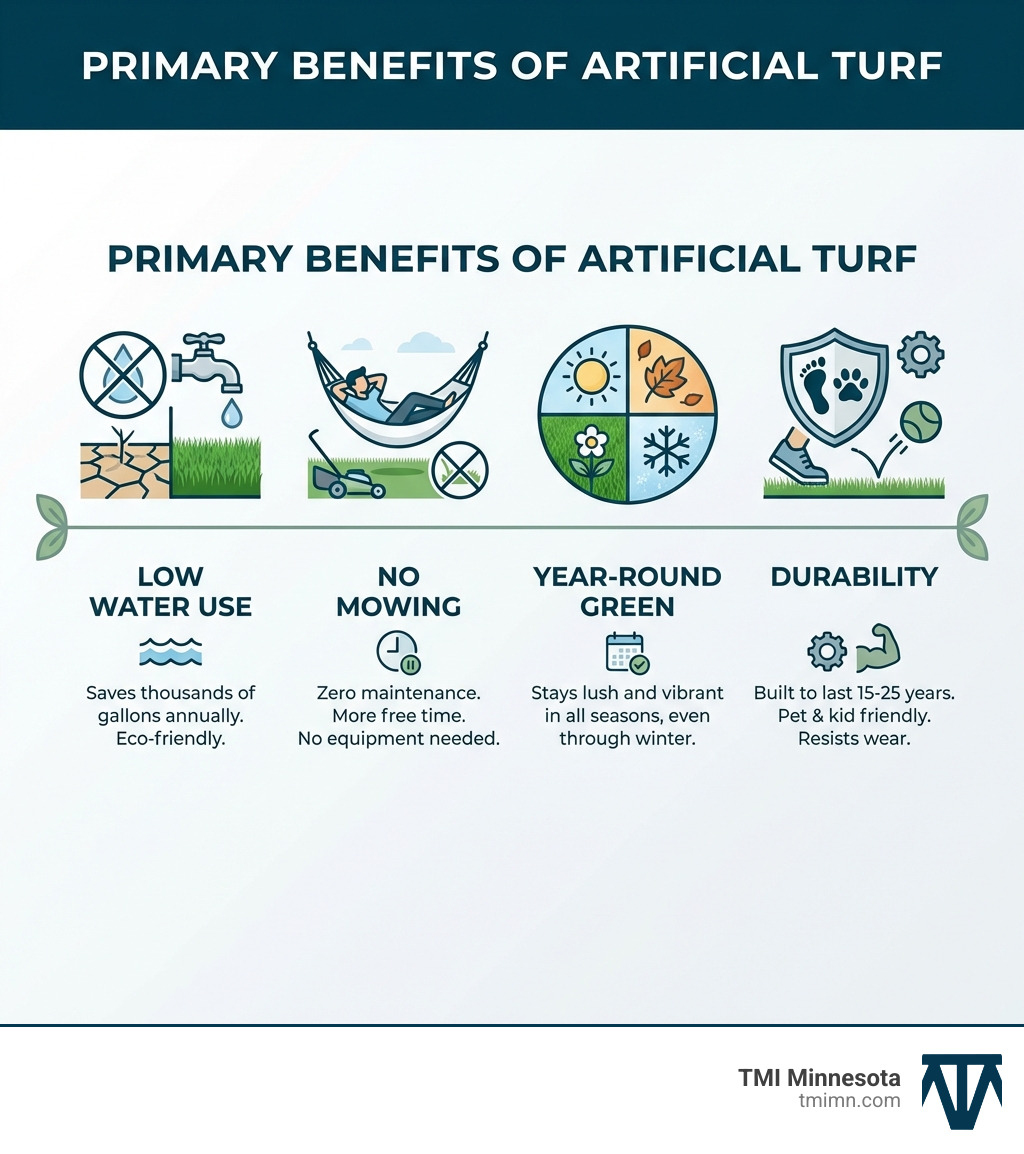
Quick Answer: Key Benefits of Turf Landscape Design
- Zero Maintenance: No mowing, watering, or fertilizing required
- Year-Round Beauty: Stays green in all seasons, even through Minnesota winters
- Water Conservation: Saves thousands of gallons annually
- Design Flexibility: Works on rooftops, balconies, steep slopes, and shaded areas
- Long Lifespan: Quality turf lasts 15-25 years
- Pet & Kid Friendly: Durable, non-toxic, and easy to clean
The shift toward artificial turf isn’t just about convenience. Homeowners are finding that synthetic grass can actually improve their landscape design rather than limit it. As one landscape professional notes, “The most creative landscape project right now is [turf] in between pavers, looking very classy and neat.”
Unlike natural grass, artificial turf eliminates concerns about irrigation patterns, sun exposure, and mowing access. This freedom allows you to create curved walkways, intimate courtyard spaces, and multi-functional zones that would be impractical with traditional lawn. You can place turf just off your patio to extend entertaining space, create a pristine putting green, or even install it on a rooftop deck.
I’m Christopher Deanovic, Operations Leader at Task Masters, where I’ve guided countless Minnesota homeowners through landscape changes that blend innovative turf landscape design with hardscaping and plantings to create outdoor spaces that truly improve their lifestyles. My hands-on approach ensures every project maximizes both beauty and functionality, custom to our region’s unique climate challenges.
Quick look at turf landscape design:
Why Choose Artificial Turf for Your Landscape?
When upgrading your outdoor living space in the Twin Cities, artificial turf is a top choice. It’s about smart, sustainable living and reclaiming weekends from yard work. Modern artificial turf is an excellent, low-maintenance alternative that’s nearly indistinguishable from natural grass.
The Value of Artificial Turf in Landscape Design
Maintaining a lush lawn in Minnesota is a full-time job. Natural grass struggles with our climate, demanding constant attention, water, and chemicals. Artificial turf is a compelling investment that pays dividends in convenience and cost savings over its long lifespan.
A primary benefit of turf landscape design is reduced maintenance. Natural grass needs about 1 inch of water per week in the growing season, leading to high water bills. Artificial turf eliminates this need, saving thousands of gallons of water annually, which benefits your wallet and the local environment.
Artificial turf also eliminates the endless cycle of mowing, fertilizing, and pest control. This means no more early Saturday mowing or spreading harmful chemicals. This translates to lower long-term costs. While the initial investment is higher than seeding, the savings on water, chemicals, and lawn care quickly offset it.
Modern artificial turf is durable, colorfast, and can last 15-25 years. That’s over two decades of a consistently green yard with minimal effort. It’s also an allergen-free option, a bonus for those with grass pollen allergies.
Here’s a quick comparison to highlight the value:
| Feature | Natural Grass | Artificial Turf |
|---|---|---|
| Maintenance | Mowing, watering, fertilizing, weeding, pest control | Debris removal, occasional rinsing, brushing high-traffic areas |
| Water Use | High (1 inch/week during growing season) | Zero for irrigation |
| Long-Term Cost | Ongoing high (water, chemicals, labor) | Low (initial investment, minimal ongoing) |
| Environmental | Water waste, chemical runoff, carbon emissions from mowing | Water conservation, no chemicals, reduced carbon footprint |
| Durability | Susceptible to wear, pests, drought | Highly durable, resistant to wear and weather |
| Lifespan | Ongoing, but requires constant care to maintain | 15-25 years, often guaranteed for 20+ years |
| Aesthetics | Varies by season, prone to brown spots | Consistent green year-round |
The Unbeatable Low-Maintenance Lifestyle
A beautiful yard without endless chores is possible with artificial turf. The “no-maintenance alternative” means little care beyond keeping it free of debris:
- No Mowing: Your weekends are yours again!
- No Watering: Your lawn stays green without a drop from the hose.
- No Fertilizing: No more expensive treatments to keep your grass healthy.
- No Pesticides: A safer environment for your family and pets.
Maintenance is simple: occasional rinsing to remove dust and brushing high-traffic areas. This frees up hours to enjoy your home and the Minnesota outdoors. Your landscape will always look pristine and ready for gatherings or a quiet evening.
Inspiring Turf Landscape Design Applications
The beauty of modern artificial turf lies in its incredible versatility. It’s not just for sprawling lawns anymore; it’s a design element that can be integrated into almost any outdoor space, creating stunning visuals and functional areas. From residential backyards to commercial properties, we’ve seen how turf landscape design can transform the ordinary into something extraordinary.
Integrating Hardscaping in Your Turf Landscape Design
One of the most popular and aesthetically pleasing trends we’re seeing in turf landscape design is the combination of artificial turf with various hardscaping materials. This creates a sleek, modern aesthetic that is both neat and highly functional.
Imagine a patio featuring large pavers with artificial turf in the spaces between – a “turf-ribbon” effect. This gives you the lush, green visual appeal of natural grass without the nightmare of trying to mow or weed between those tight spaces. It’s a classy and neat look that blends natural elements with structured design.
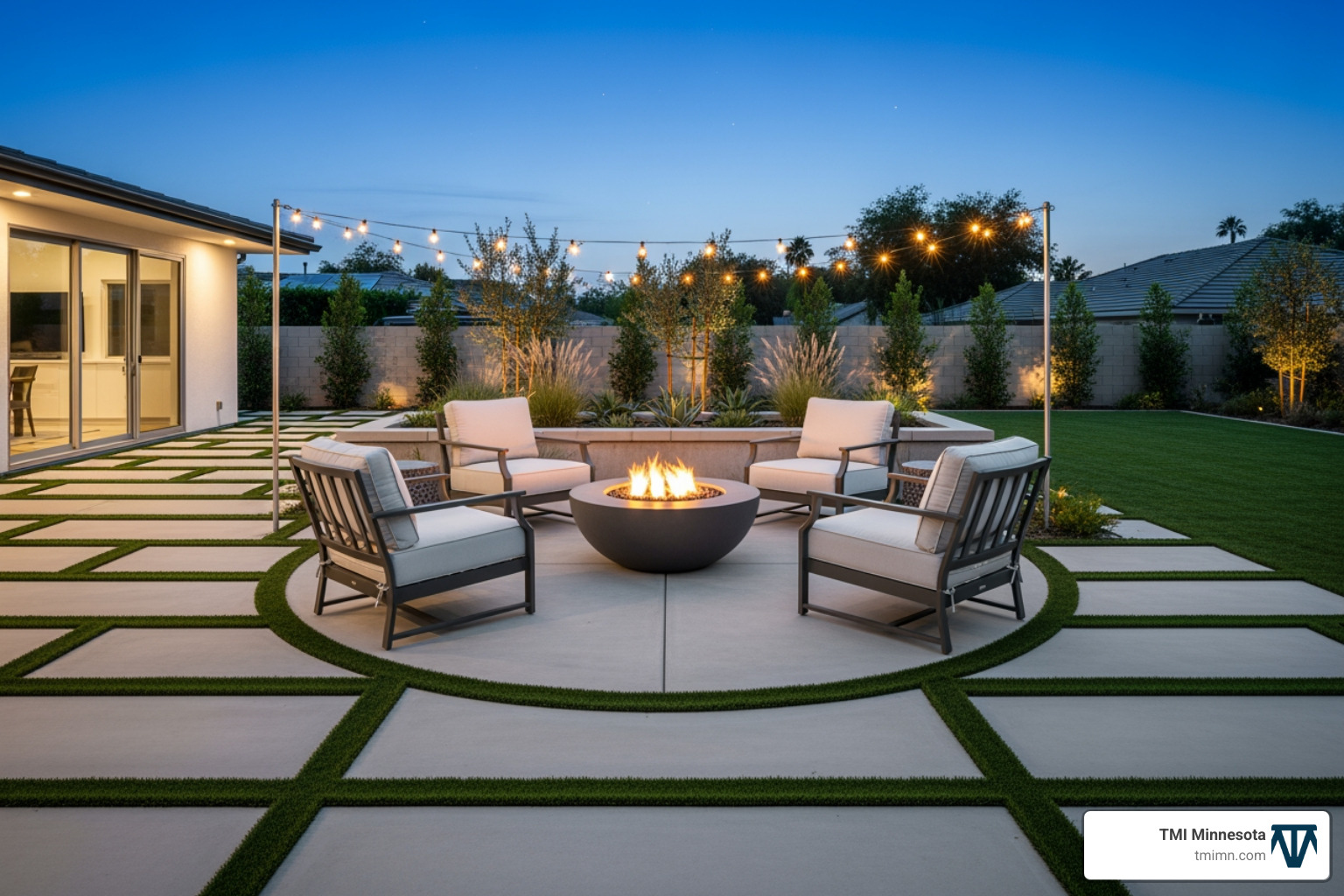
When using artificial turf, you needn’t worry about creating the best shapes for mowing or irrigating, so you have more design flexibility. It’s a good idea to place your lawn just off the patio to extend your usable landscaping space.
We can integrate artificial turf with:
- Concrete pads and walkways: Creating striking patterns and defining pathways.
- Stone patios: Softening the hard lines of stone with a vibrant green contrast.
- Pool surrounds: Artificial turf is an excellent choice around pools, providing a soft, safe, and slip-resistant surface that won’t get hot in the sun. It significantly reduces debris tracked into the pool and avoids the mess associated with natural grass near chlorinated water.
- Driveway ribbons: Lining driveways with artificial grass between pavers offers splashes of green to break up the monotony of stone or asphalt, amplifying curb appeal.
This seamless integration allows us to create multi-use spaces that are visually interesting and incredibly low-maintenance.
Creating Specialty & Recreational Zones
Artificial turf truly shines when it comes to creating dedicated specialty and recreational zones within your landscape. Its durability and consistent appearance make it ideal for areas that see heavy use or require specific performance characteristics.
- Backyard putting greens: This is arguably one of the most popular applications. We can create personalized short-game practice areas, complete with chipping pods and even sand traps, allowing you to perfect your golf game right in your own backyard. It’s practical, fun, and makes use of yard space in an unexpected way.
- Playgrounds: For families with children, artificial turf provides a cleaner, more durable, and safer surface for play areas compared to natural grass or mulch. We can install padding underneath for added safety, meeting playground safety ratings and offering a softer landing.
- Pet areas and dog runs: If you have furry friends, you know how quickly natural grass can get torn up. Artificial turf is a durable, low-maintenance, and pet-friendly alternative. It’s designed with good drainage, making it easy to clean up pet waste with a quick rinse.
- Bocce ball courts and other game areas: For those who love outdoor games, artificial turf provides a consistent, level surface that’s perfect for bocce, croquet, or other lawn games. We can blend turf with concrete or other hardscaping to create sophisticated game zones.
These applications allow us to design spaces that are not only beautiful but also highly functional and custom to your specific lifestyle needs.
Solutions for Small or Unconventional Spaces
Small yards or unconventional spaces like rooftops and balconies often pose a challenge for traditional landscaping. But for us, they’re an opportunity for creative turf landscape design! Artificial turf’s flexibility means we can bring green to almost anywhere.
- Rooftops and Balconies: Imagine changing your urban balcony or rooftop terrace into a vibrant, relaxing oasis. Artificial turf offers a touch of nature without the weight, mess, or maintenance of soil and natural grass. We can create intimate seating areas, outdoor dining spaces, or even a small putting green high above the city.
- Narrow Side Yards: These often-overlooked areas can be transformed from problematic, shaded, or poorly drained spots into attractive, easy-to-maintain pathways or accent zones.
- Courtyards: In compact courtyards, artificial turf creates a lush, inviting floor that defines the space and complements surrounding architecture.
- Indoor Golf Simulators: While not strictly outdoor, the rise of indoor golf simulators is a testament to turf’s versatility. We can use short-pile, professional-grade turf to create year-round practice facilities in basements or garages, perfect for Minnesota’s long winters.
- Vertical Applications: While traditional turf is horizontal, the concept of vertical gardening for small spaces is inspiring. We can integrate artificial turf with other vertical elements like trellises or green walls to maximize greenery in tight spots, creating multi-use spaces mixed with plants, benches, or lighting.
Small spaces are not a limitation; they’re an invitation to get creative and design intimate, highly functional outdoor rooms that expand your living area.
Key Considerations for a Flawless Turf Installation
Achieving a stunning and long-lasting artificial turf landscape design isn’t just about picking the prettiest grass. It requires careful planning and attention to detail, especially during the installation process. We’ve learned that overlooking key considerations can lead to disappointment, so we always emphasize precision from start to finish.
Planning for Perfection: Grain Direction and Dye Lots
Two critical factors that often get overlooked in artificial turf installation are grain direction and dye lots. These might sound like minor details, but they can significantly impact the final appearance of your turf.
- Grain Direction: Just like natural grass, artificial turf has a “grain” – the direction in which the blades naturally lean. For a uniform and visually appealing look, all turf rolls should be laid with the grain facing the same direction. We have a simple rule: for front yards, orient the turf grain direction towards the street. For backyards, orient it towards the back of the house. This ensures the turf looks its best from the most common viewing angles. Improper grain direction can make the turf appear to have different shades or textures, even if it’s the same product.
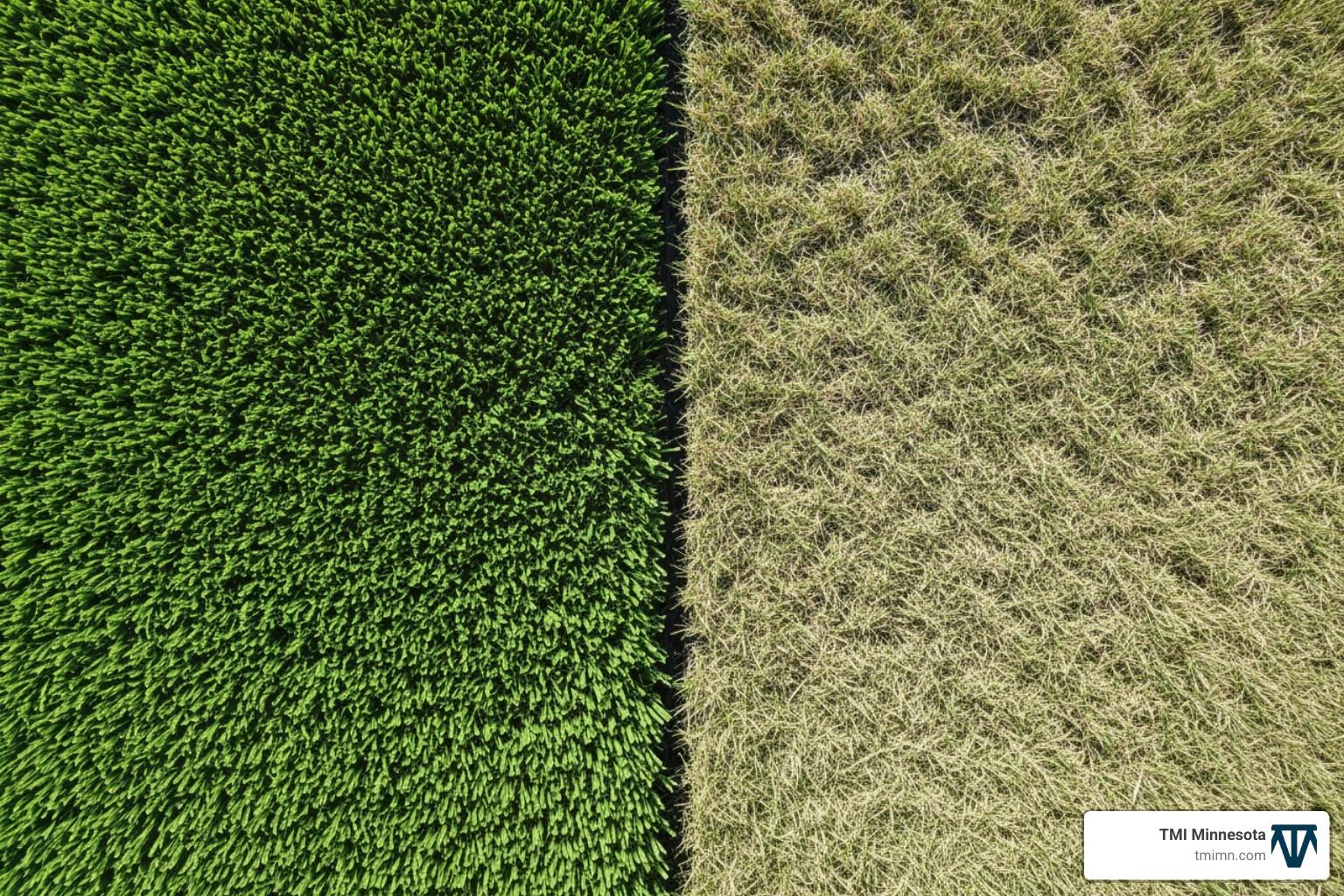
- Dye Lots: Artificial turf is manufactured in batches, and just like fabric or paint, there can be slight color variations between these batches, known as dye lots. If you’re installing a large, continuous area and use turf from different dye lots, you might end up with noticeable lines or color shifts where the rolls meet. To avoid this common mistake in DIY projects, we always ensure that all turf rolls purchased for a continuous space come from the same dye lot. This guarantees perfect color consistency across your entire installation.
Tackling Climate Challenges: Heat and Sun Exposure
Living in Minnesota means experiencing a wide range of temperatures, from hot, sunny summers to freezing, snowy winters. Artificial turf is designed to be highly resilient, but it’s important to understand how it performs in different climates, particularly regarding heat and sun exposure.
- Heat Absorption: Synthetic turf, being made of plastic fibers, can get quite warm in direct summer sunlight. While this isn’t usually an issue for casual use, it’s something to be aware of, especially if you plan to walk barefoot during the hottest parts of the day. Some infill materials can help mitigate this, offering cooling properties.
- Reflective Heat Damage: A more significant concern, particularly in residential settings, is reflective heat damage. Highly reflective surfaces like windows (especially energy-efficient ones that reflect more UV light), shiny metal decor, or even unshaded glass patio doors can concentrate sunlight onto the turf. This intense, focused heat can cause damage, leading to curling blades, browning spots, and a crunchy texture. To prevent this, we often recommend applying window films to nearby windows or using shading devices like awnings or pergolas in areas prone to sun reflection.
- Minnesota Winters: Our winters bring snow and ice, but modern artificial turf is built to withstand these conditions. It’s UV-resistant, so it won’t fade under the winter sun, and it’s designed to endure freeze-thaw cycles without cracking or becoming brittle. Proper drainage during installation is crucial here, ensuring that snowmelt drains away efficiently, preventing standing water and ice buildup that could impact the turf or its base.
Understanding these climate considerations allows us to plan and install a turf landscape design that looks great and performs flawlessly year-round, even in our demanding Minnesota weather. While we don’t need to consult the USDA Plant Hardiness Zone Map for turf selection itself, understanding our local climate’s average highs and lows is crucial for overall landscape planning and ensuring turf longevity.
Your Step-by-Step Guide to a Turf Landscape Project
Starting on a turf landscape design project, whether it’s a small accent or a full yard change, requires a thoughtful, systematic approach. We’ve guided countless Twin Cities homeowners through this process, ensuring that their vision becomes a beautiful and functional reality. It’s not just about laying down grass; it’s about crafting an outdoor space that improves your life.
Step 1: Initial Design and Planning
This is where the magic begins! A well-thought-out plan is the foundation of any successful landscape project. We encourage our clients to dream big, but also to be practical about their needs and desires.
- Measure Your Space Accurately: Before anything else, we need precise measurements of your yard. This helps us understand the scale of the project and how much material will be needed.
- Define Functional Zones: How do you want to use your lawn? Will it be a play area for kids, a tranquil relaxation spot, an entertainment hub, or a dedicated pet zone? Consider distinct areas for dining, lounging, or recreation. This helps us allocate space effectively. As Steve Biernacki of WaterQuest, Inc. asks, “how do you want to use the lawn?” If you have kids, they’re going to want a large open area to kick the ball or play catch, while an older couple may prefer just enough grass to provide an open, pleasant look.
- Create a Base Plan: We start with a base plan, which is essentially a detailed map of your property. This includes property lines, the house’s location, existing utilities (above and below ground), current plant materials, walks, drives, and any topographic features. This helps us see what we’re working with. For more on this, check out Developing the Landscape Plan.
- List Desired Features: Brainstorm all the elements you’d like to include. This could be a putting green, a new patio, a dog run, a fire pit area, or specific planting beds.
- Set a Realistic Budget: Understanding your budget early on helps us make appropriate material selections and design choices. We can help you explore options that balance your desires with financial realities, including financing options.
This initial phase is crucial for laying the groundwork. We take into account “Ten Important Things to Consider” for landscape design, ensuring that every detail is addressed before moving forward. Landscape Design: Ten Important Things to Consider
Step 2: Material Selection and Site Preparation
Once we have a clear design plan, we move into selecting the right materials and preparing your site for installation. This phase is critical for the longevity and appearance of your artificial turf.
- Choosing the Right Turf: Not all artificial turf is created equal! We’ll help you select the best product based on your intended use:
- Pile Height: Do you want a short, manicured look (like a putting green) or a longer, more natural grass appearance?
- Density: How lush and full do you want the turf to look? Denser turf often feels softer and more luxurious.
- Infill Type: We’ll discuss options like silica sand, crumb rubber, or organic infills. Infill helps the blades stand upright, adds cushioning, and can even help cool the turf.
- Base Material and Compaction: A properly prepared base is essential for drainage and stability. We excavate the existing soil, lay down a permeable weed barrier, and then apply layers of crushed rock or gravel. This base is then thoroughly compacted to create a firm, level surface that allows for excellent drainage, preventing puddles and ensuring the turf remains smooth.
- Ensuring Proper Drainage: This is especially important in the Twin Cities, where we experience significant snowmelt and rainfall. Our site preparation always includes grading the base to ensure water flows away efficiently, either into existing drainage systems or new ones we install. This prevents water from sitting under the turf and causing issues down the road.
Step 3: Professional Installation and Finishing Touches
While some homeowners consider DIY, we strongly recommend professional installation for artificial turf. Our expertise ensures a flawless finish that maximizes your investment and provides years of enjoyment.
- Laying the Turf: Our skilled team carefully unrolls the turf, paying close attention to the grain direction (as discussed earlier!) and making precise cuts to fit the contours of your landscape.
- Seaming: This is where professional expertise really shines. We carefully seam adjacent rolls of turf, ensuring that the connections are virtually invisible. This involves specialized adhesives and techniques to create a seamless, natural-looking surface.
- Securing Edges: The perimeter of the turf is securely fastened to prevent lifting or shifting. This could involve nailing, stapling, or using specialized edging materials, depending on the application and surrounding hardscaping.
- Applying Infill: Once the turf is laid and secured, we evenly spread and brush in the chosen infill material. This helps the blades stand upright, provides cushioning, and adds weight to stabilize the turf.
- Brushing the Fibers: A final power brushing lifts the fibers, making the turf look lush and natural.
- Final Cleanup: We leave your property spotless, ready for you to enjoy your brand-new, beautiful, and functional turf landscape design.
While we believe in the power of professional installation for the best results, we understand that budgeting is a key part of the process. We offer financing options to help make your dream landscape a reality.
Frequently Asked Questions about Artificial Turf
We often hear similar questions from homeowners curious about artificial turf. Let’s tackle some of the most common ones to give you a clearer picture of what to expect from this fantastic landscaping solution.
How long does artificial turf last?
This is a big one, and it’s great news! Artificial turf is an investment designed for longevity. The artificial turf products of today are highly durable, colorfast, and guaranteed to last upward of 20 years! Generally, you can expect artificial turf to last anywhere from 15 to 25 years.
The exact lifespan depends on a few factors:
- Quality of the Turf: Higher-quality turf, naturally, tends to last longer. We only work with leading-edge products designed for durability.
- Usage: A high-traffic area, like a commercial dog run or a frequently used playground, might show wear sooner than a decorative lawn area.
- Maintenance: While low-maintenance, occasional brushing in high-traffic zones and regular rinsing can extend its pristine appearance.
We’re talking about a significant return on your investment, providing two decades or more of a beautiful, green lawn with minimal effort.
Is artificial turf safe for pets and children?
Absolutely! We prioritize safety, and modern artificial turf is designed with families and pets in mind.
- Pet-Friendly: Artificial turf is an excellent choice for pet owners. It’s non-toxic and provides a comfortable surface for pets to play. Its superior drainage capabilities ensure that pet waste can be easily rinsed away, preventing odors and keeping the area clean. Unlike natural grass, it won’t get dug up or discolored by pet urine, and it’s incredibly durable against playful paws.
- Child-Friendly: For children, artificial turf offers a soft, clean, and consistent play surface. We can install shock-absorbing padding underneath, especially for playgrounds, to provide a safer landing surface and meet critical fall height requirements. Plus, without the need for pesticides or fertilizers, your kids can play freely without exposure to harsh chemicals. It’s also allergen-free, which is a relief for many families.
How does artificial turf handle Minnesota’s climate?
Ah, the million-dollar question for any outdoor product in the Twin Cities! Our climate is unique, but modern artificial turf is remarkably well-suited to handle it all.
- Hot Summers: While artificial turf can get warm in direct sun, it’s built to withstand high temperatures without degrading. The materials are UV-resistant, preventing fading or damage from intense sunlight. We can also discuss infill options that have cooling properties.
- Cold Winters, Snow, and Ice: This is where artificial turf really shines compared to natural grass. It remains green and vibrant even under a blanket of snow. It’s designed to endure our freeze-thaw cycles without cracking, becoming brittle, or losing its integrity. Snow and ice can be cleared just as you would from a patio or walkway, or simply left to melt naturally.
- Proper Drainage: As mentioned earlier, proper base preparation and drainage are key. This ensures that snowmelt and heavy rainfall drain away efficiently, preventing standing water and maintaining the integrity of your turf landscape design year-round.
We’ve seen artificial turf perform beautifully through countless Minnesota seasons, proving its durability and resilience in our unique climate.
Conclusion
Changing your outdoor space with a modern artificial turf landscape design is one of the smartest investments you can make for your home. We’ve seen how it lifts yard living, offering year-round beauty, best convenience, and a host of environmental benefits. From luxurious putting greens to neat patio integration, artificial turf provides a versatile and durable solution that stands the test of time, even against the rigors of Minnesota’s climate.
At TMI Minnesota, we pride ourselves on our expertise in crafting unique designs that blend innovative turf with hardscaping and plantings. Our leading-edge products and meticulous installation ensure that your outdoor space isn’t just beautiful, but also perfectly custom to your lifestyle and needs. Reclaim your weekends, conserve resources, and enjoy a vibrant, low-maintenance yard for decades to come.
Ready to open up your yard’s full potential?
Unlock your yard’s potential with ForeverLawn