
Understanding Softscaping: The Foundation of Beautiful Landscapes
What is softscaping is one of the most common questions homeowners ask when planning their outdoor spaces. Simply put, softscaping refers to the living, horticultural elements of landscape design – including plants, trees, shrubs, flowers, grass, soil, and mulch that bring life and natural beauty to your yard.
Quick Answer: What is Softscaping?
- Living elements of landscape design
- Includes: Trees, shrubs, flowers, grass, soil, mulch
- Purpose: Adds beauty, color, and natural character
- Nature: Dynamic and evolving over time
- Maintenance: Requires ongoing care (watering, pruning, fertilizing)
Softscaping stands in contrast to hardscaping, which includes non-living elements like patios, walkways, and retaining walls. While hardscape provides structure and functionality, softscape brings warmth, color, and life to your outdoor space. The magic happens when these two elements work together in harmony.
As the research shows, softscape elements are not always soft to the touch – trees and mulch are considered softscape despite their harder textures. What truly defines softscaping is its living, organic nature that changes with seasons and grows over time.
At TMI Minnesota, we’ve spent years helping homeowners understand what is softscaping and how it transforms outdoor spaces into beautiful, functional environments. Our experience in landscape design has shown us that successful softscaping creates the perfect balance between natural beauty and practical outdoor living.
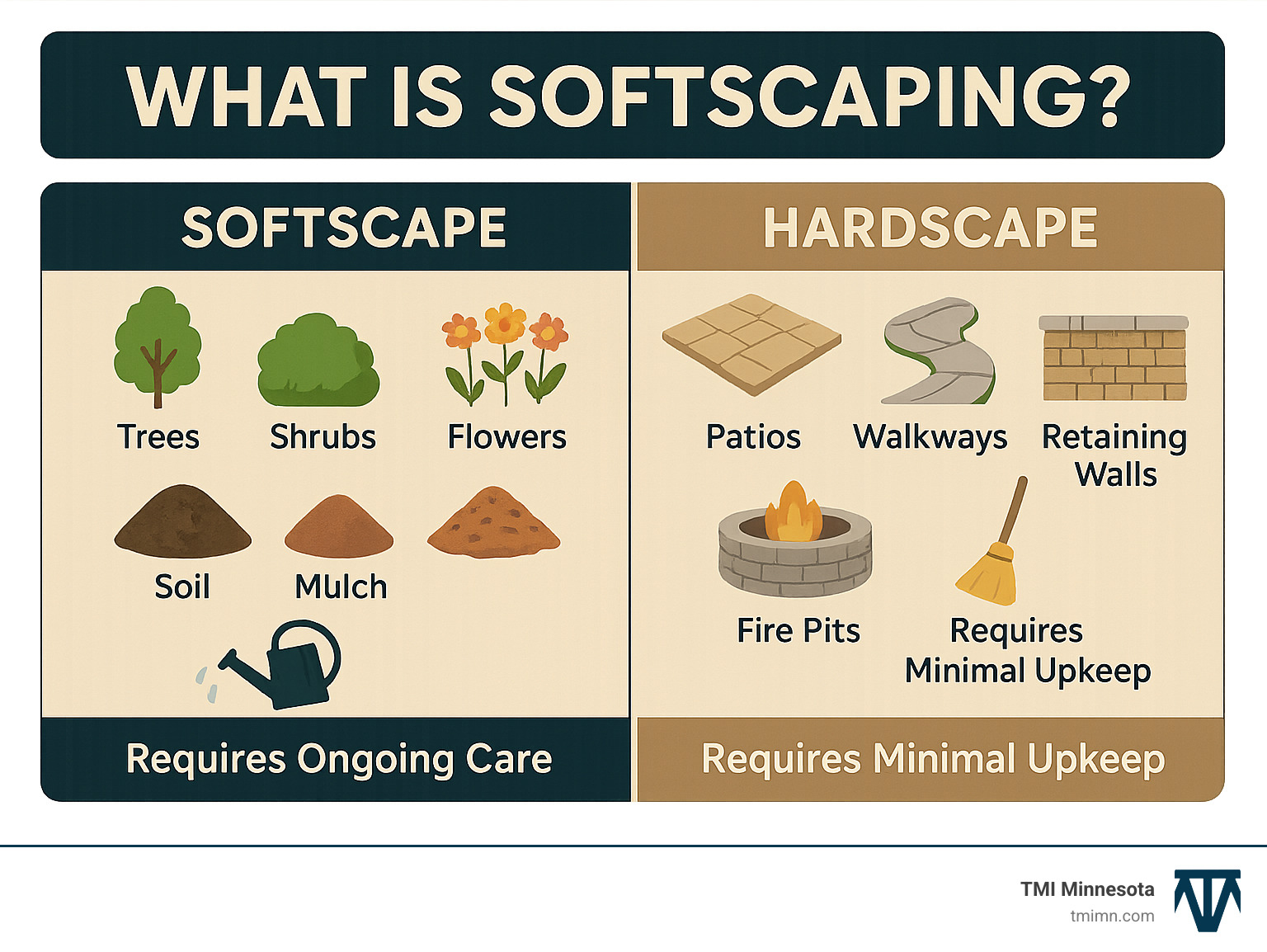
What is softscaping terms explained:
What is Softscaping? The Living Heart of Your Landscape
What is softscaping is really about bringing life to your outdoor space. Picture your landscape as having two personalities – the solid, permanent structures like patios and walkways, and then the living, breathing elements that change with the seasons. That’s where softscaping comes in.
Softscaping includes all the horticultural elements that make your yard feel alive and welcoming. We’re talking about plants, trees, shrubs, flowers, soil, and mulch – basically everything that grows, blooms, or supports growth in your landscape.
What makes softscaping so special is its dynamic and evolving nature. Unlike a stone patio that looks the same year after year, your softscape tells a story through the seasons. Spring brings fresh green shoots, summer explodes with colorful blooms, fall paints everything in warm hues, and winter reveals the neat structure of bare branches.
Trees act like the backbone of your softscape design. They provide shade on hot summer days, frame your home beautifully, and can even give you privacy from neighbors. Despite their sturdy trunks and branches, they’re still living organisms that grow and change over time.
Shrubs are the workhorses of softscaping. They fill in spaces between larger trees and smaller plants, offering different textures and heights. Some bloom with gorgeous flowers, while others provide year-round greenery with interesting foliage.
The flowers in your landscape are like nature’s artwork. Whether you choose bright annuals that need replanting each year or reliable perennials that return season after season, they add those pops of color that make people stop and admire your yard.
Your grass and lawn create a soft, green carpet that ties everything together. It’s where kids can play, where you can host backyard barbecues, and what gives your landscape that finished, welcoming look.
Don’t forget about soil – it might not be glamorous, but healthy soil is what feeds all your beautiful plants. And mulch is like a protective blanket that keeps moisture in, weeds out, and gives your garden beds that neat, professional appearance.
The beauty of softscaping is how it brings gentleness and natural charm to your outdoor space. It’s about creating harmony between your home and the natural world around it.

Softscaping vs. Hardscaping: A Tale of Two Elements
To truly understand what is softscaping, you need to meet its best friend: hardscaping. Think of them as the perfect partnership in your yard – one brings the structure, the other brings the soul. They’re completely different, yet they depend on each other to create outdoor spaces that actually work.
Hardscaping is everything in your landscape that doesn’t grow or breathe. These are the solid, permanent features that give your yard its backbone. We’re talking about patios where you’ll host summer barbecues, walkways that guide guests to your front door, and retaining walls that keep your hillside from sliding into your neighbor’s yard.
Other hardscape elements include driveways, swimming pools, pergolas, outdoor kitchens, fire pits, and those beautiful stone benches where you’ll sit with your morning coffee. These features are built to last – they won’t change color in fall or need watering during dry spells.
Here’s where it gets interesting: hardscaping and softscaping are like two sides of the same coin. Hardscape defines the space, while softscape beautifies it. Picture a gorgeous stone patio sitting all alone without a single plant around it. Pretty sterile, right? Now imagine a yard bursting with flowers and trees but no clear paths or gathering spots. That’s just chaos waiting to happen.
The magic happens when they work together. Your softscaping elements – those living, breathing plants, trees, and flowers – soften the hard edges of patios and walls. They add color that changes with the seasons and create that welcoming feeling that makes people want to spend time in your yard.
One key difference is how they handle time. Softscaping is always changing – your roses bloom in summer, your maple turns red in fall, and your perennials come back each spring. Hardscaping stays put. That stone wall will look the same next year as it does today (which is exactly what you want from a retaining wall).
Maintenance tells a different story too. Your softscape needs regular attention – watering, pruning, fertilizing, and weeding. Your hardscape? Once it’s installed properly, it mostly takes care of itself. Maybe some occasional cleaning or minor repairs, but that’s about it.
When we design landscapes, we always start with the hardscape first. Think of it as building the skeleton before adding the muscles and skin. Once we have your patios, walkways, and structures in place, we can plan where to add the plants that will bring everything to life.
| Feature | Softscaping | Hardscaping |
|---|---|---|
| Elements | Living plants, trees, shrubs, flowers, grass, soil, mulch, groundcover | Inanimate objects: Patios, walkways, retaining walls, driveways, decks, gazebos, outdoor kitchens, fire pits, stone benches, pavers, concrete, wood, metal |
| Permanence | Dynamic, evolving, can be temporary (annuals) or permanent (trees, evergreens), changes with seasons | Static, permanent, unchanging structures |
| Maintenance | Requires ongoing care (watering, pruning, mowing, fertilizing, weeding) | Minimal maintenance after installation, occasional cleaning or repair |
| Function | Adds beauty, color, texture, life, natural cooling, biodiversity, noise reduction, softens hard edges, improves well-being | Provides structure, functionality, defines spaces, creates pathways, manages erosion, offers gathering areas |
This balance is especially important here in Minnesota, where our weather can be tough on both types of landscaping. Hardscaping helps manage water runoff during spring melts and provides stable surfaces year-round. Softscaping adds the natural beauty that makes our yards feel like home, even when we’re dealing with harsh winters and unpredictable springs.
The bottom line? Understanding what is softscaping means recognizing it as half of a perfect partnership. Neither hardscape nor softscape can create a truly amazing outdoor space on its own – but together, they transform ordinary yards into extraordinary places where families love to spend time.
More info about Softscaping and Hardscaping
The Essential Elements and Benefits of Softscape Design
The true magic of what is softscaping reveals itself when you understand both its diverse elements and the incredible benefits it brings to your outdoor space. When we work with homeowners to create their dream landscapes, we’re not just planting pretty flowers – we’re crafting living environments that improve your property value, support local wildlife, and create your personal outdoor sanctuary.

Key Softscaping Elements to Consider
Think of softscaping elements as the living palette we use to paint your landscape. Each component serves a unique purpose and brings its own character to your outdoor space.
Trees are often the stars of any softscape design. These towering beauties provide the backbone of your landscape, offering shade on hot summer days and creating dramatic focal points throughout the seasons. We select trees based on how they’ll look when fully grown, their seasonal changes, and how well they’ll thrive in Minnesota’s climate. Whether you want spring blossoms, brilliant fall colors, or year-round evergreen structure, the right trees can transform your entire yard.
More info about Tree Planting Services
Shrubs are the workhorses of softscaping – incredibly versatile and often surprisingly low-maintenance. These mid-sized plants bridge the gap between towering trees and delicate flowers. We use them to create natural privacy screens, define property boundaries, or add structure to flower beds. Some shrubs reward you with stunning seasonal displays of flowers or berries, while others provide consistent green backdrops that make your colorful flowers pop.
The world of flowering plants offers endless possibilities. Perennials are the reliable friends of the garden world – plant them once, and they’ll return year after year, often getting bigger and more beautiful with time. Hostas, coneflowers, and daylilies are perfect examples of perennials that provide consistent beauty without the yearly replanting hassle.
Annuals, on the other hand, are like the seasonal decorations of your landscape. While they only last one growing season, they provide non-stop color and vibrancy that can’t be beat. These are perfect for adding bright splashes of color to containers, borders, and flower beds.
More info about Flower Garden Designs
Groundcover plants are nature’s living carpet. These low-growing spreaders are perfect for covering bare soil, preventing erosion on slopes, and creating beautiful living mats under trees where grass struggles to grow. They’re also excellent for suppressing weeds naturally.
Your grass and lawn areas provide the calm, green foundation that ties everything together. A well-maintained lawn creates open space for family activities and serves as a visual resting place between more complex plantings.
Flower beds and gardens are where we really get to show off our creativity. These dedicated showcase areas burst with carefully selected combinations of colors, textures, and heights that change throughout the growing season.
For the practical-minded homeowner, vegetable gardens combine beauty with function. There’s something deeply satisfying about growing your own tomatoes and herbs while adding natural beauty to your landscape.
Finally, healthy soil and mulch are the unsung heroes of any successful softscape. Good soil feeds your plants, while mulch keeps moisture in, weeds out, and gives everything a neat, finished appearance.
The Many Benefits of Thoughtful Softscaping
Understanding what is softscaping means recognizing that its benefits extend far beyond just looking pretty. When we design your softscape, we’re creating a living investment that pays dividends in multiple ways.
The most immediate benefit is the improved aesthetic appeal that transforms your property from ordinary to extraordinary. Well-designed softscaping adds layers of color, texture, and visual interest that change with the seasons. Your yard becomes a living artwork that you can enjoy from inside your home or while relaxing outdoors.
This beauty translates directly into increased property value. Real estate professionals consistently report that homes with attractive landscaping sell faster and for higher prices. It’s one of the most cost-effective home improvements you can make, often returning more than you invest when it’s time to sell.
But the benefits go much deeper than dollars and aesthetics. Thoughtful softscaping promotes environmental sustainability by supporting local wildlife and improving air quality. When we choose native plants, we’re creating habitat for birds, butterflies, and beneficial insects that keep your garden healthy naturally.
More info about Sustainable Landscaping Techniques
Your softscape also provides excellent stormwater management. Plants and soil naturally absorb rainwater, reducing runoff that can cause erosion and overwhelm storm drains. This is especially important here in Minnesota, where heavy rains and snowmelt can create drainage challenges.
One of our favorite benefits to share with clients is the natural cooling effect of proper plant placement. Strategic tree planting can reduce your home’s cooling costs by providing shade and natural air conditioning. In winter, evergreen windbreaks can help reduce heating costs too.
The mental and physical well-being benefits of spending time in beautiful green spaces are well-documented. Your thoughtfully designed softscape becomes your personal retreat – a place to unwind, connect with nature, and improve your overall quality of life.
Plants also provide excellent noise reduction, absorbing and deflecting sound waves from traffic or neighbors. Dense plantings can create surprisingly effective natural sound barriers.
Perhaps most importantly for overall design harmony, softscaping softens hard edges of patios, walkways, and retaining walls. This integration makes your entire landscape feel cohesive and welcoming rather than stark or institutional.
For environmentally conscious homeowners, choosing drought-tolerant and native plants can lead to significant water conservation. We often recommend xeriscaping for water conservation techniques that reduce water usage while maintaining beautiful landscapes.
More info about Drought-Resistant Landscaping
When you understand all these benefits, it becomes clear that softscaping isn’t just about making your yard look nice – it’s about creating a healthier, more valuable, and more enjoyable outdoor living environment for you and your family.
Designing and Maintaining Your Softscape
Creating a stunning landscape feels like conducting an orchestra – every element needs to work in harmony. When we’re designing outdoor spaces, we’re not just planting flowers and hoping for the best. We’re crafting a living masterpiece that balances structure with natural beauty.
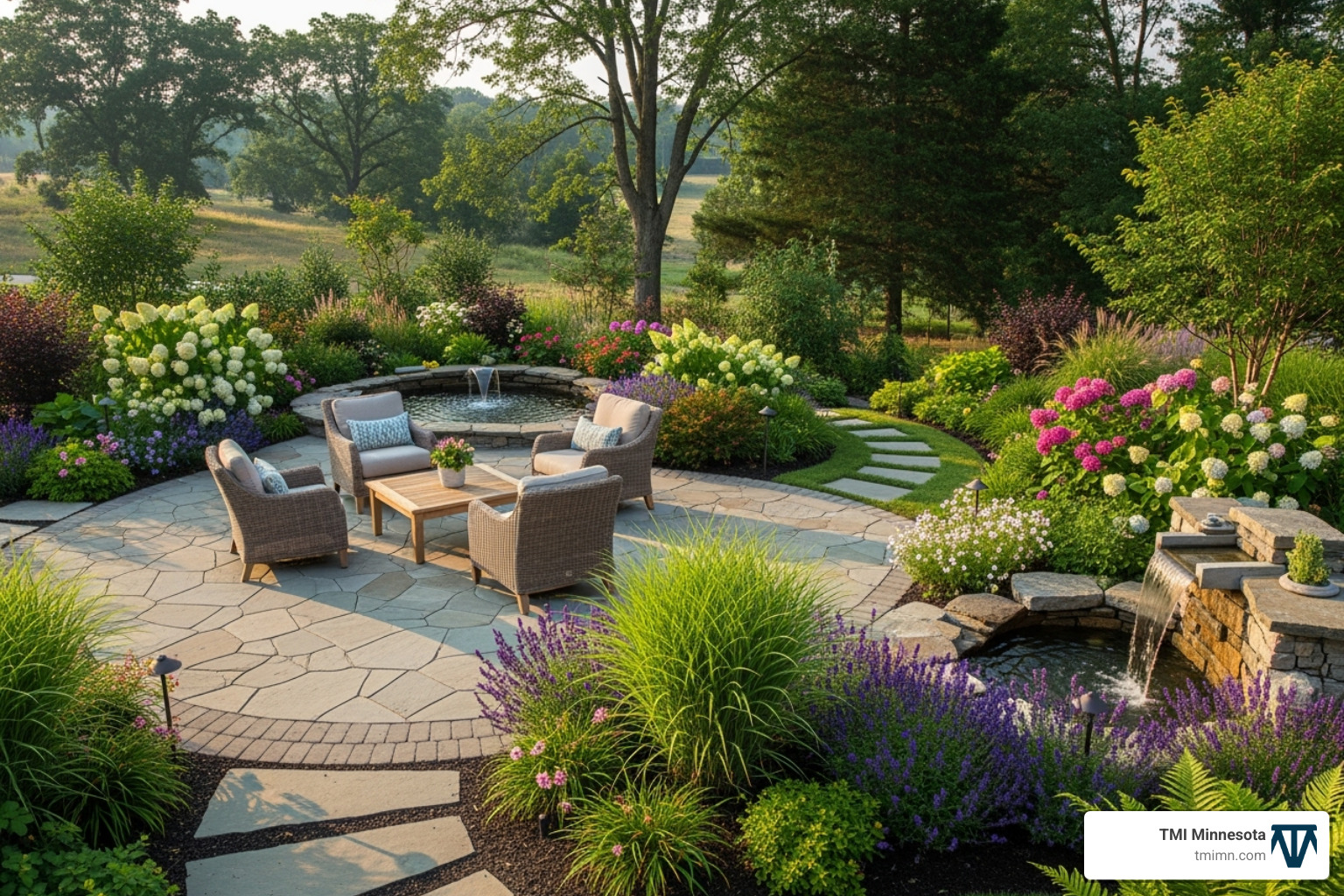
How to Balance Softscaping with Hardscaping
The secret to exceptional landscape design lies in understanding how hardscape and softscape elements dance together. Think of it like building a house – you wouldn’t paint the walls before putting up the frame, right?
Starting with hardscape first is always our approach. Those patios, walkways, and retaining walls aren’t just decorative – they’re the backbone of your entire outdoor space. By installing these permanent structures first, we ensure proper drainage and create the foundation that your softscape will improve for years to come.
Once we have that solid framework in place, the real fun begins. Using plants to soften hard edges transforms stark concrete and stone into welcoming outdoor rooms. Picture a beautiful stone patio standing alone – it might feel cold and unwelcoming. But surround it with flowering shrubs, ornamental grasses, and colorful perennials, and suddenly that same patio becomes a cozy retreat.
Creating focal points is where softscaping truly shines. A stunning specimen tree can anchor an entire yard, while a vibrant flower bed draws the eye and creates visual interest. We love using layering techniques to add depth – tall trees form the backdrop, medium shrubs fill the middle space, and groundcover plants complete the picture.
Texture and color theory play huge roles in making your landscape feel cohesive. Smooth, broad hosta leaves create beautiful contrast against feathery ornamental grasses. Cool blues and purples bring a sense of calm, while warm yellows and reds add energy and excitement to garden beds.
Scale and proportion matter more than most people realize. A massive oak tree next to a small deck can overwhelm the space, while tiny flowers might disappear next to a large retaining wall. We always plan for how plants will look when they reach maturity, ensuring they complement rather than compete with your hardscape features.
More info about Landscaping Design
What is Softscaping Maintenance Like?
Here’s the honest truth about what is softscaping maintenance involves – it’s an ongoing relationship with your landscape. Unlike hardscaping that mostly takes care of itself once installed, living plants need regular attention to stay healthy and beautiful.
Watering forms the foundation of softscape care, especially during those hot Minnesota summers or when establishing new plantings. We often recommend efficient irrigation systems that deliver water exactly where plants need it, reducing waste and ensuring consistent moisture levels.
Mowing and trimming keep your landscape looking neat and intentional. Regular lawn care maintains that classic green carpet effect, while pruning shrubs and trees prevents overgrowth and encourages healthy new growth. This isn’t just about appearance – proper pruning removes diseased branches and helps plants thrive.
Weeding might not be glamorous, but it’s essential. Weeds steal nutrients and water from your chosen plants, and they can quickly make a beautiful garden look neglected. The good news? Proper mulching significantly reduces weed problems while improving soil health.
Fertilizing gives your plants the nutrients they need to produce those gorgeous flowers and lush foliage you’re after. Different plants have different nutritional needs, and timing matters – spring feeding supports new growth, while fall applications help plants prepare for winter.
Seasonal care varies throughout the year. Spring brings cleanup and new planting opportunities. Summer focuses on watering and deadheading flowers. Fall means preparing beds for winter and planting bulbs for next year’s color. Here in the Twin Cities, winter preparation is especially important for plant survival.
For homeowners who want beauty without intensive upkeep, low-maintenance options offer the perfect solution. Native plants, drought-tolerant perennials, and well-chosen shrubs can create stunning landscapes that practically care for themselves. Drought-resistant landscaping is particularly popular with busy families who want gorgeous yards without constant maintenance.
The reality is that gardens require regular care and attention to maintain their beauty. But here’s what we’ve learned after years in this business – most homeowners find the maintenance routine relaxing and rewarding. There’s something deeply satisfying about nurturing plants and watching your landscape evolve through the seasons.
More info about Landscape Irrigation Solutions
Softscaping Project Costs: What to Expect
One of the first questions homeowners ask when considering a landscape change is, “How much will this cost me?” Understanding what is softscaping costs can help you plan your budget and make informed decisions about your outdoor space investment.
The truth is, softscaping projects come with a wide range of price points, and that’s actually good news for homeowners. Whether you’re working with a modest budget or ready to invest in a complete landscape makeover, there’s likely a softscaping solution that fits your financial comfort zone.
Small softscaping jobs typically range from $500 to $1,400. These projects might include planting a few new shrubs around your foundation, creating a small flower bed near your front entrance, or refreshing the mulch in existing garden areas. Even these smaller investments can make a noticeable difference in your home’s curb appeal.
Medium-sized projects usually fall between $1,400 and $2,200. At this level, you might be looking at creating new garden beds, installing a variety of perennials and shrubs, or establishing a new lawn area. These projects often involve more planning and can significantly transform a section of your yard.
Large softscaping jobs start around $2,200 and can extend well beyond $10,000 for comprehensive landscape changes. These projects might include mature tree installation, extensive garden bed creation throughout your property, or complete lawn establishment with sophisticated plant varieties.
Several key factors influence where your project will fall within these ranges. Materials make up a significant portion of the cost – a mature oak tree will naturally cost more than a small annual flower, and specialty plants or rare varieties command higher prices. The quality and quantity of soil amendments, mulch, and other organic materials also impact your total investment.
Labor costs depend on the complexity of your design and the amount of site preparation required. Creating a garden bed from scratch involves more work than simply adding plants to an existing, well-maintained area. If your property has challenging access for equipment or materials, this can also affect labor time and costs.
The size and scope of your project naturally influence pricing. A larger area requiring softscaping, or a design incorporating many different plant varieties, will require a bigger investment. However, larger projects often provide better value per square foot.
Design complexity is another consideration. A custom softscape plan developed by professionals ensures a cohesive, effective outcome but adds to the initial investment. However, proper planning often saves money in the long run by avoiding costly mistakes or plant replacements.
Every softscaping project is unique, just like every homeowner’s vision and property. We always recommend getting a professional estimate custom to your specific needs and goals. This approach ensures transparency and helps you understand exactly how your investment will transform your outdoor space.
Our team of softscaping contractors provides detailed consultations to help you plan your budget effectively. We’ll work with you to prioritize elements that give you the biggest impact for your investment, ensuring your softscaping project delivers both beauty and value for years to come.
Transform Your Yard with Expert Softscape Design
Now that we’ve explored what is softscaping from every angle, you can see how these living elements truly form the heart of any beautiful landscape. From the towering oak that provides summer shade to the colorful perennials that welcome you home each evening, softscaping breathes life into your outdoor space in ways that concrete and stone simply cannot.
The magic happens when softscaping and hardscaping work together as partners. Your stone patio provides the perfect stage, but it’s the surrounding garden beds bursting with seasonal color that make it feel like home. The walkway guides your steps, but the fragrant lavender brushing against your legs as you pass creates the memory.
This balance isn’t something you stumble into by accident. It requires thoughtful planning, an understanding of how plants grow and change over time, and knowledge of what thrives in our Minnesota climate. It means starting with the structural elements and then carefully selecting the living components that will soften, improve, and complement those hard lines.
The benefits we’ve discussed – from increased property value to environmental sustainability to the simple joy of watching your garden change through the seasons – these aren’t just nice-to-haves. They’re real, measurable improvements to both your property and your quality of life.
At TMI Minnesota, we’ve spent years mastering this delicate dance between form and function, structure and beauty. We understand that what is softscaping isn’t just an academic question – it’s about creating outdoor spaces where families gather, where you can unwind after a long day, and where every season brings something new to find.
Our team knows the ins and outs of Minnesota’s unique growing conditions. We know which plants will thrive through our harsh winters and which ones will provide the stunning fall colors that make our region famous. More importantly, we know how to weave these elements together with your hardscape features to create something truly special.
Whether you’re starting from scratch or looking to breathe new life into an existing landscape, we’re here to help you steer every decision. From selecting the right trees for your space to designing flower beds that bloom from spring through fall, we’ll guide you through creating an outdoor space that reflects your style and fits your lifestyle.
Ready to find what softscaping can do for your property? Let’s work together to create an outdoor space that you’ll love for years to come.