
Why Xeriscape Garden Plants Are Changing Minnesota Landscapes
Xeriscape garden plants are drought-tolerant species that create beautiful, low-maintenance landscapes while reducing water use by up to 60% compared to traditional gardens.
Top xeriscape garden plants for Minnesota include:
- Perennials: Yarrow (Achillea), Coneflower (Echinacea), Russian Sage (Perovskia), Stonecrop (Sedum), Lavender (Lavandula)
- Shrubs: Smoke Bush (Cotinus), Juniper (Juniperus), Barberry (Berberis), Potentilla
- Grasses: Little Bluestem (Schizachyrium scoparium), Blue Fescue (Festuca glauca)
- Accents: Yucca (Yucca filamentosa)
For many Minnesota gardeners, widespread drought used to feel like a distant problem—but that’s changing. Extreme weather and heat waves are making xeriscaping more than just a trend. It’s becoming essential.
The good news? Xeriscaping isn’t boring. It’s not about rocks and cacti. A well-designed xeriscape can be lush, colorful, and vibrant—filled with textures, scents, and year-round interest.
The term “xeriscape,” coined in 1981, comes from the Greek word xeros, meaning dry. It’s not about zero water—it’s about smart water use. By choosing the right plants, improving soil, and grouping plants by water needs, you can create a stunning outdoor space that thrives with minimal maintenance.
Why it matters now: Climate change is making droughts more common in Minnesota. Water conservation is no longer just for desert climates. With rising water bills and busy schedules, homeowners want landscapes that look great without constant care.
I’m Christopher Deanovic, and as Operations Leader at Task Masters, I’ve helped countless Minnesota homeowners transform their yards into sustainable, low-maintenance landscapes using xeriscape garden plants that thrive in our climate. With years of experience in landscape design and a deep understanding of regional plant hardiness, I’ve seen how the right plant selection can create beautiful outdoor spaces that stand up to our cold winters and hot summers.
Simple xeriscape garden plants glossary:
The Foundation of a Thriving Xeriscape Garden
Before picking out your favorite xeriscape garden plants, you need a solid foundation. Xeriscaping is a thoughtful approach to landscape design that makes every drop of water count. It’s not just about using drought-tolerant plants; it’s about creating a sustainable system.
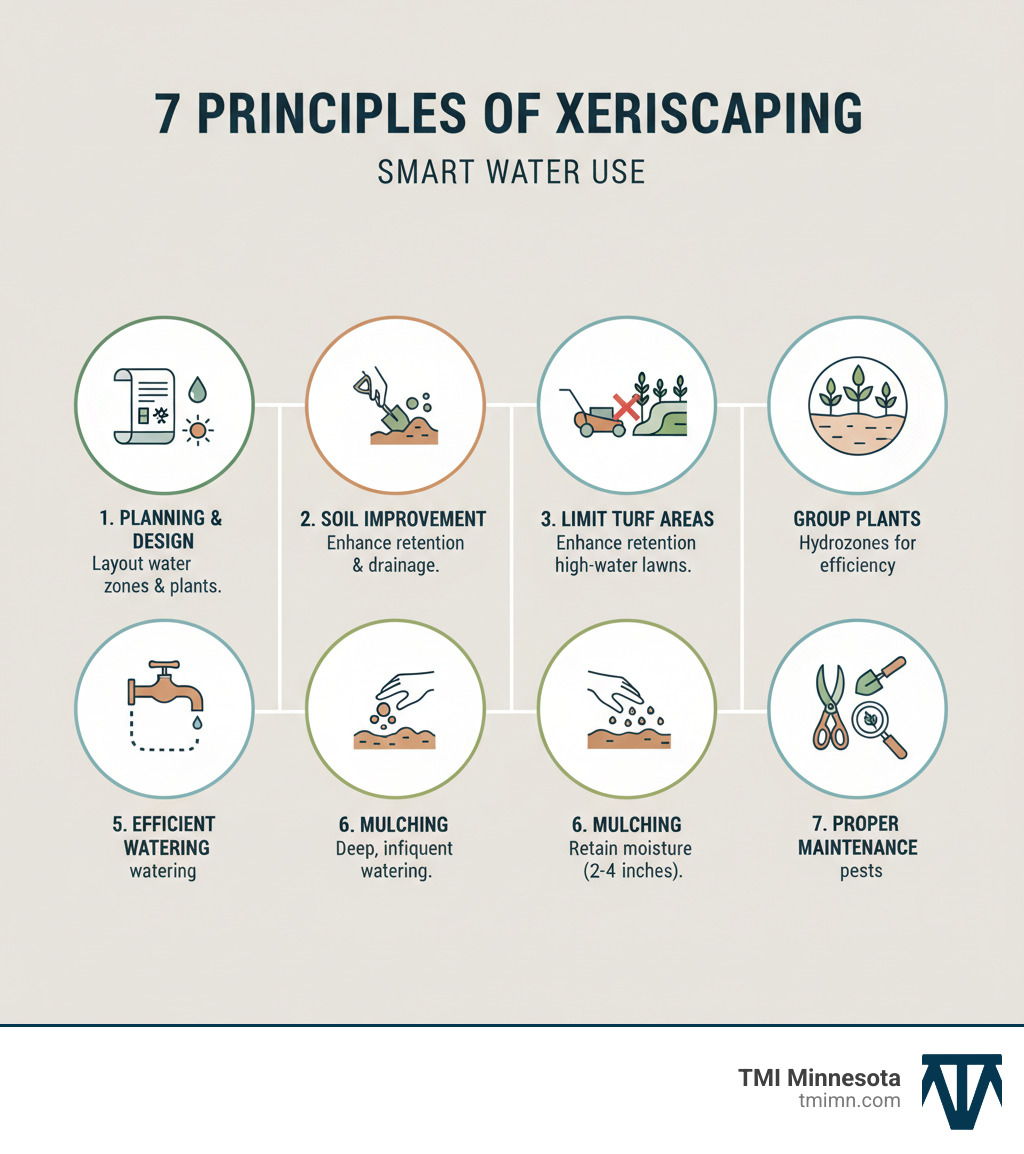
Developed in the early 1980s, seven core principles guide us in creating landscapes that are both beautiful and water-smart.
The Seven Principles That Make It Work
- Planning and design: We map your space, noting sun exposure, water flow, and how you use your yard to create a water-efficient plan.
- Soil evaluation: This is a critical step. We analyze your soil and amend it to achieve the right balance of drainage and moisture retention. The University of Minnesota’s Soil Testing Laboratory can help you understand what’s happening beneath the surface.
- Limiting turf areas: Grass is incredibly thirsty. We recommend keeping turf only for functional areas, freeing up space for more interesting, water-wise plantings.
- Grouping plants by water needs: Also called hydrozoning, this means grouping plants with similar water requirements. This logical step simplifies watering and ensures all plants get what they need.
- Efficient watering: Ditch wasteful sprinklers. Drip irrigation and soaker hoses deliver water directly to the roots, where plants use it. More info about our Garden Irrigation Systems shows how we design systems that work with your landscape.
- Using mulch: A 2-4 inch layer of organic or mineral mulch is a protective blanket for your soil. It retains moisture, blocks weeds, and regulates soil temperature.
- Proper maintenance: Xeriscapes need care, but far less than traditional landscapes. Occasional weeding, pruning, and monitoring plant health is usually all it takes.
Xeriscaping vs. Zeroscaping: A Common Misconception
Let’s be clear: xeriscaping is not zeroscaping. Zeroscaping often implies a barren yard of rocks and gravel. Real xeriscaping creates lush, vibrant gardens filled with color, texture, and life. The difference is that these beautiful gardens use water intelligently.
Soil Preparation for Success
In Minnesota, proper soil preparation is key. Most xeriscape garden plants need well-draining soil to avoid root rot.
If you have heavy clay soil, common in the Twin Cities, we add organic compost to improve drainage and add nutrients. For sandy soil, which drains too quickly, compost helps retain moisture and nutrients near the roots.
The goal is to create soil where roots can grow deep, allowing plants to find their own moisture and become self-sufficient. This foundation work ensures your xeriscape garden plants don’t just survive—they thrive.
Top Xeriscape Garden Plants for Beauty and Resilience
Now for the fun part: choosing plants! For Minnesota gardens, we select xeriscape garden plants that are not only drought-tolerant but can also handle our cold winters (USDA Zones 3b-5a) and hot summers.
The best choices combine hardiness with visual appeal, offering diverse textures, vibrant colors, and year-round interest. This proves that water-wise doesn’t mean boring.
Want to see how we bring these principles together? More on our Softscape Design services shows our approach to creating stunning, sustainable landscapes.
Drought-Tolerant Perennials
Perennials are the workhorses of the garden, becoming more drought-resistant as they mature. We choose species that thrive in Minnesota’s climate with minimal water.
Yarrow (Achillea): Features cheerful, flat-topped flower clusters in yellow, pink, and red. This tough perennial thrives in full sun and poor soil, is loved by pollinators, and is often hardy to Zone 3.
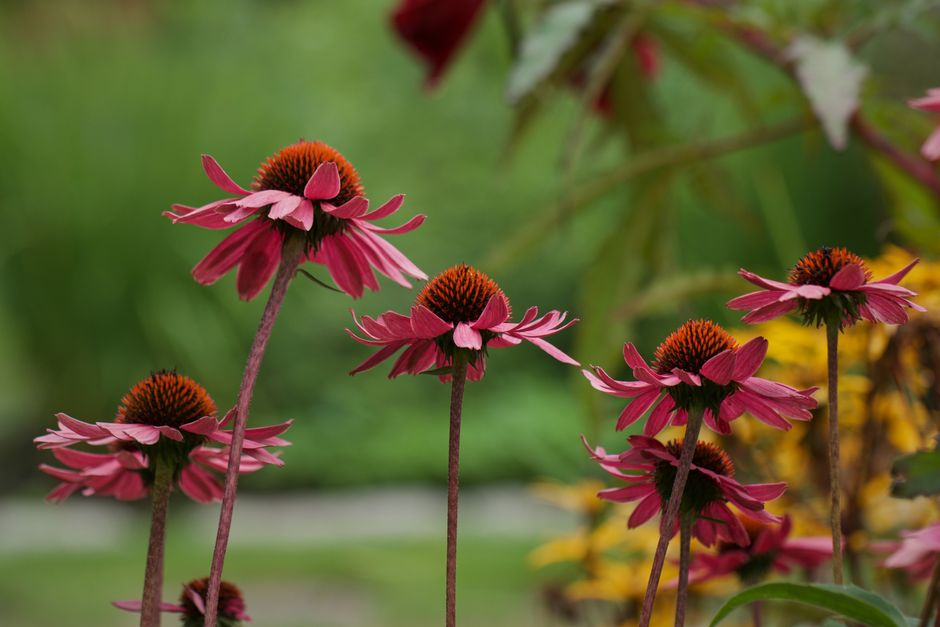
Coneflower (Echinacea): A prairie native perfect for Minnesota, the classic purple coneflower has daisy-like flowers that attract pollinators. It provides long-lasting summer color and is hardy to Zone 3.
Russian Sage (Perovskia atriplicifolia): Offers silvery foliage and spikes of lavender-blue flowers from mid-summer into fall. It’s exceptionally drought-tolerant, loves full sun, and is hardy to Zone 4.
Stonecrop (Sedum): This succulent comes in many forms, from low-growing groundcovers to upright varieties like ‘Autumn Joy’. They store water in their leaves, making them incredibly drought-tolerant and hardy in Zones 3 or 4.
Lavender (Lavandula): Certain English Lavender varieties like ‘Munstead’ and ‘Hidcote’ can handle our winters (Zone 4-5). They produce fragrant purple blooms in sunny, well-drained spots.
These pollinator-friendly perennials conserve water while supporting beneficial insects. Explore our Flower Garden Designs to see how we use them in cohesive displays.
Hardy Shrubs for Structure and Style
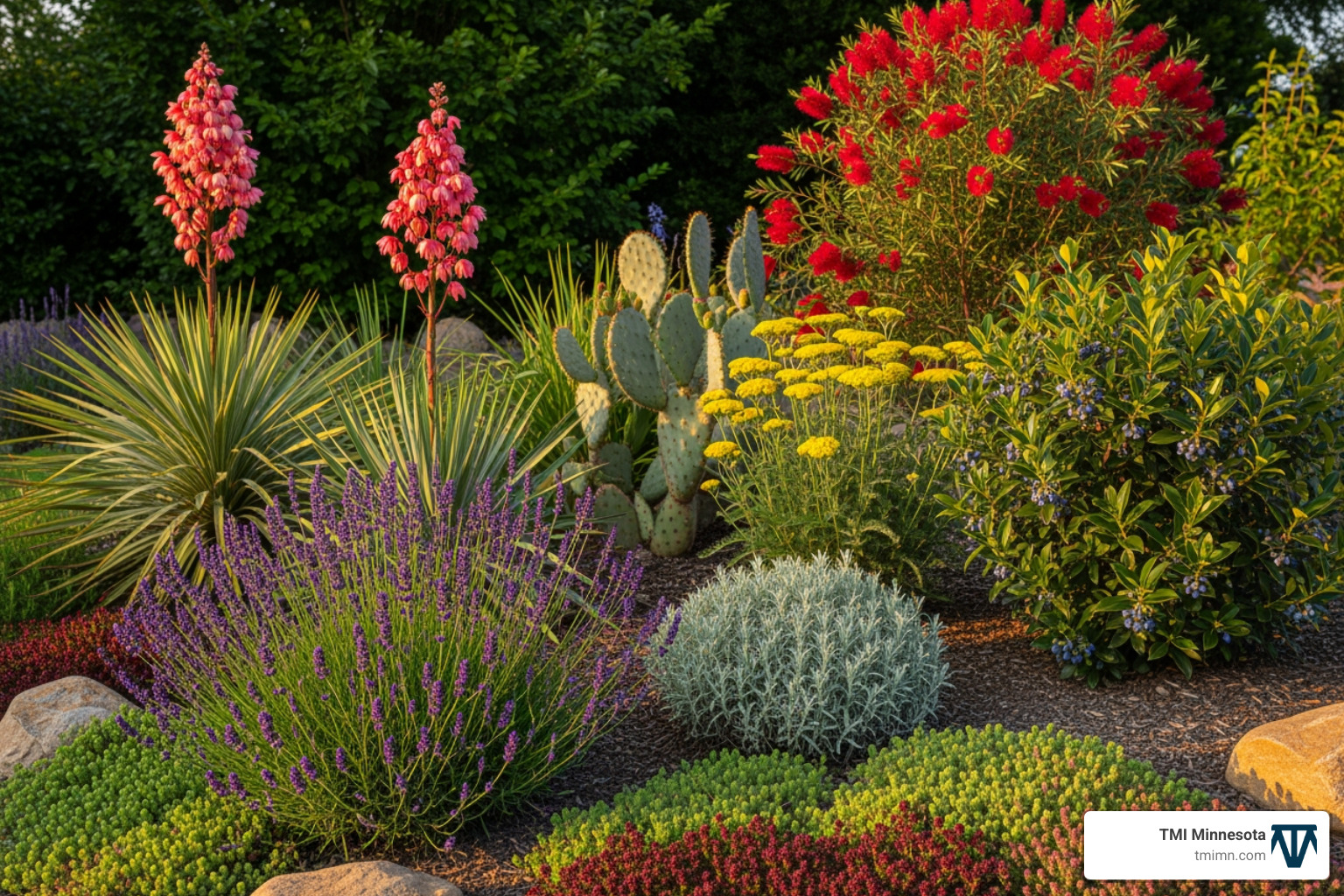
Shrubs provide the backbone of your landscape, offering structure and year-round interest with minimal water needs once established.
Smoke Bush (Cotinus coggygria): Named for its hazy, smoke-like flower clusters, this shrub has dramatic deep purple or green foliage. It’s drought-tolerant, provides stunning seasonal color, and is hardy to Zone 4.
Juniper (Juniperus): The evergreen workhorse of xeriscaping, junipers come in all shapes and sizes. Their needle-like foliage provides year-round texture, and they are incredibly drought-resistant and hardy to Zone 3.
Barberry (Berberis): Offers vibrant red, gold, or purple foliage and thorny branches that deter deer. Choose non-invasive varieties suitable for Minnesota. Most are hardy to Zone 4.
Potentilla (Dasiphora fruticosa): A low-maintenance champion, this shrub produces cheerful, buttercup-like flowers from late spring to fall. It’s extremely cold-hardy (Zone 2), drought-tolerant, and loves full sun.
These shrubs add structure, color, and deer resistance. Get inspired by our Garden Border Ideas for creative ways to use them.
Ornamental Grasses and Other Xeriscape Garden Plants

Ornamental grasses add movement, texture, and architectural interest that lasts through winter.
Little Bluestem (Schizachyrium scoparium): This native prairie grass has blue-green foliage that turns coppery-orange in the fall. It’s highly drought-tolerant and hardy to Zone 3.
Blue Fescue (Festuca glauca): Forms neat mounds of fine, silvery-blue foliage. It’s perfect for edging or rock gardens, providing beautiful contrast. It prefers well-drained soil and is hardy to Zone 4.
Yucca (Yucca filamentosa): With bold, sword-like evergreen leaves, Yucca adds architectural drama. In summer, a tall stalk bears creamy white flowers. It’s extremely drought-tolerant and hardy to Zone 4.
These plants bring unique texture and movement to your garden. For more ideas, Check out these Backyard Rock Garden Ideas.
Planting and Maintaining Your Water-Wise Oasis
A strong start is crucial for a successful xeriscape. While xeriscape garden plants are tough, they need some care during their first few years to establish deep roots.
Best Time to Plant
In the Twin Cities, fall planting is ideal. The warm soil encourages root growth, while cooler air reduces plant stress. Autumn rains also help with watering. Spring planting also works, but be prepared to water more consistently through the first summer.
Drought-tolerant plants typically take one to three years to establish the deep root systems that make them self-sufficient.
Watering New Plants
Even drought-tolerant plants need regular water for the first 1-3 years. The secret is deep, infrequent watering. Apply about an inch of water at a time, letting it soak deep into the soil. This encourages roots to grow downward, creating self-reliant plants. Shallow watering keeps roots near the surface, making them vulnerable to drought.
Once established, you can dramatically cut back on supplemental watering. For efficient irrigation during this phase, check out More info about our Garden Irrigation Systems.
Mulch Application
Our top maintenance tip is to mulch generously. A 2-4 inch layer of mulch reduces water evaporation, smothers weeds, and regulates soil temperature. Organic mulch like wood chips improves soil as it breaks down, while mineral mulches like gravel are a permanent solution for plants needing sharp drainage. Avoid plastic sheeting under mulch, as it harms soil health by blocking air and water.
Pruning and Fertilizing
Good news: xeriscapes are low-fuss. Pruning is usually limited to removing dead branches or shaping plants. As for fertilizer, most xeriscape garden plants don’t need it once established. Over-fertilizing can encourage weak, thirsty growth.
Adapting to Cold Climates
The key to a Minnesota xeriscape is choosing plants hardy for our USDA Zones (3b-5a). Native plants are excellent choices as they are already adapted to our climate. Good drainage is critical in winter to prevent root rot during freeze-thaw cycles. A thick layer of mulch also insulates roots from extreme cold.
Want to know exactly which zone you’re in? Find your zone with the U.S. Department of Agriculture Plant Hardiness Zone Map. It takes the guesswork out of plant selection.
Following these practices will help you create a landscape that thrives in Minnesota while using a fraction of the water. For more ideas, explore our guide to Sustainable Landscaping Techniques.
Frequently Asked Questions about Xeriscape Garden Plants
Here are answers to common questions from Twin Cities homeowners about xeriscaping.
Can I have a xeriscape garden in a cold climate like Minnesota?
Absolutely! The myth that xeriscaping is only for deserts is false. It’s about smart water use, not a specific climate.
The key is choosing xeriscape garden plants rated for our USDA Hardiness Zones (3-5). Many beautiful options thrive here, including Minnesota Native Plants like Little Bluestem and Purple Coneflower. These plants are adapted to our winters.
Proper soil preparation to ensure excellent drainage is also critical. This prevents root rot during our spring freeze-thaw cycles. With the right plants and planning, a Minnesota xeriscape will thrive year-round.
Do xeriscape plants need any water at all?
Yes, they do. “Xeriscape” means dry landscape, not zero water. The goal is to use water smartly and reduce consumption by up to 60%.
- Establishment (First 1-3 years): All new plants need regular, deep watering to establish strong root systems.
- Once Established: Plants become very independent and handle normal weather without extra water. They will only need supplemental watering during prolonged droughts or extreme heat waves.
Smart plant choices, efficient irrigation, and proper mulching are how we achieve massive water savings.
Is xeriscaping expensive to install?
While the upfront cost can be similar to a traditional landscape, the long-term savings make xeriscaping a smart investment.
You’ll save money in three key ways:
- Lower Water Bills: Using up to 60% less water adds up to significant savings over time.
- Reduced Maintenance Costs: Resilient xeriscape garden plants require less fertilizing, pruning, and general care, saving you time and money.
- Increased Property Value: A professionally designed, water-wise landscape is a major selling point for modern, eco-conscious buyers.
Over just a few years, a xeriscape often pays for itself through these savings, providing a return on investment that’s both financial and environmental.
Want to explore what a custom xeriscape could look like for your property? Connect with our Softscaping Contractors and let’s talk about creating something beautiful and sustainable together.
Create Your Sustainable Oasis
Embracing xeriscape garden plants in your Twin Cities landscape is a choice that improves your life and property. You gain a beautiful, vibrant yard, significant water savings, and dramatically reduced maintenance. Your yard becomes a place to enjoy, not a chore.
At TMI Minnesota, we specialize in changing outdoor spaces with unique, sustainable designs. Our expertise in custom landscape design and professional installation allows us to craft a water-wise oasis that reflects your style and thrives in Minnesota’s climate.
We understand the local conditions and know which xeriscape garden plants will truly flourish here. We design landscapes that are intentional and beautiful.
Imagine a backyard that contributes to a healthier environment, saves you money and time, and brings you joy. That sustainable oasis is within reach.
Ready to see what’s possible for your property? Discover more Xeriscape Landscaping Ideas to transform your yard and let’s start a conversation about bringing your vision to life.