
Why Water-Wise Landscaping is Perfect for Modern Families
A xeriscape garden is a landscaping method that reduces or eliminates the need for supplemental irrigation by using drought-tolerant plants, efficient water management, and smart design principles.
Key Components of a Xeriscape Garden:
- Water Conservation – Can reduce water consumption by 60% or more compared to traditional lawns
- Drought-Tolerant Plants – Native and adapted species that thrive with minimal watering
- Smart Design – Grouping plants by water needs and utilizing natural rainfall patterns
- Low Maintenance – Requires significantly less mowing, fertilizing, and pest control
- Environmental Benefits – Reduces pollution runoff and supports local wildlife
The term comes from the Greek word xeros, meaning “dry,” but don’t let that fool you into thinking these gardens are barren. Modern xeriscaping creates lush, colorful landscapes that are both beautiful and sustainable.
Why Families Love Xeriscaping:
- Saves Money – Lower water bills and reduced maintenance costs by roughly 55%
- Saves Time – Less mowing, watering, and weekend yard work
- Supports Wildlife – Attracts beneficial pollinators like bees and butterflies
- Climate Resilient – Thrives during drought conditions and extreme weather
At TMI Minnesota, we’ve helped countless families transform their outdoor spaces into sustainable, low-maintenance landscapes. Our experience designing xeriscape gardens shows how these water-wise approaches create stunning outdoor spaces that work perfectly for busy families while protecting our local environment.
Why Xeriscaping is a Smart Choice for Modern Homeowners
In an era of environmental consciousness and precious resources, xeriscaping is a responsible choice for homeowners. Especially in regions prone to drought or with rising water costs, a xeriscape garden offers benefits that extend far beyond your property line.
Xeriscapes can reduce water consumption by 60% or more compared to regular lawns, translating into significant savings for communities and households. For instance, in some arid states, up to 75% of a household’s potable water is used on lawns, highlighting the strain traditional landscaping puts on water supplies. Choosing xeriscaping directly alleviates this pressure.
Beyond water conservation, the environmental and economic benefits are profound. Xeriscaping lowers annual maintenance costs by roughly 55% and can even reduce park construction costs by 57%. When an average city park switches to more native vegetation, irrigation usage can drop by 30–50%, demonstrating the large-scale impact of water-wise landscaping.
A well-designed xeriscape garden also reduces pollution. Traditional lawns often require heavy use of fertilizers and pesticides, which can wash into our waterways. With xeriscaping, the need for these chemicals is significantly reduced, protecting our local ecosystems and improving water quality.
Furthermore, xeriscaping contributes to biodiversity. By selecting native and drought-tolerant plants, we create habitats for local wildlife, from pollinators like bees and butterflies to various bird species. As the climate changes, bringing hotter, drier summers, xeriscaping offers a resilient solution, allowing our gardens to thrive even in challenging conditions.
We believe that embracing sustainable landscaping techniques is key to a healthier planet and a more enjoyable home life.
The Environmental Impact of Traditional Lawns
Lush, green lawns come with a significant environmental cost. Turf grass is the single most irrigated nonfood crop in the United States, covering nearly 128,000 square kilometers and demanding enormous amounts of water.
This high water consumption often draws from stressed sources. To maintain their appearance, lawns also receive heavy applications of synthetic fertilizers and pesticides. Runoff carries these chemicals into waterways, creating “nonpoint source pollution” that harms aquatic life and can contaminate drinking water.
Furthermore, routine mowing with gasoline-powered equipment contributes to air pollution and carbon emissions. Rethinking the traditional lawn allows us to reduce our environmental footprint and create more sustainable green spaces.
Benefits for Your Wallet and Your Weekend
A xeriscape garden offers tangible benefits for your budget and free time. The most immediate return is a lower water bill, as xeriscaping can cut water use by 60% or more, leading to substantial savings.
Maintenance is another key area of savings. Traditional lawns require weekly mowing, fertilizing, and pest control. Xeriscaping lowers annual maintenance costs by roughly 55%, saving you money on fuel and supplies and giving you back your weekends for family and relaxation.
While there is an initial investment to install a xeriscape garden, the long-term savings on water and maintenance make it a financially smart move. A well-designed, low-maintenance, and eco-friendly landscape is also increasingly seen as a valuable asset that can improve property appeal and market value.
We specialize in drought-resistant landscaping that not only looks beautiful but also contributes to a more sustainable lifestyle.
The 7 Core Principles of a Successful Xeriscape Garden
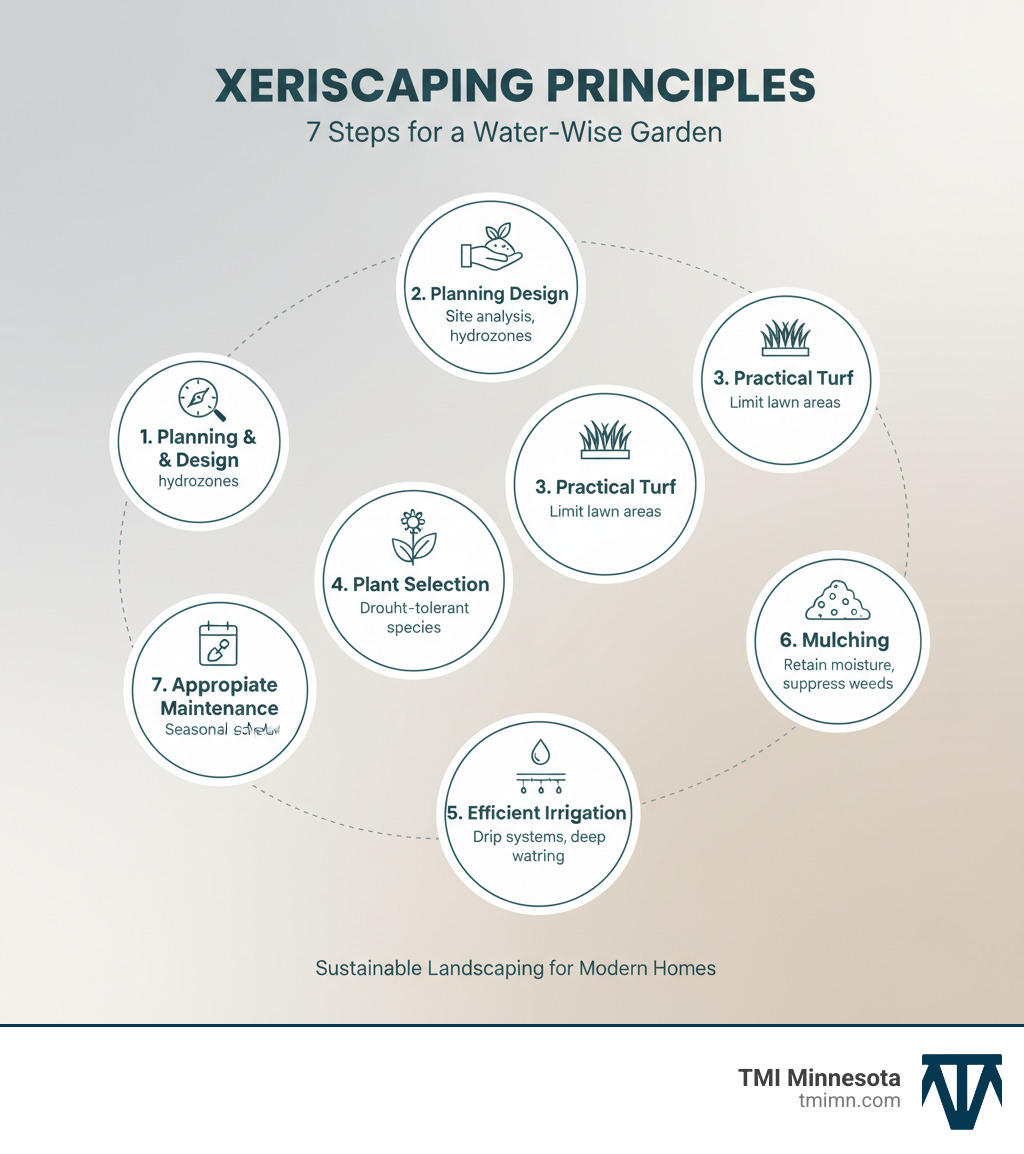
Creating a water-wise landscape is a thoughtful process guided by seven core principles. Originally developed in the 1980s by Denver Water, these principles provide a roadmap for designing and maintaining a beautiful, sustainable, and low-maintenance xeriscape garden. By following these steps, we can ensure our outdoor spaces thrive with minimal supplemental irrigation, even in Minnesota’s diverse climate. Let’s dig into each one.
1. Thoughtful Planning and Design
Thoughtful planning and design are the first steps to a successful xeriscape garden. This involves understanding your property’s unique characteristics and how you want to use the outdoor space.
First, conduct a thorough site analysis. This means mapping out sun and shade patterns throughout the day and across seasons. This information is crucial for placing plants that will thrive in their specific microclimates. We also consider the topography of your yard – are there slopes? Flat areas? Low spots where water collects? This will influence drainage and plant selection.
A key concept in xeriscape design is creating “hydrozones.” This involves grouping plants with similar water needs together. For example, we’d place high-water-use plants in a single, easily irrigated zone, while drought-tolerant plants would be grouped in a separate, low-water zone. This prevents overwatering some plants and underwatering others, leading to efficient water use.
Integrating hardscaping elements like walkways, patios, and seating areas is also vital. These features can define spaces, reduce planting areas, and provide visual interest. When choosing materials, we consider permeability. For instance, using pavers or crushed stone allows water to infiltrate the soil rather than running off, maximizing stormwater absorption. This creates cohesive designs that are both beautiful and functional.
We can help you with softscape design that integrates seamlessly with your new water-wise landscape. For more ideas on integrating natural materials for pathways, check out this resource.
2. Smart Soil Improvement
The foundation of any successful garden, especially a xeriscape garden, is the soil. Many plants, particularly those adapted to drier conditions, prefer well-draining soil. However, our existing soil might be sandy (drains too quickly) or heavy clay (drains too slowly). This is why smart soil improvement is crucial.
We start with a soil analysis to understand its composition and nutrient levels. Based on this, we can amend the soil by incorporating organic matter such as compost and well-rotted manure. Adding organic matter improves drainage in clay soils, helps sandy soils retain moisture, and provides essential nutrients. This creates a healthier environment for plant roots to establish deeply, making them more resilient to dry spells. Creating good soil upfront will save time and money later by reducing maintenance, plant replacement, and water use.
3. Practical Turf and Lawn Alternatives
One of the biggest water guzzlers in a traditional landscape is the lawn. In xeriscaping, we don’t necessarily eliminate turf entirely, but we approach it strategically. The goal is to create practical turf areas that serve a purpose, rather than sprawling expanses that demand constant water and upkeep.
We minimize lawn size, limiting it to areas that are actively used for play or relaxation. For other areas, especially slopes or difficult-to-mow spots, we explore alternatives.
Drought-tolerant turf species, such as specific blends of turf-type tall fescues and perennial ryegrass, can be excellent choices. These varieties require substantially less irrigation once established. We can even consider no-mow grasses or clumping perennial sedges like Carex pensylvanica, which offer a more natural look with reduced maintenance.
Ground covers are another fantastic option. Plants like Dymondia margaretae or Lippia repens can create a low-growing, attractive carpet that chokes out weeds and controls erosion with minimal water. For areas where a green carpet isn’t necessary, we can use hardscaping. Using gravel and stone as a lawn alternative can provide texture, contrast, and permeable surfaces, further reducing water needs.
4. Appropriate Plant Selection
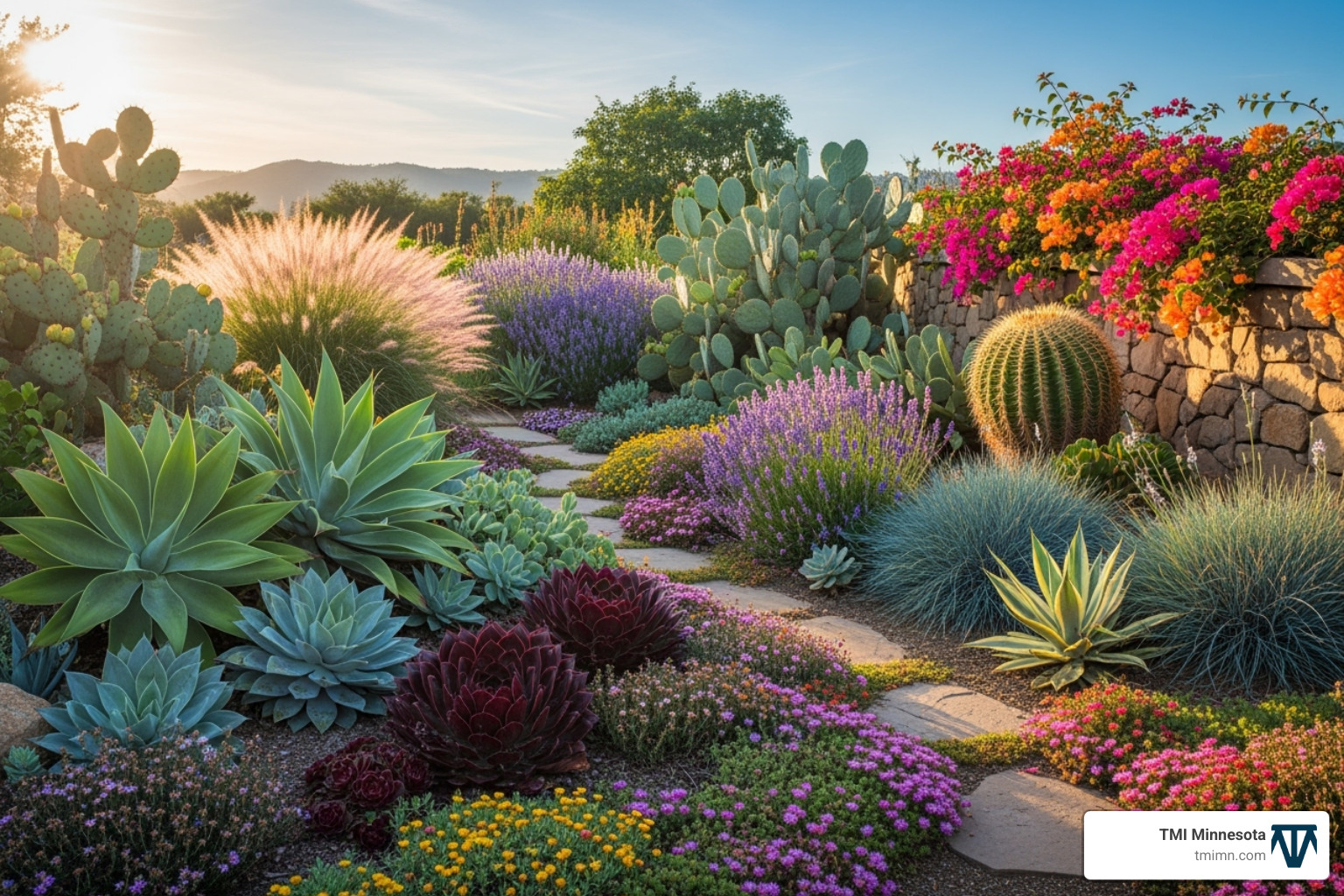
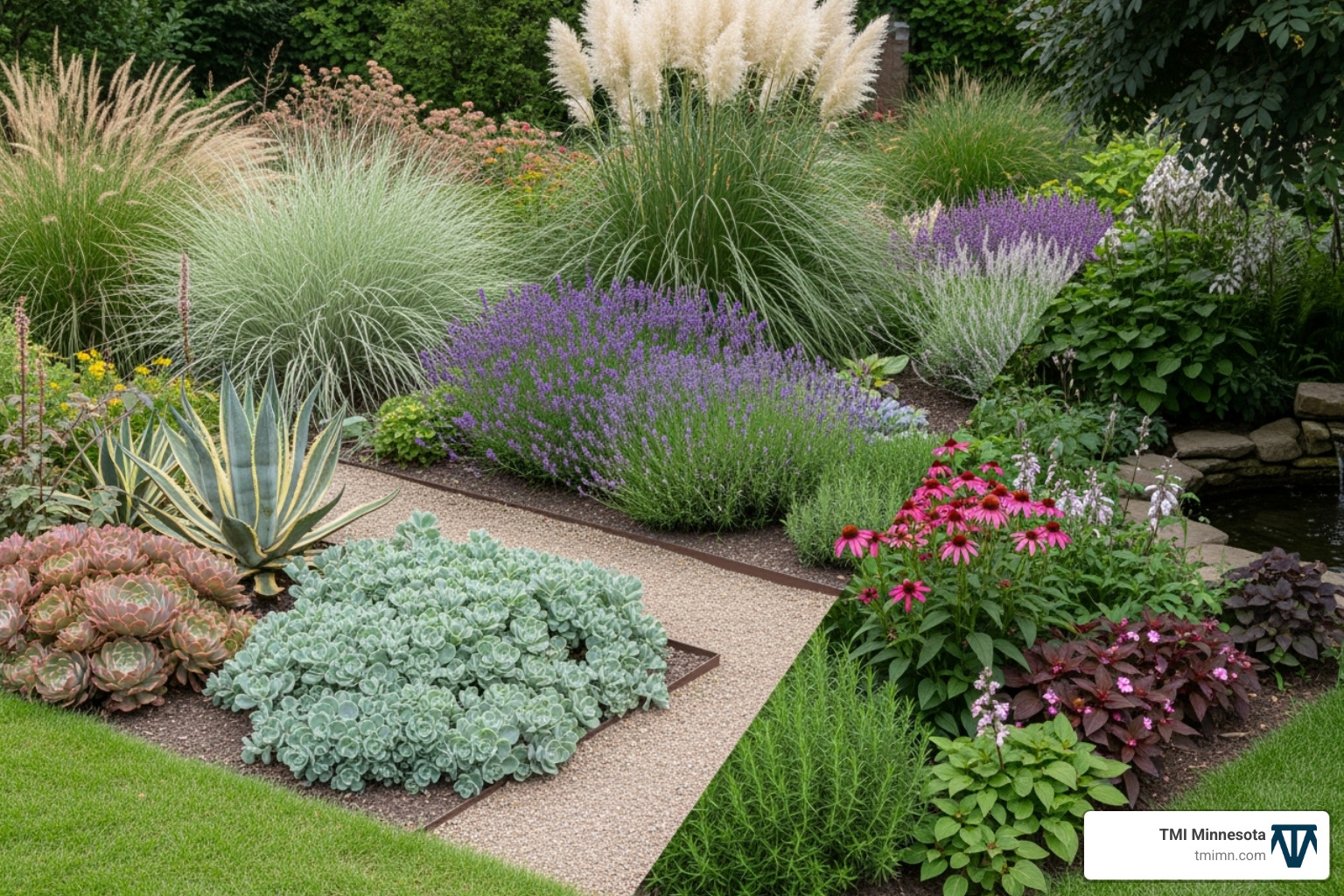
Choosing the right plants is an impactful principle of a xeriscape garden. The goal is to select plants naturally adapted to drier conditions that will thrive with minimal water once established. This includes a wide variety of beautiful and diverse plants, not just cacti and yuccas.
We prioritize native plants whenever possible. Native species are inherently suited to the local climate, soil, and rainfall patterns of Minnesota, making them incredibly resilient and low-maintenance. They require less water, fertilizer, and pest control, and they also support local ecosystems.
Beyond natives, we look for plants with specific characteristics that indicate drought tolerance. These might include:
- Waxy or succulent leaves: Like sedum or hens and chicks, which store water.
- Silver or fuzzy foliage: These reflect sunlight and reduce water loss.
- Small or fine leaves: Minimize surface area for evaporation.
- Deep root systems: Allow plants to access water deeper in the soil.
- Aromatic leaves: Some plants, like lavender, emit oils that help reduce water loss.
When selecting plants, we consider regional suitability, focusing on plants proven to perform well in our specific USDA hardiness zone and local conditions.
For instance, Hens and Chicks (Sempervivum tectorum) are a popular choice for xeriscaping. Adrienne R. Roethling, director of curation at Paul J. Ciener Botanical Garden, notes how they form tight rosettes and continue to develop new plants, providing year-round interest. They’re perfect for borders or rock gardens.
We can help you with native plant landscaping that thrives in Minnesota.
Mastering Water-Wise Techniques and Plant Curation
Now that we’ve covered the foundation, let’s explore the practical techniques that will make your xeriscape garden truly thrive. This is where science meets art, creating outdoor spaces that are both stunning and sustainable.
Effective Irrigation and Mulching
Even drought-tolerant plants need water to get established, but the key is efficiency.
Drip irrigation systems and soaker hoses are ideal for a xeriscape garden. Unlike sprinklers, which lose much water to evaporation, these systems deliver water directly to the root zone for maximum efficiency.
The rule for xeriscape watering is to water deeply and infrequently. Watering for longer periods but less often encourages plants to develop deep, strong root systems that can find moisture during dry spells. This is more effective than frequent, shallow watering.
Rainwater harvesting is an eco-friendly and budget-friendly strategy. Installing rain barrels to collect roof runoff provides a free water source for your garden while reducing stormwater runoff. According to Longwood Gardens, well-established xeriscaped landscapes can thrive on natural rainfall alone.
Mulching is essential for conserving soil moisture, suppressing weeds, and regulating soil temperature. Organic mulches like wood chips or shredded bark also enrich the soil as they decompose. Inorganic mulches like gravel work well in very dry areas and can prevent rot around the base of certain plants.
Aim for a mulch depth of two to four inches. Less is ineffective, and more can prevent air and water from reaching the soil.
Plant and Design Ideas for Your Xeriscape Garden
Creating a beautiful xeriscape garden in Minnesota means choosing plants that can handle our climate while putting on a show. Here are some reliable performers.
For flowers, Purple Coneflower (Echinacea purpurea) is a Minnesota native that attracts pollinators. Yarrow comes in gorgeous colors with feathery foliage. Sedum varieties range from groundcovers to upright forms like ‘Autumn Joy’, storing water in their succulent leaves. Coreopsis brings cheerful yellow blooms, while Lavender adds fragrance and iconic purple spikes.
When it comes to shrubs, Juniper varieties offer everything from low groundcovers to upright specimens. Sumac provides incredible fall color and interesting seed heads. Serviceberry is a native triple-threat with spring flowers, summer berries, and autumn color.
For grasses, Little Bluestem is a prairie native with blue-green summer foliage that turns reddish-bronze in fall. Blue Fescue forms neat, compact clumps with striking blue-gray color. Switchgrass adds height and graceful movement.
Arranging your beds by height creates visual depth. Place your tallest plants like switchgrass or tall coneflowers in the back, medium-height plants like yarrow and sedum in the middle, and shorter options like blue fescue or creeping sedums in front.
Don’t forget to play with color and texture combinations. Silver-leafed plants look stunning next to deep green foliage, and mixing different flower shapes keeps things interesting. For those dealing with local wildlife challenges, consider our guide to deer resistant plants for Minnesota.
How Your Garden Can Support Local Wildlife
Your xeriscape garden can become a busy hub for local wildlife. Choosing the right plants can transform your yard into a mini nature preserve.
Native plants are the foundation of wildlife-friendly landscaping because they have co-evolved with local insects, birds, and other animals. They provide the specific nectar, pollen, seeds, and leaves that local wildlife depends on.
Attracting pollinators like bees, butterflies, and hummingbirds happens naturally when you include native flowering plants. These creatures are essential for healthy ecosystems and play a crucial role in pollinating many of our food crops.
Supporting birds is another wonderful benefit. Native plants provide the berries, seeds, and insects that birds need. The shrubs and grasses in your landscape offer nesting sites and shelter from predators.
Consider the mighty oak tree as an example of nature’s interconnectedness. As highlighted in research about why you should plant oaks, these trees are keystone species that can support hundreds of caterpillar species – a primary food source for baby birds. Even if you don’t have space for a large oak, incorporating native shrubs, perennials, and grasses will make a significant difference.
By creating environmentally friendly gardens, we’re building essential stepping stones for wildlife, connecting fragmented habitats and fostering a healthier natural world.
Frequently Asked Questions about Xeriscaping
We get lots of questions about xeriscaping from homeowners who are curious about making the switch. Let me clear up some common confusion and address the concerns we hear most often.
What is the difference between xeriscaping and ‘zeroscape’?
A common misconception is confusing “xeriscape” with “zeroscape.” The latter implies a barren landscape of rocks and gravel, which is not the goal.
The term “xeri” comes from the Greek word xeros, meaning “dry.” Xeriscaping means “dry landscaping,” not “zero landscaping.” It focuses on choosing plants that thrive in dry conditions and using smart watering techniques to create a beautiful, living garden.
A well-designed xeriscape garden can be lush and colorful, full of vibrant flowers and graceful grasses. It’s about making smart plant choices, not eliminating them.
“Zeroscape” refers to landscapes with minimal or no plants. In contrast, xeriscaping creates a healthy, living, and water-wise environment, not a sterile rock garden.
What are the disadvantages or challenges of xeriscaping?
While we’re huge fans of xeriscaping, it’s only fair to talk about the potential challenges you might face:
The upfront investment can be significant. Converting a traditional lawn to a xeriscape garden sometimes costs more initially than simply planting grass seed. You’re looking at removing existing turf, improving soil, buying diverse plants, and possibly installing drip irrigation. Professional conversions can be a considerable investment, though DIY projects can cut costs dramatically.
Not everyone “gets it” right away. Some neighbors might wonder where your green lawn went, especially during the establishment period when new plants are still filling in. If you’re planning to sell your home soon, potential buyers who prefer traditional lawns might need some education about the benefits.
HOA rules can be tricky. Some homeowners associations have strict lawn requirements that initially seem to conflict with xeriscaping. The good news? Many states are passing laws preventing HOAs from banning water-wise landscaping practices.
New plants need babying at first. While established xeriscape plants are incredibly low-maintenance, they need regular watering during their first year or two to develop strong root systems. Your garden won’t be “zero-water” immediately – it takes time to reach that point.
Is a xeriscape garden cheaper than a traditional lawn?
The short answer is yes, especially over time. While you might spend more upfront, the long-term savings are impressive.
Here’s how the numbers typically break down:
Initial costs for a xeriscape garden are often higher due to plant diversity, soil improvements, and hardscape materials. Traditional lawn installation is usually cheaper upfront.
Long-term savings with xeriscaping are substantial. You’ll see your water bills drop by 60% or more, and maintenance costs plummet by around 55%. That means less money spent on mowing, fertilizing, and pest control. You’ll also need fewer expensive tools and equipment.
Traditional lawns keep costing you money year after year through mowing, fertilizing, pest control, and high water bills during dry spells.
The beauty of a xeriscape garden is that once it’s established, it practically takes care of itself. The higher upfront cost is an investment that pays for itself through reduced utility bills and minimal maintenance needs. Your future self will thank you for making the switch!
Conclusion: Create Your Own Sustainable Oasis
As we’ve explored, creating a xeriscape garden is far more than just a landscaping trend—it’s a thoughtful commitment to a sustainable, beautiful, and remarkably low-maintenance lifestyle. We’ve seen how xeriscaping can slash your water consumption by 60% or more, dramatically reduce environmental pollution, and create a thriving habitat for local wildlife right outside your door.
The seven core principles we’ve covered work together to create a successful garden. Thoughtful planning and design sets the foundation, while smart soil improvement creates the perfect growing environment. Practical turf alternatives and appropriate plant selection bring color and life to your space, while efficient irrigation and mulching keep everything thriving with minimal effort. Finally, appropriate maintenance ensures your garden stays beautiful year after year.
The beauty of a xeriscape garden lies in its resilience. Once established, your garden will flourish even during Minnesota’s dry spells, requiring less of your precious weekend time and significantly less money for upkeep. It’s an investment that truly pays dividends—offering both stunning visual appeal and genuine peace of mind.
You’ll wake up to a landscape that supports biodiversity, attracts colorful butterflies and songbirds, and adapts gracefully to our changing climate. Instead of fighting against nature with constant watering and chemical treatments, you’ll be working with it to create something truly special.
At TMI Minnesota, we’re passionate about changing outdoor spaces with unique designs that lift your yard living. We understand that every Minnesota family deserves a landscape that’s both beautiful and practical—one that improves your lifestyle rather than consuming it. Our expertise in creating sustainable, low-maintenance landscapes means we can help you design a xeriscape garden that perfectly fits your family’s needs and your property’s unique characteristics.
Ready to transform your yard into a sustainable oasis that you’ll love for decades to come? Explore our Xeriscape Landscaping Ideas and let us help you create a water-wise garden that will be the envy of your neighborhood—and your future self will thank you for it.