
Transform Your Yard with Water-Wise Landscaping
Looking for xeriscape landscaping ideas to create a beautiful, drought-resistant yard? Here are the top water-wise landscaping approaches:
- Replace lawn areas with drought-tolerant ground covers like sedge or buffalo grass
- Create gravel gardens with decorative rocks and drought-resistant perennials
- Install permeable pathways that allow water to soak into the ground
- Use native plants grouped by water needs (hydrozoning)
- Apply organic mulch to retain soil moisture and suppress weeds
- Add rainwater harvesting systems to capture and reuse natural precipitation
Xeriscape landscaping ideas blend beauty with practicality, offering a sustainable solution to traditional water-intensive yards. Born in Colorado in the 1980s, xeriscaping can reduce landscape water use by up to 60% while cutting maintenance time in half. This approach isn’t about creating barren rock gardens or cactus-only designs – modern xeriscapes feature vibrant flowers, attractive hardscaping, and functional outdoor living spaces that thrive with minimal irrigation.
Whether you’re facing water restrictions, tired of high water bills, or simply want a more environmentally-friendly yard, xeriscaping provides a smart alternative to conventional landscaping. The key lies in thoughtful planning, appropriate plant selection, and efficient irrigation systems that deliver water precisely where needed.
I’m Christopher Deanovic, Operations Leader at Task Masters, where I’ve helped countless Minnesota homeowners implement xeriscape landscaping ideas that balance water conservation with stunning visual appeal. My experience has shown that with the right design approach, xeriscaping can transform even the most challenging yards into sustainable, low-maintenance outdoor spaces.

Basic Xeriscape landscaping ideas glossary:
– Garden border ideas
– Landscape lighting ideas
– Slope garden ideas
What Is Xeriscaping & How It Differs from Traditional Landscaping
Ever wondered why your water bill skyrockets in summer? The culprit might be right outside your window.
Xeriscaping (pronounced “zeer-i-scaping”) is a smart landscaping approach that works with nature instead of against it. Coined by Denver Water back in 1981, the term blends the Greek word “xeros” (dry) with “landscape” – literally meaning “dry landscaping.” But don’t let the name fool you! Xeriscape landscaping ideas aren’t about creating barren, lifeless yards. They’re about embracing plants that naturally thrive in your local climate without needing constant watering.
Traditional American landscaping has long been dominated by the perfect green lawn – a thirsty tradition that’s increasingly hard to justify. Those lush carpets of turf grass cover an astonishing 128,000 square kilometers across the country, making them the most irrigated non-food crop in America. In some dry states, a shocking 75% of household drinking water gets dumped directly onto lawns. Beyond the water waste, traditional landscapes demand weekly mowing, regular fertilizing, and constant battling against pests.
Xeriscape landscaping ideas flip this water-wasting script by:
- Celebrating native and drought-adapted plants that belong in your environment
- Shrinking lawn areas or replacing them with beautiful alternatives
- Improving your soil’s natural ability to hold moisture
- Using mulch as nature’s water-saving blanket
- Installing targeted irrigation that delivers water exactly where needed
- Creating “hydrozones” that group plants with similar thirst levels
- Designing landscapes that let you enjoy your weekends instead of maintaining them
The payoff? Xeriscaped yards typically slash water use by 50-75%, dramatically cut maintenance time, and create vibrant habitats that support local birds, butterflies, and beneficial insects. For more information about the origins and principles of xeriscaping, you can visit the EPA WaterSense program which provides excellent resources on water-efficient landscaping.
| Comparison | Traditional Landscaping | Xeriscape Landscaping |
|---|---|---|
| Water Usage | High (thousands of gallons per month) | Low (60% less on average) |
| Maintenance | Weekly mowing, frequent fertilizing | Pruning once annually, minimal fertilizer |
| Environmental Impact | High water waste, chemical runoff | Low water use, supports local ecosystems |
| Plant Types | Often non-native, high-water species | Native, drought-tolerant species |
| Cost Over Time | Higher ongoing costs (water, maintenance) | Higher initial investment, lower long-term costs |
The Seven Principles at a Glance
The genius of xeriscaping lies in seven straightforward principles that Denver Water established decades ago. These guidelines remain the gold standard today:
Planning and Design: Creating a thoughtful blueprint that considers your local climate, soil conditions, and how you actually use your outdoor spaces.
Soil Amendment: Giving plants the foundation they need by improving your soil. This might mean working compost into sandy soil to help it hold water or adding organic matter to clay soil to improve drainage.
Practical Turf Areas: Keeping grass only where it makes sense – maybe a small play area for kids or pets – and choosing tougher, drought-resistant varieties.
Efficient Irrigation: Using smart systems like drip irrigation that deliver water directly to plant roots instead of spraying it into the air where much evaporates before reaching plants.
Mulch Application: Covering soil with a protective layer that locks in moisture, blocks weeds, and moderates soil temperature – just like nature does in forests.
Low-Water Plants: Selecting beautiful plants that thrive naturally in your region without needing constant babysitting and watering.
Appropriate Maintenance: Following sustainable care practices that preserve water efficiency while keeping your landscape healthy and attractive.
These principles work together as a system, creating outdoor spaces that aren’t just water-smart but also beautiful, functional, and kind to the environment. At TMI Minnesota, we’ve seen how these principles transform ordinary yards into extraordinary landscapes that look amazing year-round while demanding far less from both your water bill and your weekend time.
Planning Your Xeriscape Escape

Ready to dive into water-wise landscaping? Before you grab your shovel or start ordering plants, let’s take a moment to plan your xeriscape journey. Think of this as mapping your route before an trip – a little preparation now saves a lot of headaches later!
Site Analysis
Every yard tells a story, and understanding yours is the first chapter in your xeriscape change. Grab a piece of paper and sketch your property to scale, noting the unique features that make your outdoor space special.
When I work with homeowners at TMI Minnesota, I always look for those “aha” moments during site analysis. Is there a spot that bakes in the afternoon sun? Perfect for those sun-loving succulents! Got a shady corner where nothing seems to grow? There are drought-tolerant shade plants for that too!
Don’t forget to track how sunlight moves across your yard throughout the day. Those sunny morning spots might be shaded by afternoon, creating microclimates that influence what will thrive where. Note existing plants worth saving, natural drainage patterns, and how you actually use your space – pathways, play areas, and places where you love to relax.
Soil testing is your secret weapon here. We often find dramatically different soil conditions across a single property. That clay pocket in the back corner needs different treatment than the sandy soil near the driveway. Understanding your soil’s personality helps you select plants that will feel right at home.
Creating Hydrozones
One of my favorite xeriscape landscaping ideas is the concept of hydrozoning – it’s like creating neighborhoods for plants with similar water needs. This smart strategy prevents the common gardening mistake of drowning drought-tolerant plants while underwatering thirstier varieties.
Think of your yard in terms of water-need zones. Near your house, you might have a “moderate water” zone with colorful perennials that need regular (but not excessive) irrigation. Further out, transition to a “low water” zone with native grasses and hardy shrubs that need only occasional help during dry spells. Then create a “very low water” zone featuring tough natives that can survive on rainfall alone once established.
This approach not only saves water but creates a natural transition from more manicured areas near your home to more naturalistic plantings at your property’s edges – a design technique that feels intentional and beautiful.
Grading for Water Harvesting
Why let precious rainwater run off into storm drains when your plants could be enjoying it? With thoughtful grading, your landscape becomes a natural water collector.
I love showing homeowners how small changes in elevation can make a big difference. Creating shallow depressions (rain gardens) in strategic locations captures runoff from roofs and hard surfaces. Gentle swales – those subtle, planted channels – can direct water exactly where you need it. On sloped properties, simple terracing slows water’s journey downhill, giving it time to soak in rather than erode your beautiful landscape.
Patios and walkways should always slope away from your home’s foundation, but with clever design, we can direct that water toward planted areas instead of wasting it.
Planning for Irrigation
Even the most drought-tolerant garden needs some help getting established. Smart irrigation planning saves water while ensuring your plants thrive.
Drip irrigation is the superstar of water-wise gardens. These systems deliver water directly to plant roots, reducing evaporation and preventing the wet foliage that can lead to disease. Group plants with similar water needs on the same irrigation zones, and consider smart controllers that adjust watering based on recent rainfall and temperature.
For the ultimate in sustainability, consider rainwater harvesting systems that collect roof runoff in barrels or cisterns for later use. Your plants actually prefer this untreated water to the chlorinated variety from your tap!
For more comprehensive approaches to working with nature rather than against it, our guide on Sustainable Landscaping Techniques offers additional insights.
Budget-Friendly Roadmap
Let’s talk dollars and sense. While professional xeriscape landscaping ideas typically cost between $10,000-19,000 to implement fully, there are plenty of ways to achieve your water-wise dreams without breaking the bank.
The secret? Think in phases. Rome wasn’t built in a day, and your dream xeriscape doesn’t have to be either. Start with a comprehensive plan, then tackle one section each season. This approach spreads out costs while giving you time to learn what works in your unique environment.
Many water utilities offer free xeriscape designs or consultations – a fantastic resource worth exploring. Plant swaps with neighbors can help you acquire specimens without the nursery markup, and starting from seed dramatically cuts costs for many perennials.
Don’t overlook free resources like municipal mulch programs – many cities offer free wood chips from their tree maintenance operations. The materials may not be as uniform as bagged products, but plants don’t mind a bit!
While the upfront investment might be higher than traditional landscaping, the long-term savings are substantial. Lower water bills, reduced maintenance time, and fewer replacement plants mean your xeriscape pays dividends for years to come.
Pet- & Kid-Friendly Considerations
Creating a family-friendly xeriscape requires thoughtful plant selection and design. Many drought-adapted plants have developed defense mechanisms like thorns or toxins that could be problematic for curious children or pets.
Fortunately, there are plenty of safe, drought-tolerant options that create beautiful, functional spaces for the whole family. Buffalo grass or no-mow fescue can create perfect play areas with far less water than traditional turf. Drought-tolerant trees provide essential shade for outdoor enjoyment on hot summer days.
When selecting hardscape materials for pathways or borders, opt for rounded stones in areas where children play, and ensure all edging is secure to prevent tripping hazards. The sensory experience of your garden can be improved with drought-tolerant herbs like lavender and rosemary, which offer wonderful scents and textures for little explorers.
For more inspiration on creating beautiful, functional planted spaces for families, our Softscape Services page provides additional guidance and ideas to bring your vision to life.
Xeriscape landscaping ideas for Every Yard

Ready to transform your outdoor space? Let’s explore some beautiful xeriscape landscaping ideas that work for any yard size or style. I’ve helped dozens of Minnesota homeowners create stunning water-wise landscapes, and I’m excited to share what really works.
Drought-Tolerant Perennials
The secret to a thriving xeriscape is choosing the right perennials. Think of these hardy plants as the reliable friends of your garden – they show up year after year with minimal fuss. In our Minnesota climate, purple coneflowers (Echinacea) are absolute stars, attracting butterflies while standing strong through dry spells. The cheerful yellow blooms of Black-eyed Susans create sunny spots even on cloudy days, while sedums offer fascinating textures that change with the seasons.
I particularly love recommending Russian sage to my clients – its silvery foliage and lavender-blue flower spikes create a dreamy, ethereal look that thrives in hot, sunny spots. And don’t overlook yarrow! This tough-as-nails perennial comes in a rainbow of colors and has feathery foliage that adds wonderful texture to any xeriscape.
Gravel Gardens
There’s something magical about a well-designed gravel garden. Far from being sterile, these spaces combine drought-tolerant plants with decorative stone to create low-maintenance landscapes with year-round appeal.
When we install gravel gardens at TMI Minnesota, we start by excavating about 6 inches deep, then add a layer of compost mixed with the existing soil. After planting drought-tolerant perennials with plenty of space between them, we cover the area with 3-4 inches of washed gravel or crushed stone. The plants grow through the gravel, which suppresses weeds and holds moisture in the soil. The contrast between the stone and the living plants creates a contemporary look that’s especially striking in front yards.
Mediterranean-Inspired Gardens
You don’t need to live in Italy or Spain to enjoy the beauty of Mediterranean-style gardens. These plants naturally thrive in climates with dry summers, making them perfect candidates for xeriscaping. Lavender has become one of our most-requested plants, with its fragrant purple flowers and silvery foliage creating a sensory delight. Pair it with rosemary, santolina, and creeping thyme for an instant Mediterranean feel.
For a complete look, we often incorporate terracotta pots, gravel pathways, and stone features. One of my clients even added a small olive tree in a large container that she brings indoors during winter – it’s become the talking point of her garden!
Permeable Hardscaping
Smart hardscaping is the unsung hero of successful xeriscapes. Instead of creating more surfaces for water to run off, permeable hardscaping allows rainwater to soak into the soil. Permeable pavers are a game-changer, offering the durability of traditional pavers while allowing water to filter through to the ground below.
Gravel pathways provide an inexpensive and permeable option, especially when installed over landscape fabric. For a more distinctive look, stepping stones set in gravel or planted with creeping thyme create charming pathways that let the earth breathe. We’ve also created beautiful dry creek beds that not only look attractive but serve the practical purpose of directing rainwater exactly where it’s needed.
Container Accents
Don’t have much yard space? Containers are your friends! They allow you to add color and interest to paved areas while giving you complete control over water use. The trick is using large containers that won’t dry out quickly and grouping them together to create higher humidity around the plants.
Succulents, ornamental grasses, and Mediterranean herbs thrive in containers and add vertical interest to xeriscapes. For clients who travel frequently, we often recommend self-watering containers that provide consistent moisture with minimal maintenance.
Rain Gardens
I’m particularly passionate about rain gardens – these slight depressions planted with species that can handle both wet and dry conditions are xeriscaping superstars. They capture runoff from roofs or paved surfaces, allowing water to slowly infiltrate the soil rather than rushing away as stormwater.
Creating a rain garden is straightforward: locate it at least 10 feet from your foundation, excavate a depression 4-8 inches deep, amend the soil with compost, and plant native species that can tolerate fluctuating moisture levels. The environmental benefits are enormous – these gardens filter pollutants, provide habitat for beneficial insects, and reduce the need for irrigation.
Colorful Xeriscape landscaping ideas for Front Yards

Your front yard makes the first impression, so creating a xeriscape with curb appeal is essential. The key is to create a focal point that draws the eye – perhaps an ornamental tree like a serviceberry, a distinctive boulder arrangement, or a sculptural plant like yucca. These elements give the eye somewhere to land and create a sense of intentional design.
Framing your entrance with drought-tolerant plants creates a welcoming journey to your front door. I love using fragrant herbs along walkways for a sensory experience – imagine brushing against lavender or rosemary as you walk to your door! Low-voltage lighting can highlight these pathways while using minimal electricity.
A successful front yard xeriscape accepts seasonal change rather than fighting it. Early spring bulbs like crocus and daffodils need minimal water and provide early color, while summer-blooming perennials keep the show going. Ornamental grasses turn golden in fall, and evergreen structure maintains interest through winter.
Many of my clients are passionate about supporting pollinators, and front yard xeriscapes are perfect for this. Including nectar-rich plants like echinacea, salvia, and agastache creates a haven for bees and butterflies. Adding native milkweed supports monarch butterflies, while a small bee hotel can serve as both a decorative and functional element.
Low-Maintenance Xeriscape landscaping ideas for Backyards
Backyards are where we live, play, and connect with nature, so they need to be functional as well as beautiful. Creating defined outdoor “rooms” helps organize the space while reducing the area that needs irrigation. A permeable paver patio surrounded by drought-tolerant container plantings creates an instant outdoor living room. Add a pergola with drought-tolerant vines for shade, and perhaps a fire pit as a focal point – fire features require no water at all!
I always encourage clients to dedicate at least a small section of their backyard to supporting local wildlife. Native plants provide food and shelter, while varying the plant heights creates diverse habitats. A small recirculating water feature provides drinking water for birds while using minimal water overall.
Many clients are surprised to learn they can incorporate edibles into their xeriscapes. Mediterranean herbs like rosemary, thyme, sage, and oregano are naturally drought-tolerant, as are many fruit trees when grafted onto appropriate rootstock. Even vegetables like artichokes can be both decorative and delicious additions to a water-wise landscape.
For more comprehensive backyard changes, our Landscape Renovation Services can help create your ideal outdoor space with water conservation in mind.
Rock, Mulch & Gravel Mastery
The right mulch makes all the difference in a xeriscape. Organic options like wood chips and shredded bark not only reduce water needs but also improve soil as they break down. For a more permanent solution, inorganic mulches like river rock, crushed stone, and decomposed granite add texture and visual interest while keeping moisture in the soil.
Here’s a little industry secret: contrary to popular belief, plastic weed barriers often create more problems than they solve. They prevent organic matter from enriching the soil, can block water from reaching plant roots, and eventually break down into frustrating fragments. Instead, we recommend proper mulch depth (2-4 inches for organic, 3-4 inches for inorganic) and occasional hand-pulling of weeds when they’re small.
Strategic placement of decorative boulders creates visual anchors in your xeriscape. The trick is to use odd numbers of boulders for a natural look and to bury them by about 1/3 of their height so they appear to have been there forever. These stones create microhabitats for specialized plants and influence how water flows during rain events.
Alternatives to Traditional Turf Grass
While xeriscaping often reduces lawn areas, you don’t have to give up grassy spaces entirely. No-mow fescue blends provide the look of a traditional lawn with about half the water requirements. These cool-season grasses can be left unmowed for a flowing, meadow-like appearance or mowed occasionally for a more manicured look.
Sedges (Carex species) are another excellent alternative, forming dense, low-growing mats that require no mowing. Pennsylvania sedge and prairie sedge are particularly well-suited to Minnesota conditions and provide year-round structure.
For areas where you don’t need to walk frequently, drought-tolerant ground covers like creeping thyme, sedum, and wild strawberry create living carpets that suppress weeds while adding color and texture. And for sunnier spots, buffalo grass offers a warm-season native option that grows just 4-8 inches high and needs mowing only about once per month during the growing season.
The beauty of these turf alternatives is that they not only save water but also dramatically reduce the time you’ll spend on lawn maintenance – giving you more opportunities to actually enjoy your outdoor space.
Smart Irrigation & Maintenance
Keeping your xeriscape thriving doesn’t mean you’ll be hauling around watering cans all summer. In fact, with smart irrigation systems, your plants get precisely what they need—no more, no less—saving you time, money, and precious water resources.
When I first started designing xeriscapes in Minnesota, clients often asked, “Don’t drought-tolerant plants just take care of themselves?” While these landscapes are certainly low-maintenance, even the toughest plants need proper irrigation, especially during their first couple of seasons. The good news? Today’s irrigation technology makes this easier and more efficient than ever.
Drip vs Sprinkler: Choosing Efficient Systems
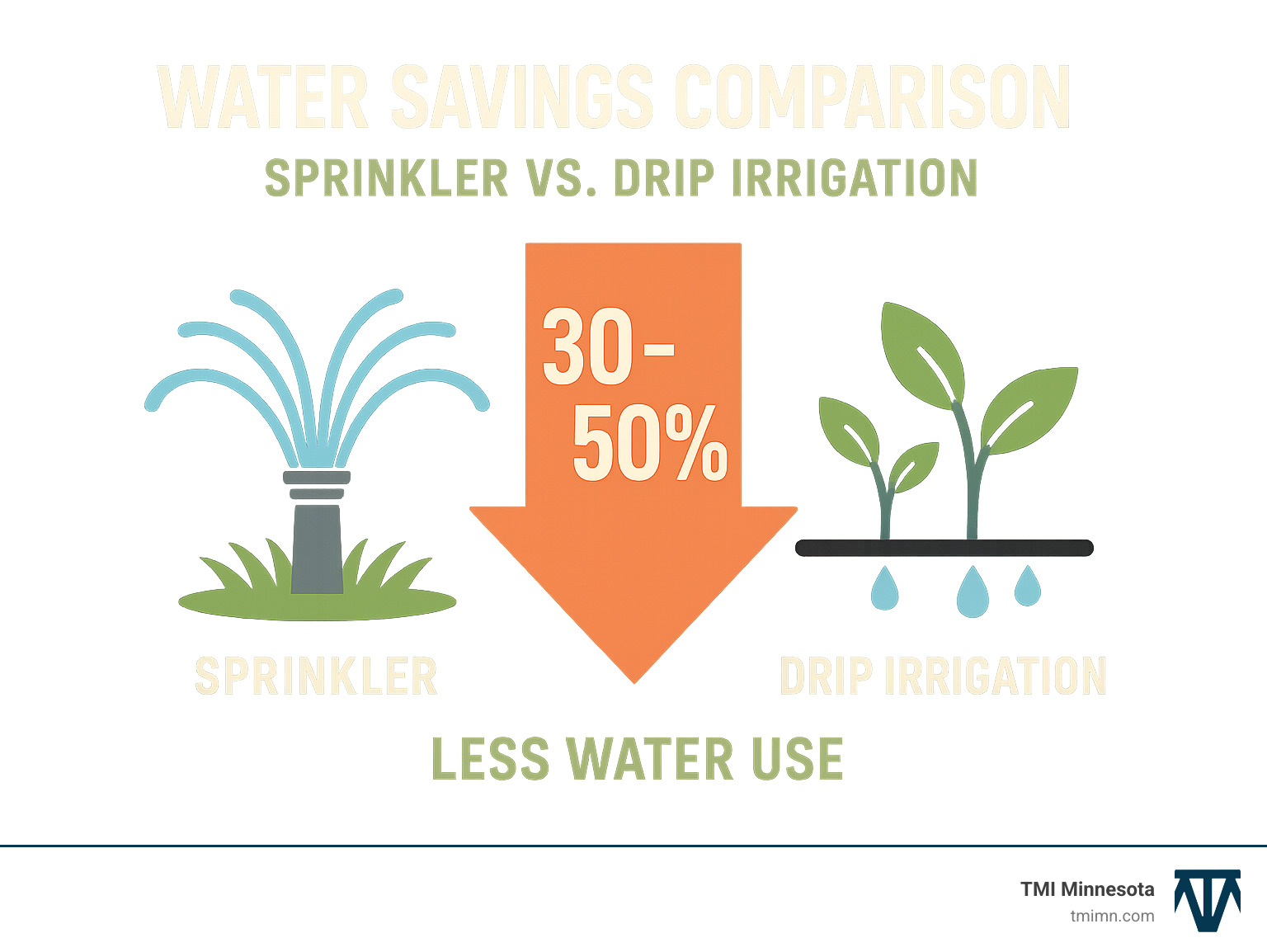
If you’re serious about water conservation, drip irrigation is truly the gold standard for xeriscapes. These systems deliver water directly to plant roots, where it’s needed most. I’ve seen clients reduce their landscape water use by 30-50% after switching from traditional sprinklers to drip systems.
What makes drip irrigation so special? It virtually eliminates evaporation and runoff since water goes straight to the soil rather than spraying through the air. Plus, areas between plants stay dry, which naturally suppresses weed growth. And for those concerned about aesthetics, the entire system can be hidden beneath a layer of mulch for a clean, natural appearance.
A complete drip system typically includes:
- A backflow preventer (usually required by local building codes)
- A pressure regulator that brings water pressure down to appropriate levels
- A filter to prevent tiny particles from clogging the system
- Drip tubing with either built-in emitters or spots where you can add emitters
- Various end caps and fittings to customize your layout
For larger areas or established native plantings, micro-spray heads offer another efficient option. These cover more ground than drip emitters while still using significantly less water than conventional sprinklers. They’re particularly effective for ground covers and densely planted beds where multiple drip emitters would be impractical.
Whatever system you choose, adding smart technology takes efficiency to another level. Modern smart controllers can adjust watering schedules based on local weather data, while rain sensors prevent your system from running during or after rainfall (something I’ve seen happen far too often in traditional systems). Soil moisture sensors provide even more precision by ensuring you water only when the soil actually needs it.
For more comprehensive guidance on creating landscapes that thrive with minimal water, check out our guide on Drought Resistant Landscaping.
Seasonal Care Checklist
One of the biggest perks of xeriscape landscaping ideas is the dramatically reduced maintenance compared to traditional yards. No more spending every weekend mowing, fertilizing, and fighting with sprinklers! That said, a little seasonal attention keeps your xeriscape looking its best year-round.
Spring
Spring is inspection time. Once the ground thaws, check your irrigation system for any winter damage—cracked pipes or damaged emitters need repair before the hot weather arrives. This is also the perfect time to prune away any dead branches from your shrubs and perennials, allowing new growth to shine.
A fresh layer of mulch works wonders in spring, helping to suppress the inevitable early-season weeds while retaining soil moisture as temperatures begin to rise. For established xeriscapes, spring is also ideal for dividing any perennials that have become overcrowded, giving you free plants to fill in other areas.
Summer
During summer, your main focus is monitoring rather than constant maintenance. Deep water newly planted areas as needed—even drought-tolerant plants need consistent moisture during their first year or two. Deep, infrequent watering encourages deeper root growth than frequent shallow watering.
Keep an eye out for pests and diseases, addressing any issues promptly before they spread. Removing spent flowers (deadheading) from perennials can encourage continued blooming throughout the season, giving you more color with minimal effort.
Fall
Fall is planting season in the xeriscape world. Cooler temperatures and typically more reliable rainfall make autumn ideal for establishing new trees, shrubs, and perennials. Plants installed in fall can develop strong root systems before facing the stress of summer heat.
As temperatures cool, gradually reduce watering to prepare plants for dormancy. I always advise clients to leave ornamental grasses and seed heads intact through winter—they provide beautiful structure under frost and snow while offering food and shelter for birds and beneficial insects.
Winter
Winter is the xeriscape’s time to rest, and yours too! Avoid walking on frozen plants to prevent damage to crowns and stems. For borderline hardy plants, consider light winter protection like a layer of mulch around the base.
The stripped-down winter landscape reveals the bones of your design—the rocks, pathways, and structural plants that form your garden’s framework. It’s the perfect time to appreciate these elements and plan any adjustments you’d like to make in spring.
With thoughtful design and appropriate plant selection, a mature xeriscape typically requires only about 25% of the maintenance time of a traditional landscape. That’s more weekends enjoying your outdoor space and fewer spent working on it—exactly what outdoor living should be about.
Frequently Asked Questions about Xeriscaping
Curious about making the switch to a water-wise landscape? You’re not alone! Here are answers to the questions I hear most often from homeowners considering xeriscape landscaping ideas.
How do I convert my lawn to a xeriscape?
Saying goodbye to your thirsty lawn doesn’t have to happen overnight. At TMI Minnesota, we’ve helped hundreds of homeowners make this transition, and there are several approaches that work beautifully.
The “lasagna method” (sheet mulching) is my personal favorite for DIY enthusiasts. Simply mow your existing lawn super short, then cover it with overlapping cardboard or several layers of newspaper. Add 3-4 inches of compost on top, followed by 2-3 inches of mulch. When you’re ready to plant, just cut holes through these layers. The grass gradually decomposes underneath over 3-6 months, enriching your soil in the process – nature’s recycling at its finest!
For quicker results, consider renting a sod cutter for a weekend. This tool neatly slices away the grass and shallow roots, giving you a clean slate to work with immediately. The removed sod doesn’t have to go to waste – it can be composted or even donated to neighbors who might need to patch their lawns.
Some homeowners opt for herbicide application, but we generally recommend the mechanical removal methods when possible, as they’re more environmentally friendly and improve your soil structure from the start.
Which drought-tolerant plants work in my region?
Living in the Twin Cities area (USDA Hardiness Zones 4a-4b) doesn’t mean you’re limited to cacti and yucca! Our region offers a surprising variety of beautiful, drought-resistant plants that can handle both our cold winters and occasional summer dry spells.
Our native prairie plants are absolute champions for xeriscaping. Prairie Dropseed grass creates neat, fountain-like textures, while Butterfly Weed attracts monarchs with its vibrant orange blooms. Purple Prairie Clover adds height and structure, and Blazing Star sends up stunning purple spikes that pollinators adore. For spring interest, the feathery seed heads of Prairie Smoke create a magical effect in the morning light.
For larger spaces, consider drought-tolerant trees and shrubs like the mighty Bur Oak (a slow-growing native that will outlive us all), the adaptable Northern Hackberry, or the compact Potentilla with its cheerful yellow flowers.
Don’t forget that even these tough plants need regular watering during their first couple of growing seasons. They’re establishing those deep root systems that will eventually make them drought-resistant superstars. After that establishment period, they’ll need only occasional deep watering during extended dry spells.
Will a xeriscape increase my property value?
In most cases, your water-wise landscape investment will pay dividends beyond just lower water bills. A thoughtfully designed xeriscape can absolutely boost your property value in several meaningful ways.
First, there’s the undeniable curb appeal factor. A well-executed xeriscape stands out from the sea of cookie-cutter lawns on your block. The textures, colors, and year-round interest create a distinctive look that photographs beautifully for listing photos and makes a memorable first impression during showings.
Smart buyers also recognize the economic advantages. Your xeriscape translates directly to lower monthly water bills and reduced maintenance expenses – no small consideration in today’s cost-conscious market. As one client told me after selling her xeriscaped property: “Buyers were actually calculating how much they’d save on lawn care services!”
There’s also growing demand for environmentally responsible homes. As water conservation becomes increasingly important, properties already adapted to use less water hold special appeal. A University of New Mexico study found homes with xeriscaping sold for approximately 4-6% more than similar properties with traditional landscaping.
The reduced maintenance aspect shouldn’t be underestimated either. Today’s busy homebuyers are specifically searching for properties that won’t demand hours of weekend upkeep. When they see your established, low-maintenance xeriscape, they’re not just seeing pretty plants – they’re seeing their reclaimed free time.
Conclusion
Creating a xeriscape isn’t just about saving water—it’s about reimagining what a beautiful landscape can be. By embracing xeriscape landscaping ideas that work with nature rather than against it, you’re creating an outdoor space that’s more sustainable, more resilient, and often more captivating than conventional turf-dominated yards.
The benefits of xeriscaping reach far beyond just lowering your monthly water bill. Imagine stepping into your yard throughout the year and finding new seasonal beauty—spring bulbs giving way to summer blooms, followed by the golden hues of ornamental grasses in fall, and the structural interest of evergreens and seed heads dusted with snow in winter. This year-round appeal comes naturally when you select plants that are meant to thrive in our local conditions.
Your xeriscape becomes a haven for local wildlife too. Native bees buzz between blossoms, butterflies dance from flower to flower, and birds feast on seeds and berries. This increased biodiversity isn’t just beautiful to watch—it creates a healthier ecosystem right in your own backyard.
Perhaps best of all, you’ll find yourself with more time to actually enjoy your outdoor space. Instead of spending every weekend mowing, watering, and fighting weeds, you can relax on your patio with a cool drink, watching the hummingbirds visit your salvias. When extreme weather hits—whether it’s a scorching heat wave or an extended drought—your xeriscape will continue to thrive while conventional landscapes struggle.
At TMI Minnesota, we specialize in creating custom xeriscapes that balance water conservation with stunning design. Our team understands the unique challenges of the Twin Cities climate and can help you select the perfect combination of plants and hardscape elements for your property. We believe your landscape should be an expression of your personal style and environmental values, not just a cookie-cutter yard that looks like everyone else’s.
Whether you’re ready for a complete landscape change or want to start with a small xeriscape garden bed, we have the expertise and leading-edge products to bring your vision to life. From initial design through installation and beyond, we’ll help you create an outdoor space that’s beautiful, functional, and environmentally responsible.
Ready to start your xeriscape journey? Contact our landscape design team today to schedule a consultation. Together, we’ll create a water-wise landscape that will bring you joy and satisfaction for years to come—while doing something good for our planet too.