
Softscape designer duties focus on the lush, vibrant elements of landscape design that breathe life into any outdoor space. If you’re seeking to understand what a softscape designer does and their role in changing gardens and yards, here’s a quick breakdown:
- Softscape Design: Involves the use of living elements like plants, flowers, and shrubs to create an aesthetically pleasing environment.
- Role of a Softscape Designer: They plan and manage the plants and organic materials to complement the hardscape, thus crafting balanced and functional landscapes.
- Industry Insight: Softscape design is a flourishing part of the landscaping industry, emphasizing sustainability and natural beauty.
As you explore the art of softscape design, you’ll find that this practice is not just about planting, but about creating experiences and memories within your outdoor space.
My name is Ed Reichow, and as the owner of Task Masters, I’ve spent years blending innovative design with community-focused landscaping practices. Through my experience, I’ve learned how essential a well-thought-out softscape design is to improve any living area. Let’s dive deeper into this art form.
Understanding Softscape Design
Softscape design is all about the living, breathing elements that make a landscape come alive. Unlike hardscapes, which are the structural aspects like paths and patios, softscape elements include everything from trees and shrubs to flowers and grass. These elements are essential for creating dynamic and inviting outdoor spaces.
Types of Softscape Elements
When we talk about softscape, we refer to the variety of plant life that can be used to shape and improve a landscape. Here are some key components:
- Trees and Shrubs: These provide structure and height, offering shade and privacy.
- Flowers: Add color and fragrance, turning any garden into a vibrant mix.
- Grasses: From traditional lawns to ornamental varieties, grasses can soften the landscape and add texture.
- Groundcovers: These low-growing plants fill in spaces and reduce soil erosion, offering a lush carpet of greenery.
Each of these elements plays a role in the overall aesthetic and functionality of a landscape. A skilled softscape designer knows how to choose and arrange these elements to complement the existing hardscape and fulfill the client’s vision.
Softscape and the Broader Landscape
Incorporating softscape into a landscape is about more than just planting. It’s about creating a harmonious balance between the organic and inorganic elements. The landscape becomes a living canvas, where plants are the brushstrokes that add depth and interest.
A successful softscape design considers the entire ecosystem, including the local climate and soil conditions. This ensures that the chosen plants not only thrive but also contribute to the sustainability and health of the environment. As highlighted by the Cultural Landscape Foundation, horticulture is critical to defining the function and experience of civic spaces, showing how plants can both define and organize a space while providing a unique experience.
By understanding the types of softscape elements and their role in the landscape, you can begin to appreciate the artistry involved in softscape design. It’s a field that combines science and creativity, offering endless possibilities for changing outdoor spaces into living works of art.
Essential Tips for Softscape Designers
To create a visually appealing and functional landscape, a softscape designer must follow a structured process. Here are some essential tips to guide you through designing with softscape elements.
Plan Hardscape First
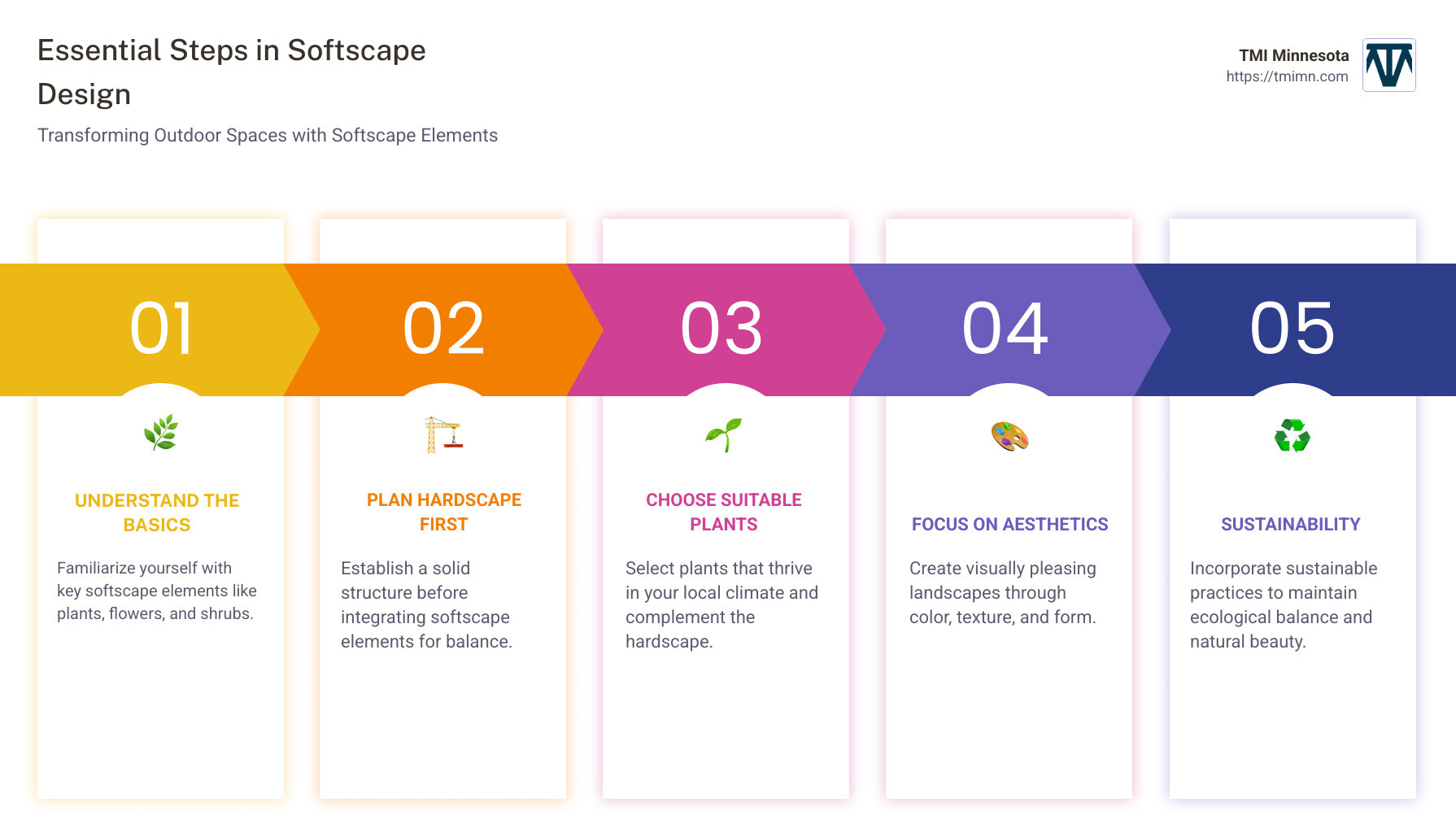
Before diving into plants and greenery, plan the hardscape elements first. Hardscape refers to the non-living components of a landscape, like pathways, patios, and retaining walls. These elements form the backbone of your design, providing structure and defining the spaces where softscape elements will thrive.
Why start with hardscape? Because it ensures that the layout is functional and that softscape elements will complement the existing structures. Once the hardscape is in place, you can layer in plants and other softscape features to improve the overall aesthetic.
Design Process
A well-thought-out design process is key to successful softscape design. Here’s a step-by-step approach:
Site Analysis: Understand the site conditions, including soil type, sunlight exposure, and drainage patterns. This information will guide plant selection and placement.
Client Consultation: Discuss with clients their preferences, needs, and budget. This ensures the design aligns with their vision and practical requirements.
Conceptual Design: Develop a conceptual plan that outlines the placement of softscape elements. Use sketches or digital tools to visualize the layout.
Plant Selection: Choose plants that suit the local climate and site conditions. Consider factors like maintenance requirements, growth habits, and seasonal interest.
Installation Plan: Create a detailed plan for the installation, including timelines and resource allocation.
Aesthetic Potential
The true beauty of softscape design lies in its aesthetic potential. With careful selection and placement of plants, you can transform any outdoor space into a vibrant, inviting environment.
Color and Texture: Use a mix of colors and textures to add depth and interest. Flowers, grasses, and foliage can create a diverse palette that changes with the seasons.
Height and Form: Varying plant heights and forms can create a dynamic landscape. Tall trees and shrubs provide structure, while low-growing plants soften edges and fill gaps.
Focal Points: Incorporate focal points like a unique tree, a sculpture, or a water feature to draw the eye and add interest.
By focusing on these essential tips, a softscape designer can maximize the aesthetic potential of any landscape, creating spaces that are not only beautiful but also functional and sustainable.

Next, let’s explore the vital role that softscape designers play in crafting and organizing outdoor spaces.
The Role of a Softscape Designer
A softscape designer is much more than someone who plants flowers and shrubs. They are the creative minds behind the lush, vibrant landscapes that improve our outdoor spaces. Let’s explore what this role entails and the organizational potential it holds.
Softscape Designer Job Description
At its core, the role of a softscape designer involves planning, designing, and implementing the living elements of a landscape. This includes everything from selecting plants that thrive in specific climates to crafting aesthetically pleasing and functional outdoor environments.
Here’s a quick breakdown of their key responsibilities:
Site Evaluation: Assess the existing conditions of a site, including soil quality, sunlight, and drainage. This helps in making informed decisions about plant selection and placement.
Design Creation: Develop a comprehensive design plan that incorporates client preferences and site conditions. This often involves creating sketches or digital renderings to visualize the proposed layout.
Plant Selection and Placement: Choose plants that complement the hardscape elements and improve the overall aesthetic. Consider factors like color, texture, height, and seasonal changes.
Project Management: Oversee the installation process, ensuring that the design is executed according to plan. This includes coordinating with landscapers and managing timelines and budgets.
Organizational Potential
The organizational potential of a softscape designer is immense. By effectively organizing and planning the living elements of a landscape, they can transform ordinary spaces into extraordinary experiences.
Creating Cohesive Designs: By integrating softscape elements with existing structures, designers ensure that every part of the landscape works harmoniously. This cohesion is crucial for creating inviting and functional outdoor spaces.
Adapting to Change: Nature is ever-changing, and a skilled softscape designer anticipates these shifts. They plan for growth and seasonal changes, ensuring that the landscape remains beautiful and functional throughout the year.
Enhancing Biodiversity: Thoughtful plant selection can boost biodiversity, attracting beneficial insects and wildlife. This not only enriches the ecosystem but also adds life and movement to the landscape.
A softscape designer plays a pivotal role in shaping outdoor environments. Their expertise in selecting and organizing plants transforms spaces into vibrant, sustainable landscapes that delight the senses and provide lasting value.
Next, we’ll address some frequently asked questions about softscape design to further understand its intricacies and applications.
Frequently Asked Questions about Softscape Design
What is the difference between softscape and hardscape?
In landscape design, understanding the difference between softscape and hardscape is crucial. Softscape refers to the living, changing elements of a landscape. This includes plants, trees, shrubs, flowers, and even soil. These elements are dynamic and require regular maintenance to thrive.
On the other hand, hardscape encompasses the non-living, permanent features of a landscape. This includes patios, walkways, rocks, and other structural elements. These features provide the framework for a landscape, offering stability and form.
Together, softscape and hardscape elements create a balanced and cohesive landscape. The art of blending these components lies at the heart of effective landscape design.
How do I choose the right plants for my softscape design?
Selecting the right plants is a critical aspect of softscape design. A well-chosen plant palette not only improves the visual appeal but also contributes to the functional and ecological health of a landscape.
Climate Compatibility: Consider the climate and microclimates of your area. Choose plants that are native or well-suited to your region to ensure they thrive with minimal intervention.
Soil and Sunlight: Assess the soil quality and sunlight exposure of your site. Different plants have specific requirements, so match them with the right conditions.
Aesthetic and Functional Goals: Decide on the look and feel you want to achieve. Whether it’s a lush, tropical vibe or a minimalist, modern garden, your plant choices should align with your vision.
Productive Potential: Incorporate horticulture elements that offer more than beauty. Consider plants that provide food, fragrance, or attract beneficial wildlife, enhancing the landscape’s productive potential.
What are some examples of softscape elements?
Softscape elements are diverse and can be custom to fit any design style. Here are some common examples:
Trees and Shrubs: These form the backbone of many landscapes, providing structure, shade, and seasonal interest.
Flower Beds: A vibrant mix of annuals and perennials can add color and texture, creating focal points and enhancing curb appeal.
Ground Covers: Low-growing plants like moss or creeping thyme can fill in gaps, control erosion, and reduce maintenance.
Grasses and Vines: Ornamental grasses add movement and softness, while vines can create vertical interest and cover unsightly structures.
By thoughtfully selecting and arranging these softscape elements, you can craft a landscape that is both beautiful and functional, meeting your aesthetic and practical needs.
Next, we’ll explore the unique designs and transformative power of softscape design in creating outdoor spaces that evolve with time.
Conclusion
At TMI Minnesota, we pride ourselves on our ability to transform outdoor spaces with unique designs that integrate both hardscape and softscape elements. Our approach is not just about creating a beautiful yard; it’s about crafting an evolving space that reflects your lifestyle and aspirations.
Outdoor spaces are more than just a part of your property; they are extensions of your home. They offer a place to relax, entertain, and connect with nature. With our expertise in softscape design, we create landscapes that are dynamic and adaptable, allowing them to change and grow over time.
Our team understands the importance of selecting the right elements to suit your environment. By carefully choosing plants and materials that work harmoniously together, we ensure that your landscape not only looks stunning but also thrives with minimal maintenance.
We invite you to contact us to explore how our unique designs can transform your outdoor spaces. Let us help you create a landscape that evolves with you, enhancing your quality of life and adding value to your home.